



Industrial Plating Equipment.
Uninterrupted power and autonomous plant infrastructure for metal finishing.
A high-performance plating plant is far more than its chemical baths.
A high-performance plating plant is a technological ecosystem: it carries thousands of amperes of direct current without loss, locks thermal balances to the finest tolerance, and moves tonnes of metal through aggressive environments without a jolt. With next-generation equipment developed for the harshest conditions in the industry — corrosion, acid vapour, high current loads — we turn your plant into a fully autonomous, fault-free metal finishing base built to Industry 4.0 standards.
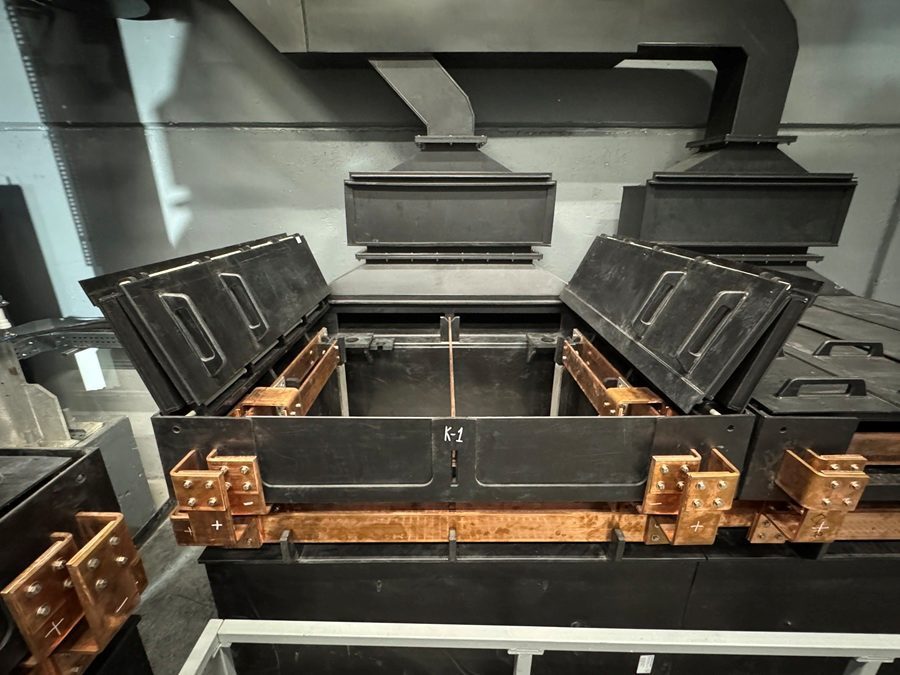
Plating Bus Bars Loss-free DC current transfer
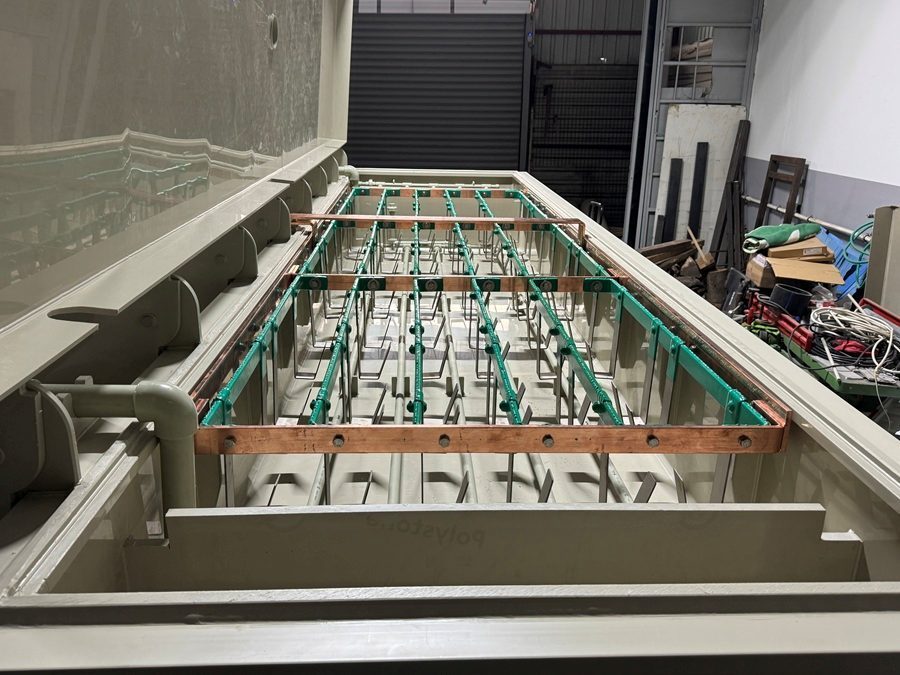
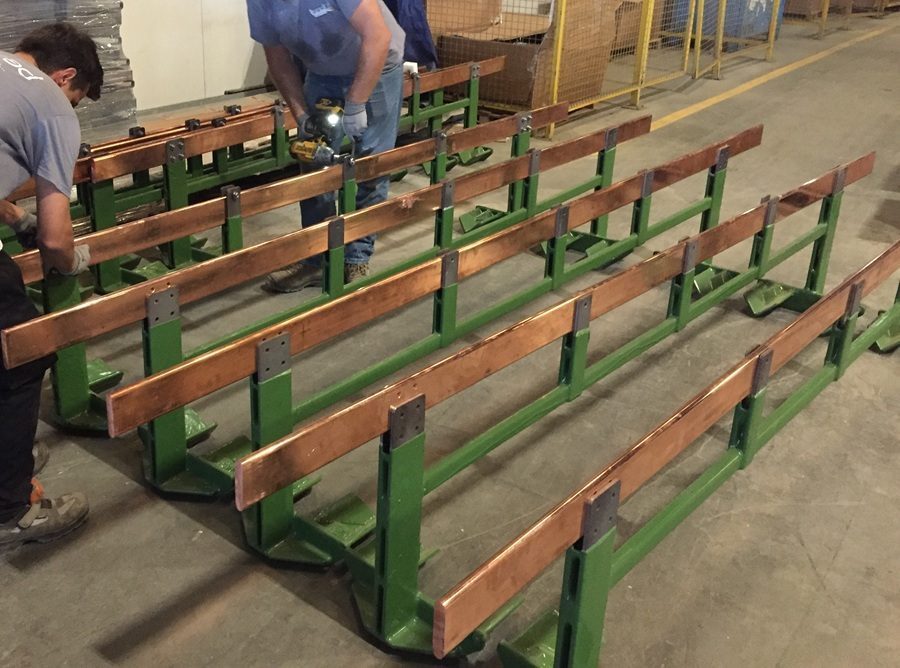
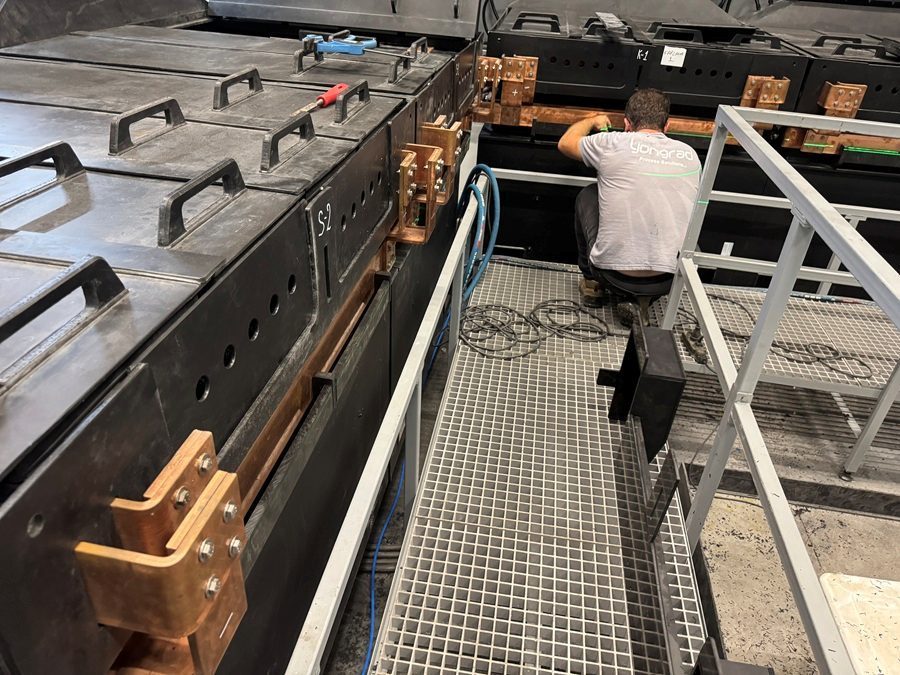
At the heart of the electrolytic reactions that deposit metal ions evenly between anode and cathode lies a stable, loss-free transfer of direct current. The high-conductivity carrier bars we design for plating plants take the enormous amperage from the rectifiers straight to the rack and barrel seats, without voltage drop and without Joule heating. That loss-free transfer guarantees a flawless micron thickness distribution at every point of the metal surface.
- System Components
-
- Oxygen-free electrolytic copper cores (OFC): Solid copper conductors of the highest conductivity, calculated by simulation against the plant's maximum current density (A/dm²).
- Titanium cladding: A titanium sheath that makes bars working in corrosive baths such as hard chrome or nickel chemically indestructible, without compromising conductivity.
- Self-cleaning V-contact seats: High-pressure contact assemblies that break the surface oxide formed by acid vapour mechanically, eliminating arcing.
- Industry applications centred on metal plating
-
- Heavy-duty zinc and alloy lines: Large-section bar assemblies that damp swings of tens of thousands of amperes when tonnes of structural steel enter the electrolysis at once.
- Precision plating and electroforming: Ultra-precise conductors allowing zero current deviation, for engineering components and metal growth over a mandrel.
Heating comes either from too small a cross-section or from contact resistance that builds up over time. We size our bars with a 40 % safety margin over the system load and use internally water-cooled designs on critical runs.
At stations where acid is concentrated we clad the solid copper in titanium, preserving current-carrying capacity and removing chemical attack entirely.
Immersion Heaters Chemically inert, intelligent heat exchangers
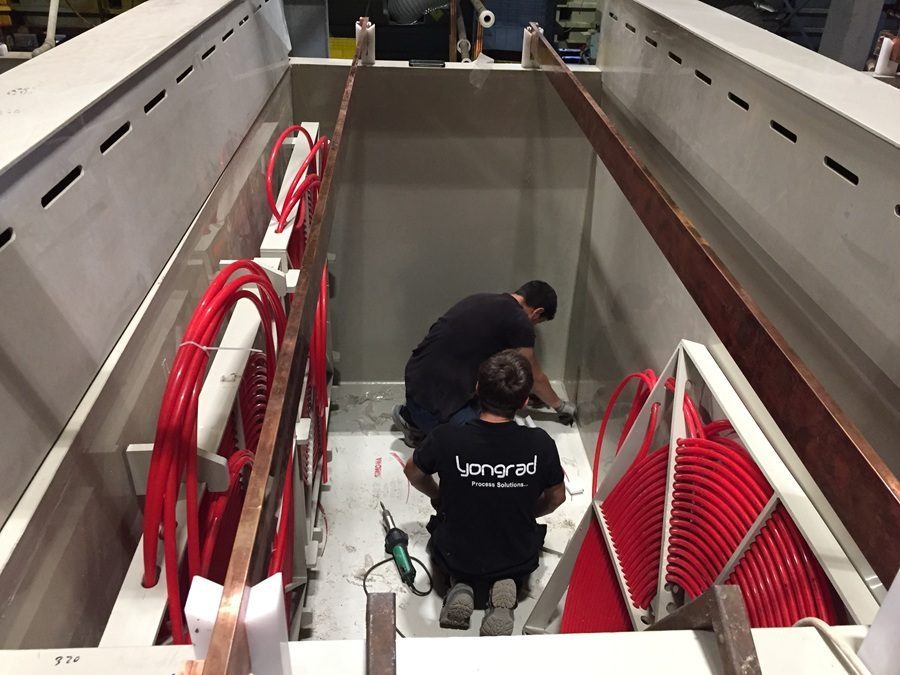
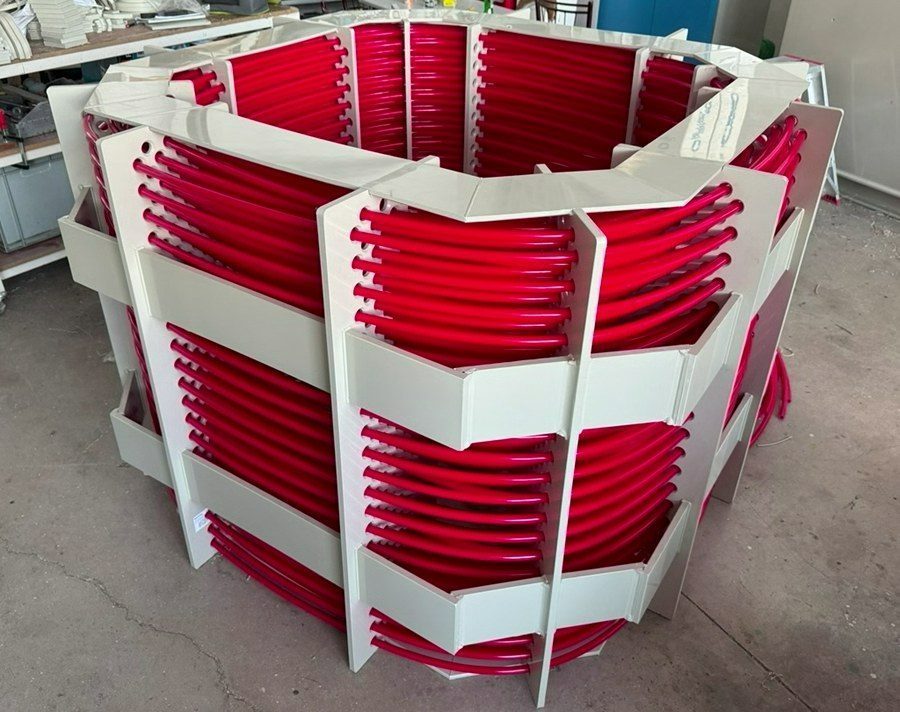
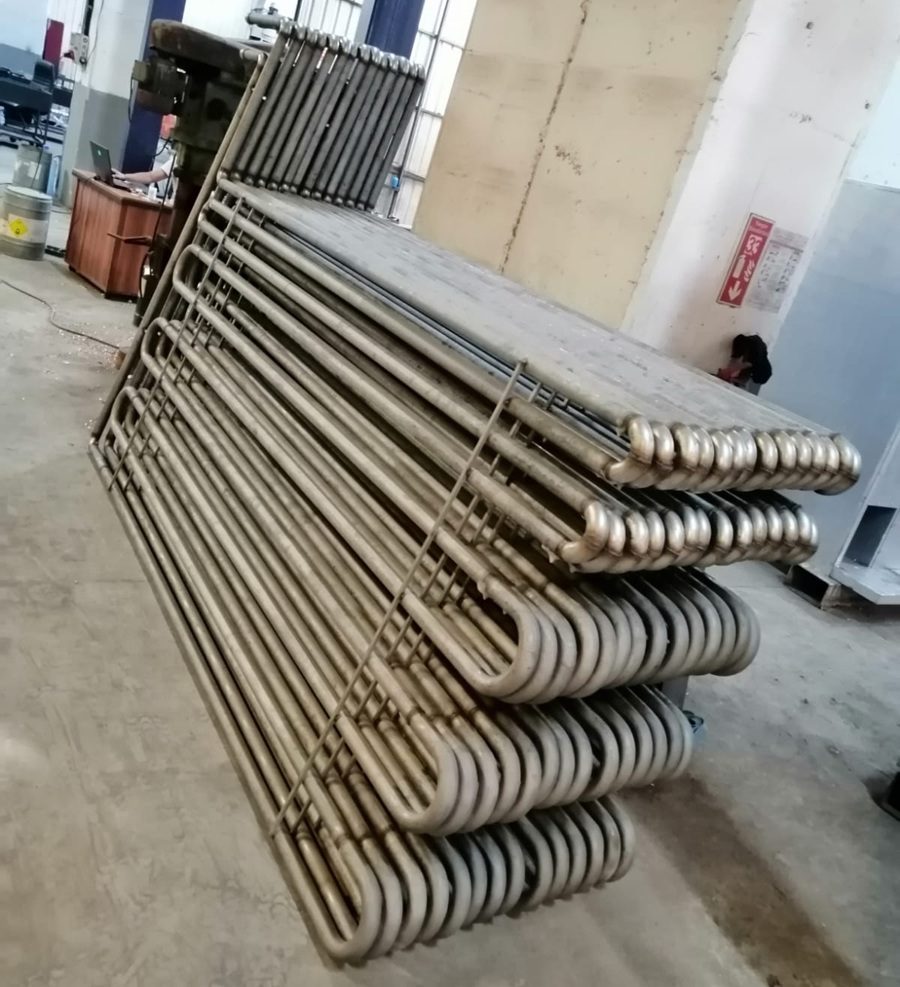
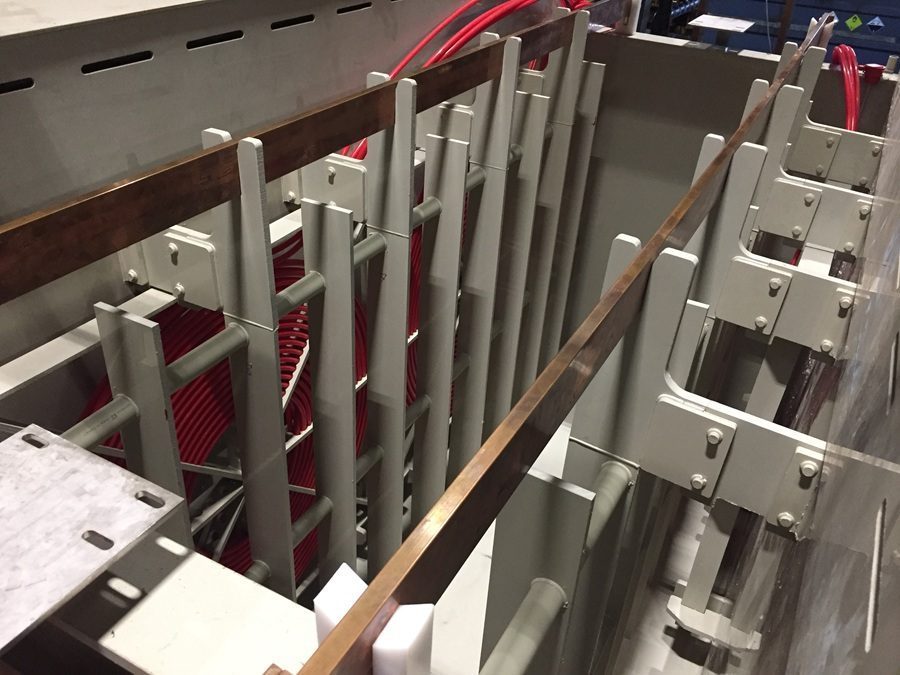
In deposition and plating reactions, thermodynamic stability is the single factor that decides success. Even the smallest deviation in bath temperature disturbs the crystal structure of the metal and leads to dullness, internal stress or peeling. Completely inert to the aggressive acids and alkalis of plating, our intelligent heat exchangers bring your process up to temperature in the shortest possible time and then hold it with flawless stability.
- System Components
-
- Fluoropolymer (PTFE/Teflon) elements: Heaters with a non-stick surface that stay intact even in solutions which dissolve metal in seconds, such as hydrofluoric or chromic acid.
- Titanium and zirconium coils: Industrial heating and cooling coils with a high heat transfer coefficient in oxidising baths and extra resistance to mechanical impact.
- Algorithmic thermal control (PID): Automation panels that read PT100 sensors in real time, anticipate temperature drops and bring the heaters in proportionally.
- Industry applications centred on metal plating
-
- Hard chrome and industrial coatings: Integrated heating and cooling loops that immediately remove the excess exothermic energy generated by high current density.
- Metal pre-treatment and degreasing lines: Coil systems that minimise warm-up time in cleaning and pickling tanks needing high temperature (above 80 °C).
The ultra-smooth surface of our PTFE-coated heaters gives chemical salts nothing to crystallise on; heat transfer efficiency stays as it was on day one for years.
The heaters are placed, after a fluid dynamics calculation of the tank, in the flow corridors where circulation is strongest, so the heat distributes evenly.
Drying Ovens Thermal cabinets that prevent flash rust
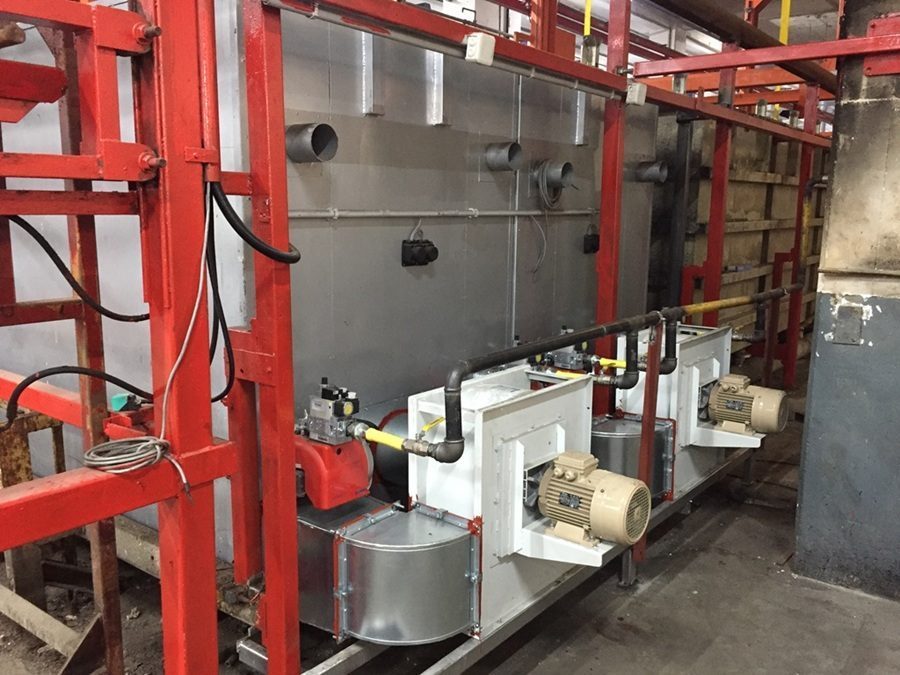
Drying, the most critical last link in metal finishing, does more than remove moisture: it decisively prevents flash rust and water staining. Our thermal ovens, designed specifically for plating plants, use a high volumetric air flow to dry complex parts with blind holes without any risk of oxidation, and perform the thermal fixing that some metallurgical processes require.
- System Components
-
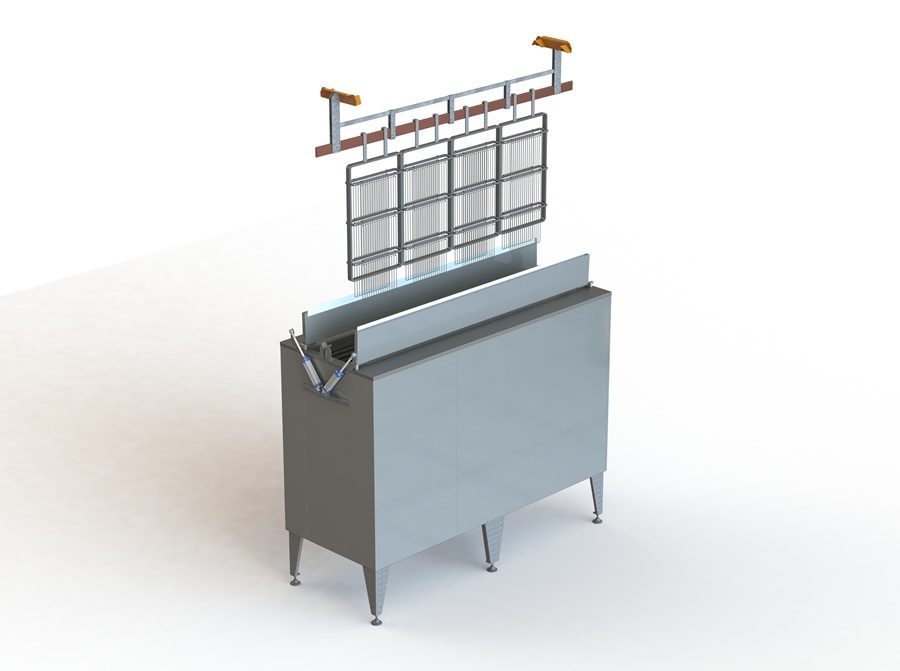
- Air knives: Aerodynamically designed nozzles that strip the bulk water off the part with high-pressure air jets before it enters the drying cabinet.
- Heat recirculation cabinets: High-efficiency constructions with a double-walled, rockwool-insulated shell that recirculates the hot air continuously and keeps energy costs to a minimum.
- Multi-axis air baffles: A wind-tunnel design that passes the hot air evenly between thousands of small parts in a barrel or between large components on a rack.
- Industry applications centred on metal plating
-
- High-strength metal fasteners: Critical de-embrittlement baking lines that drive out the hydrogen absorbed into the steel during plating and prevent it becoming brittle.
- After precision plating: Drying tunnels that leave the metal spot-free after the deionised water rinse and preserve optical and surface perfection.
No. Our PLC-controlled systems hold the temperature well below the thermal limits of the metal and the deposit; the drying is done with high air flow, not high heat.
In our barrel dryers the hot air is blown straight into the axis of rotation. As the barrel turns, the parts tumble constantly so that every surface dries completely.
Transfer Robots Autonomous hoists with millimetre positioning
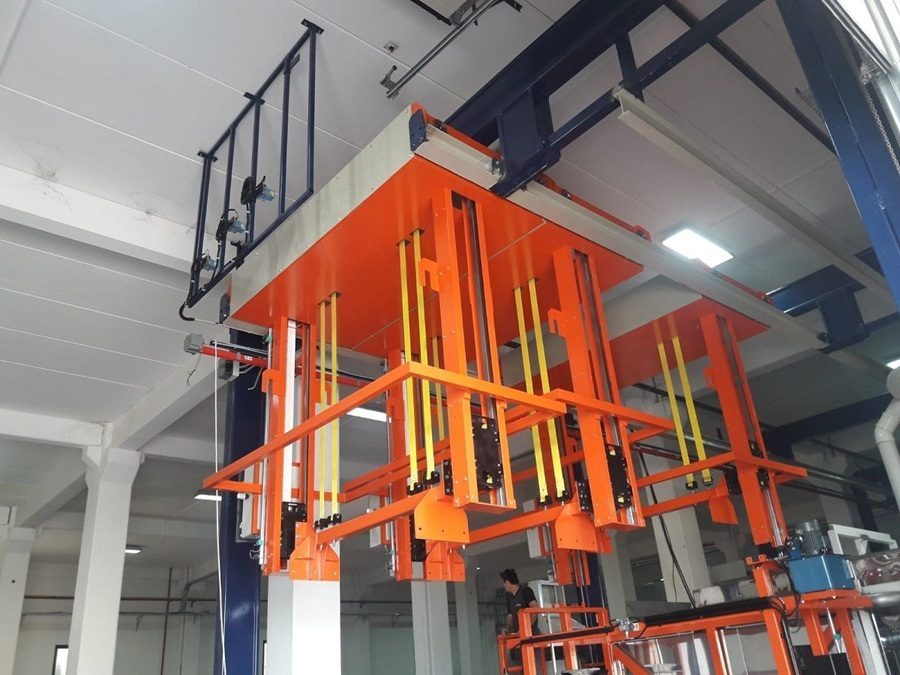
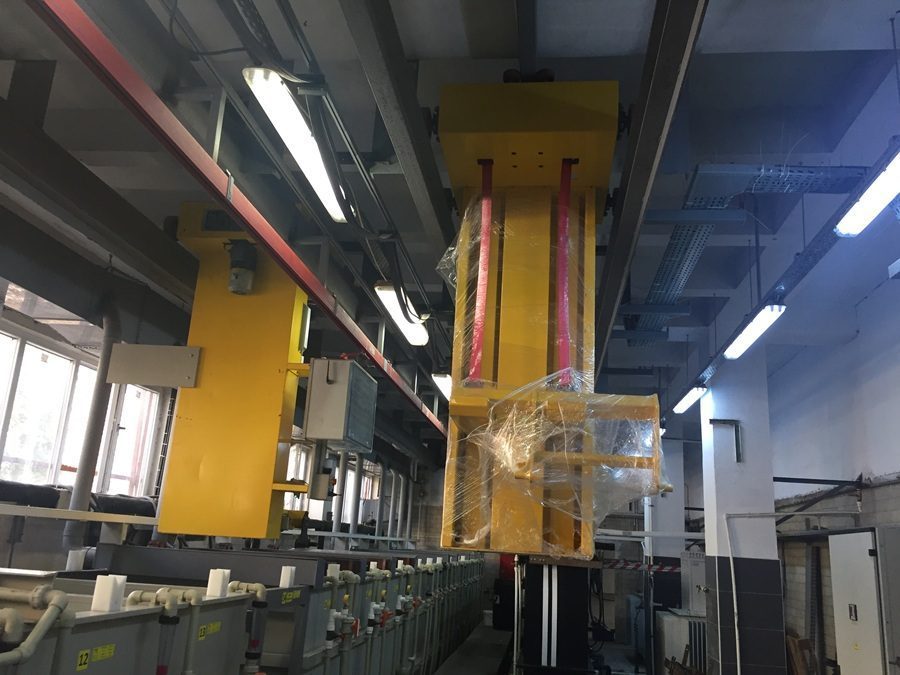
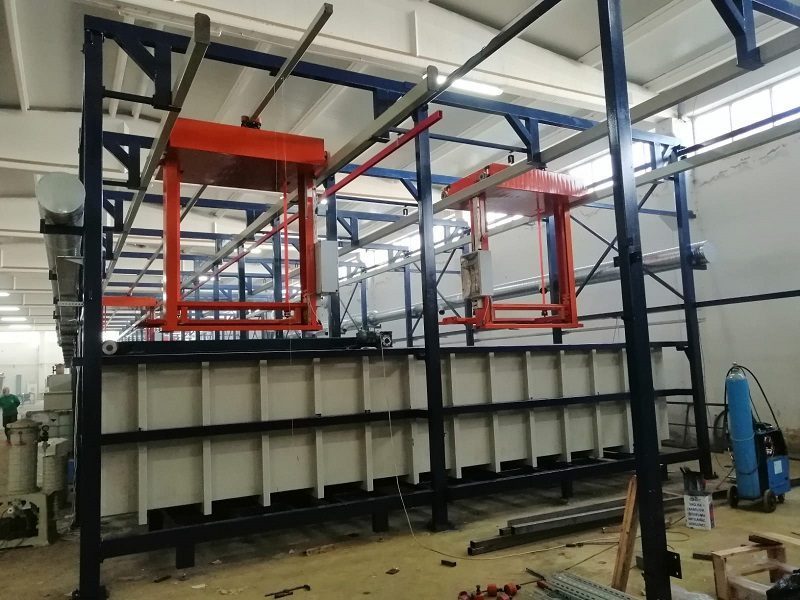
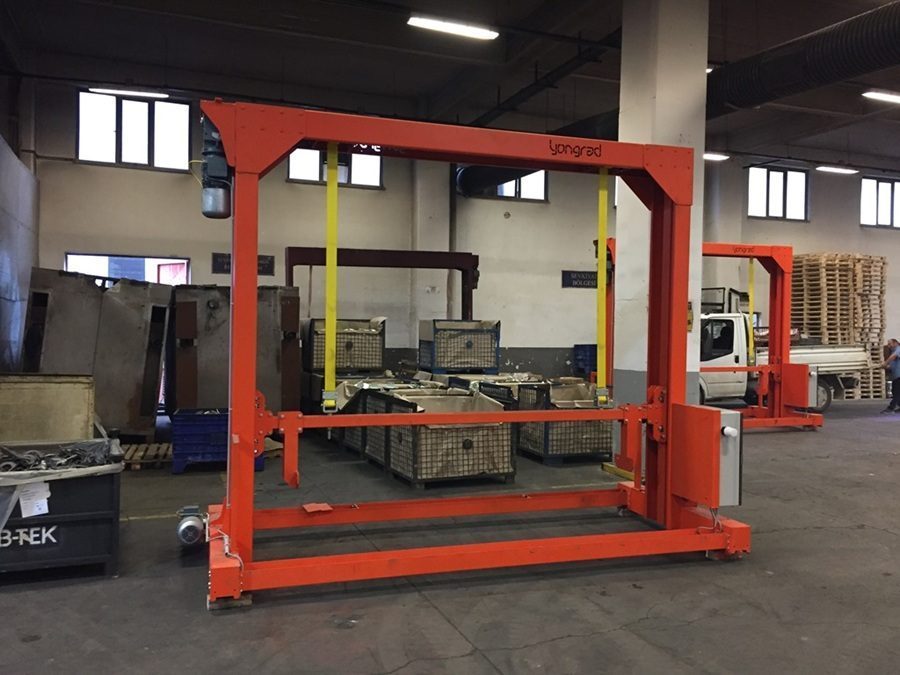
In a plating plant full of harmful acid vapour and tonnes of metal, the greatest force multiplier is the fully autonomous transfer robot. These heavy-duty muscles, positioning to the millimetre, execute the transfer timings between baths — drip time, immersion angle — with perfect fidelity to the PLC recipe. Fatigue, error and accident risk arising from human discretion become history.
- System Components
-
- Absolute laser positioning: Targeting systems that compute the robot's position on the X, Y and Z axes to micron accuracy through a combination of laser and encoder, even in the worst vapour and mist.
- Sway-control algorithms: Kinematic acceleration and deceleration software that stops tonne-heavy liquid-filled barrels or large racks swinging like a pendulum during fast transfers.
- Acid-armoured drive architecture: Polyurethane-coated travel wheels fully resistant to corrosive atmospheres, brushless servo motors to IP67, and titanium-alloy lifting ropes and belts.
- Industry applications centred on metal plating
-
- Series production plating lines: Multi-hoist systems that move tonnes of metal between stations in seconds on zinc, zinc-nickel or hard chrome lines running around the clock.
- Heavy industry component lines: Heavy-duty overhead cranes that move very large metal blocks and sections between baths with no jolt and a millimetre-accurate immersion angle.
The anti-collision logic built into our PLC architecture tracks the position and route of every robot in real time. When two approach each other's working area, the system synchronises their speeds automatically.
Guided by the immersion speed parameter in the recipe, our robots enter the bath at a rate matched to the volume of the part; hydraulic shock is avoided and air trapped in recesses escapes.