



Industrial Grease Separators.
Liquid-solid-grease separation reactors to EN 1825 that block the FOG load at source.
Phase separation reactors to EN 1825 that block the FOG load at source.
These are separation reactors for liquid, solid and grease, fully compliant with EN 1825, that block the FOG load — fats, oils and grease — at source in the drainage of commercial kitchens, food factories and any site producing organic waste. Through physical phase separation they prevent fats congealing in the pipework and causing blockages, and keep the COD and BOD load off the treatment works.
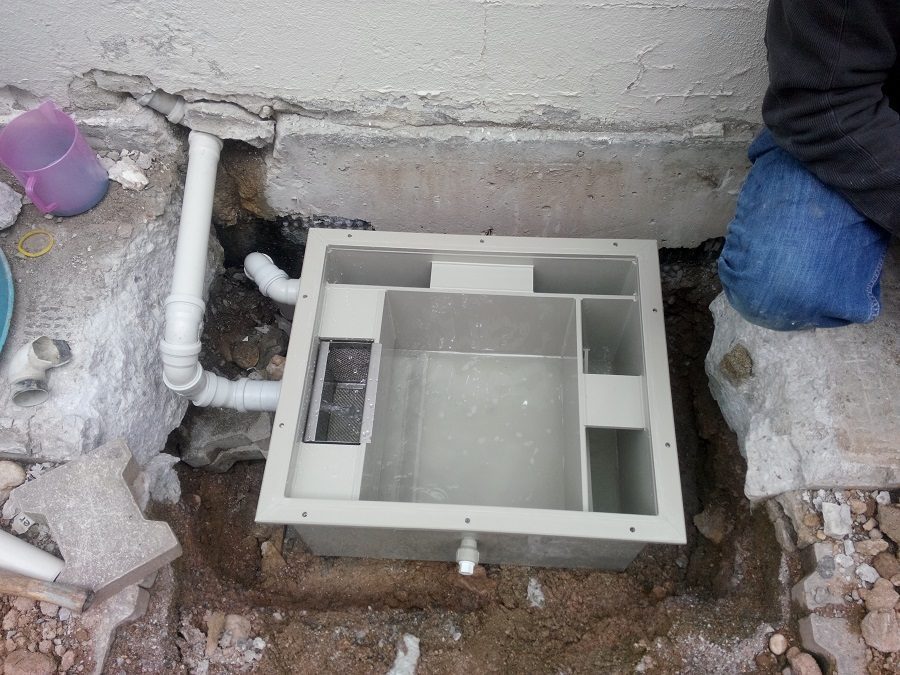
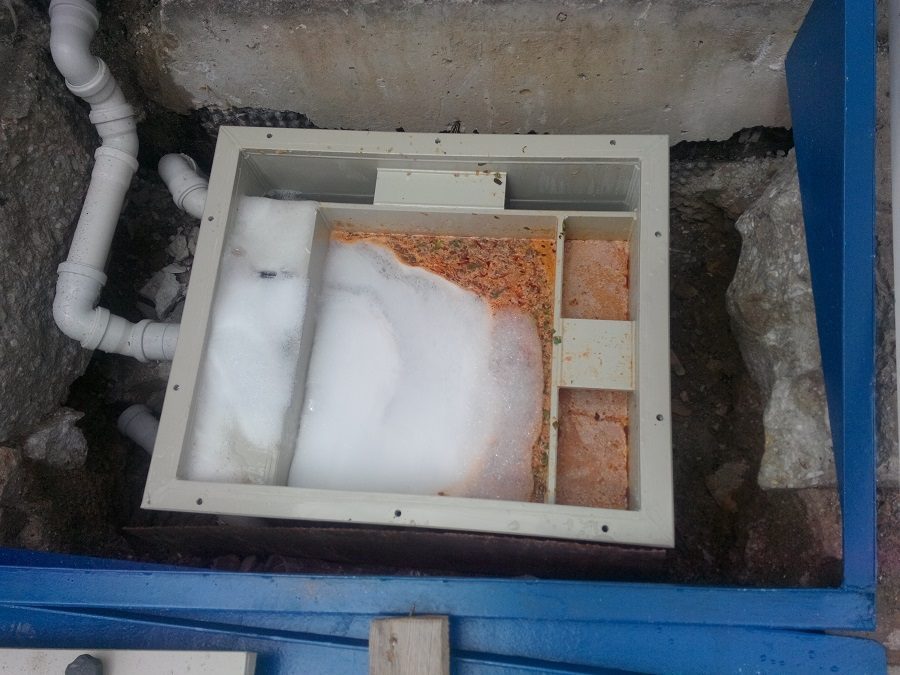
Underground Grease Separators Monolithic HDPE reactors below ground
Corrosion-free monolithic HDPE tanks, calculated structurally to withstand below-ground hydrostatic pressure and heavy goods vehicle traffic with a class D400 cover. In deep excavations they meet the finished level directly through telescopic shaft sections, with no need to build a concrete chamber.
- System Architecture
-
- Internal deflector baffles to EN 1825-1, giving an optimised hydraulic retention time.
- A seamless one-piece high-density polymer body, fully resistant to acidic ground water.
- An integrated sludge and sediment trap.
- Industry Applications
-
- Underground discharge lines of large food factories in meat and dairy processing.
- Central drainage for shopping centres, hospitals and industrial catering facilities.
The bodies are designed with external ribbing. That structure absorbs the lateral earth pressure and at the same time allows the tank to be anchored against groundwater buoyancy.
Because the unit is buried below the frost line, the ground temperature insulates it. In extreme climates thermal insulation jackets are fitted inside the telescopic shaft.
By the calculation method of EN 1825-2: the optimum nominal size — NS10, NS20 and so on — follows from the peak flow, the water temperature, the use of detergents and the density of the grease.
Freestanding Grease Separators Freestanding units in a closed system
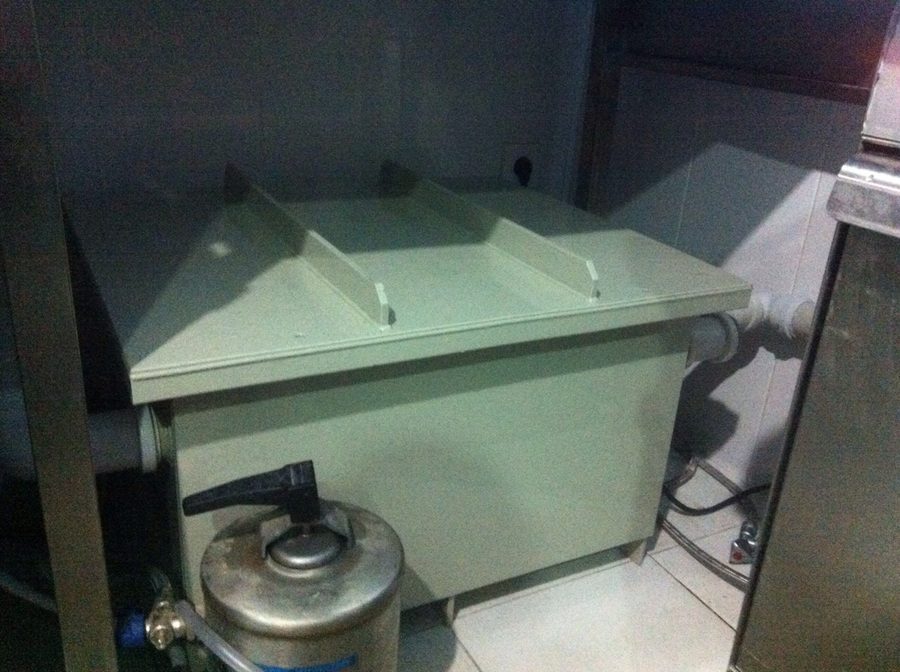
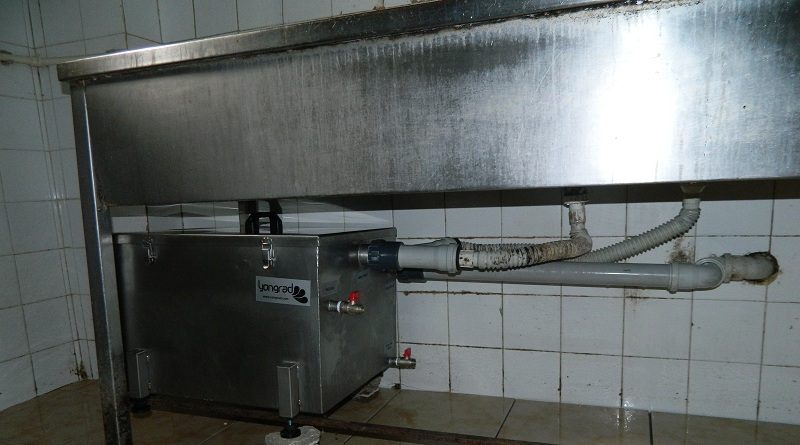
Freestanding units for installation indoors or in a basement, giving guaranteed tightness and freedom from odour where space is limited. With pneumatically clamped lids they run as a closed system and keep the room air entirely unaffected.
- System Architecture
-
- A compact oval or rectangular PP/HDPE construction that will pass through narrow doorways.
- Fully sealed maintenance covers with EPDM gaskets and internal venting ports.
- Polycarbonate sight glasses and manual sampling valves for quick inspection.
- Industry Applications
-
- Airport terminal kitchens and the technical basements of multi-storey office buildings.
- Local food processes that must sit directly alongside the production line.
The system is entirely gas-tight. The fermentation gases that build up inside are carried away through a dedicated port connected directly to the building's central ventilation stack.
Support frames at the base spread the load evenly, so the point pressure is minimised and the concrete floor is protected.
With the optional direct suction lines, the tanker hose connects to a flange on the outside of the tank and the contents are drawn off under vacuum without the lids ever being opened.
Bypass Grease Separators Intelligent hydraulic diversion systems
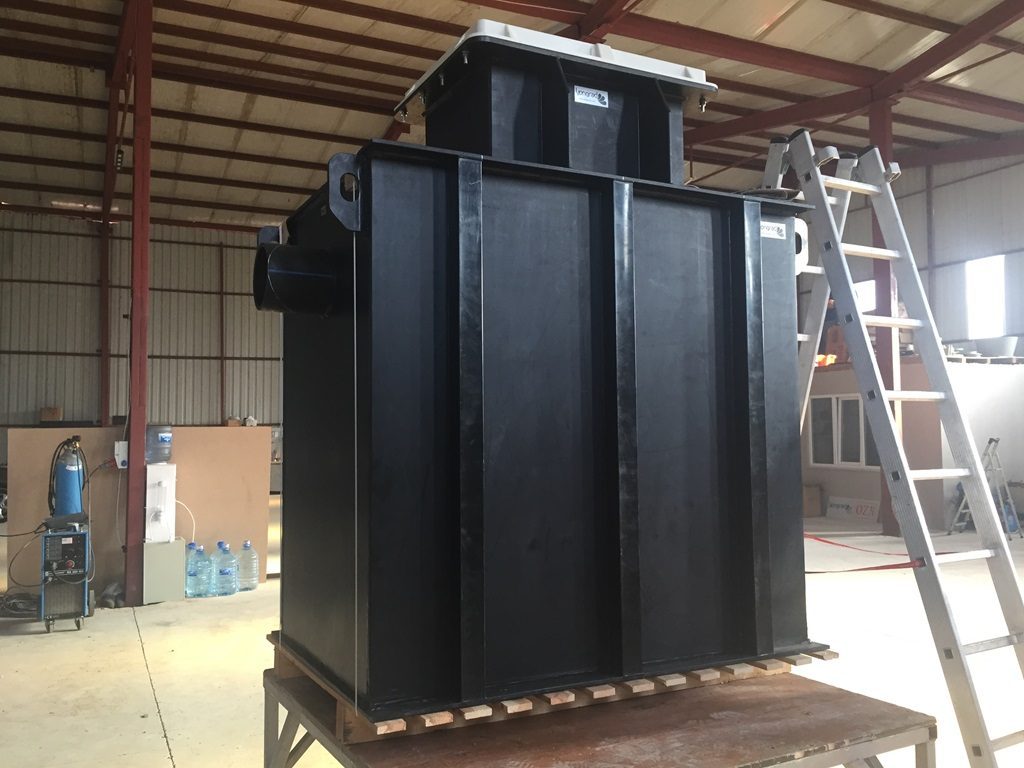
Intelligent hydraulic diversion systems for open areas and car parks — places with a low grease risk that are nevertheless exposed to enormous flows in a downpour.
- System Architecture
-
- Streamlined bypass weirs that route stormwater above the nominal flow straight to the outlet, past the separation chamber.
- Proportional flow splitters that take the first flush into the separation chamber.
- Energy-dissipating baffles that withstand heavy hydrodynamic shock and slow the flow inside.
- Industry Applications
-
- Open car parks and lorry loading ramps at large logistics centres.
- Roof and surface rainwater drainage at industrial sites.
Once the water reaches the weir level, the hydraulic weir automatically diverts the excess around the main separation chamber and straight to the outlet, so the grease already captured is not washed out and discharged.
Around 90 % of the oil and hydrocarbon lying on the surface is washed off in the first ten minutes of rain. The bypass captures and treats that first, dirtiest water and lets the relatively clean flow that follows pass by.
Since the channels are made entirely from smooth HDPE and sharp turns are avoided, the risk of blockage is close to nil.
Industrial Grease Interceptors Bespoke process reactors for heavy industry
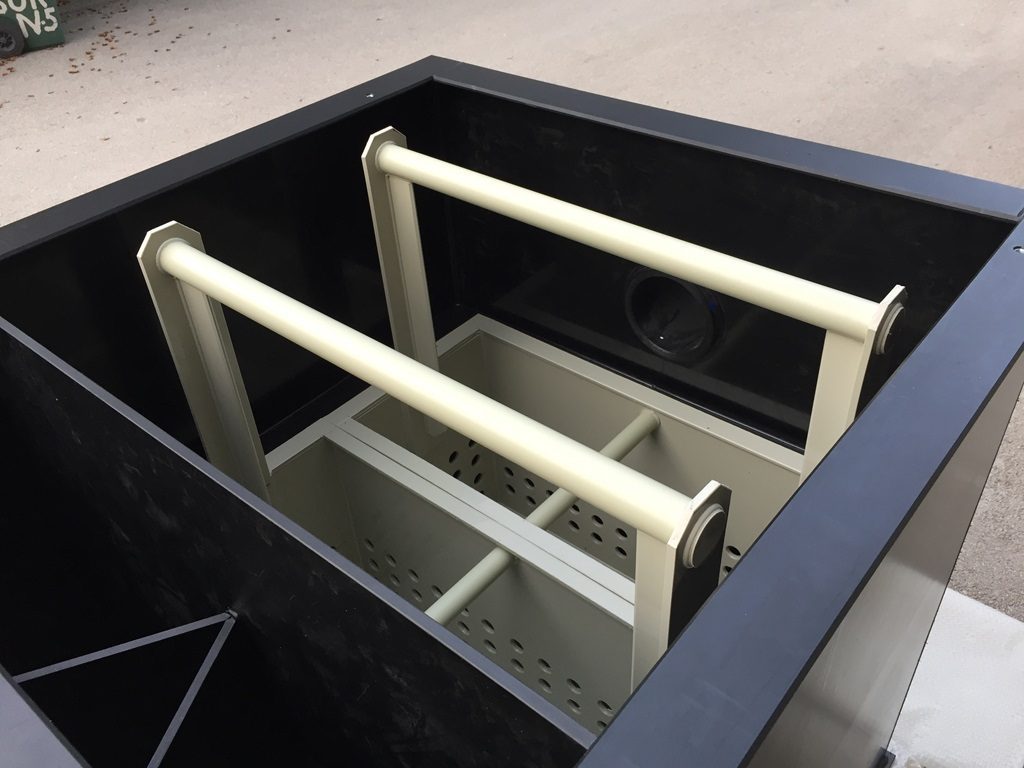
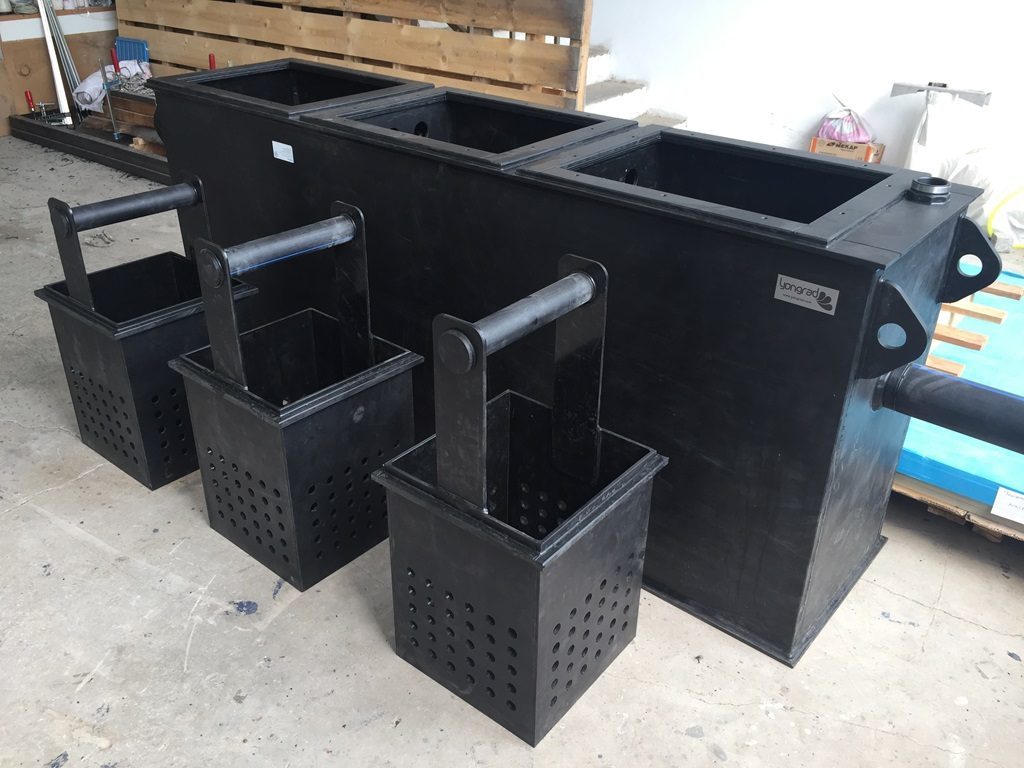
Bespoke process reactors built for heavy industrial conditions, where the media are anything but standard: hot chemicals, solvents or very viscous machine oils.
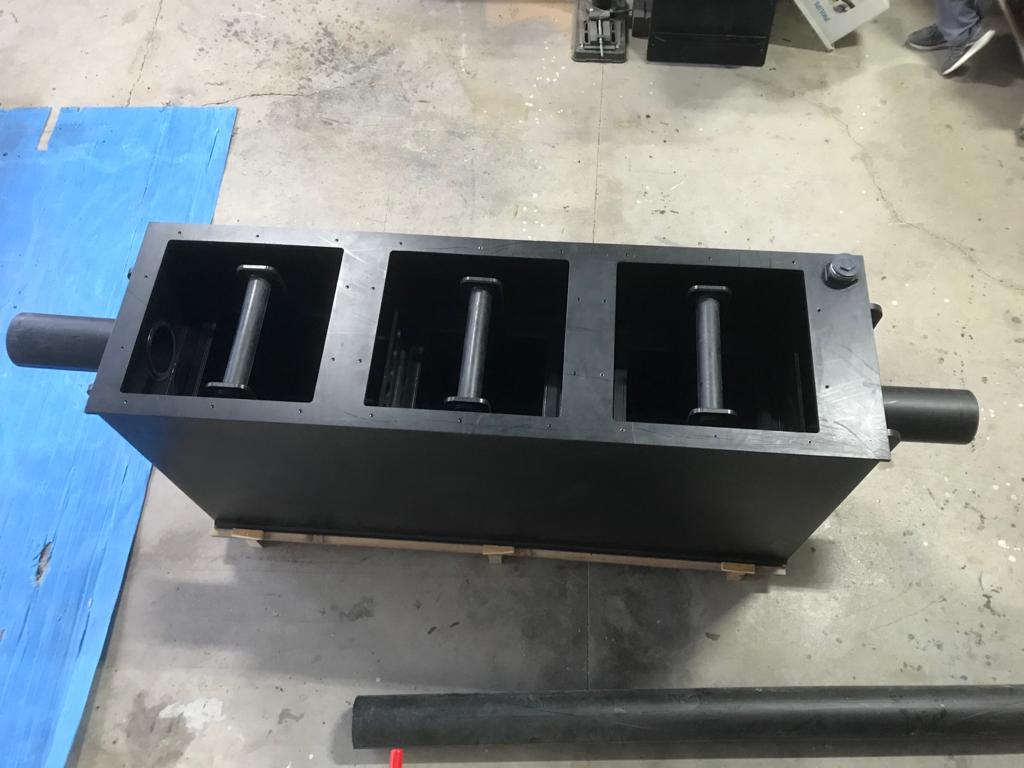
- System Architecture
-
- A body in specially formulated PP-H (homopolymer polypropylene) with continuous resistance to 90 °C.
- Optional surface skimmer and heating elements to break up the solidified layer of heavy grease on the surface.
- Full automation compatibility through the intelligent interface level sensors of the Labkotec idOIL range.
- Industry Applications
-
- Recovering cooling oils in iron, steel and rolling mills.
- Engine manufacture and parts degreasing lines in the automotive industry.
Instead of standard PE we use PP-H or PVDF, whose heat distortion temperature is far higher. The outer wall is also supported by steel frames that accommodate the thermal expansion.
Explosion-proof heating elements are fitted inside to raise the fluidity, and the surface layer is transferred automatically to waste drums by mechanical skimmers.
Every sealing element is specified in Viton (FKM) or PTFE rather than standard EPDM, giving absolute resistance to solvents, acids and alkalis.