



Labkotec Sensor Integration.
A sensor ecosystem that turns thermoplastic systems into autonomous, Industry 4.0-ready units with no blind spots.
Official Labkotec Solutions Partner: the sensor ecosystem that gives thermoplastic systems their intelligence.
To give its advanced thermoplastic systems intelligence, Yongrad acts as an official Solutions Partner of Labkotec, the Finnish leader in alarm and automation technology. Every separation and wastewater tank we build is fully integrated with Labkotec's explosion-proof certified sensor ecosystem and becomes an autonomous, Industry 4.0-ready unit with no blind spots.
Oil and Grease Alarms ATEX-certified intelligent interface monitoring
ATEX-certified intelligent interface monitoring systems that prevent environmental incidents by stopping grease separators and oil-water separators from exceeding their capacity.
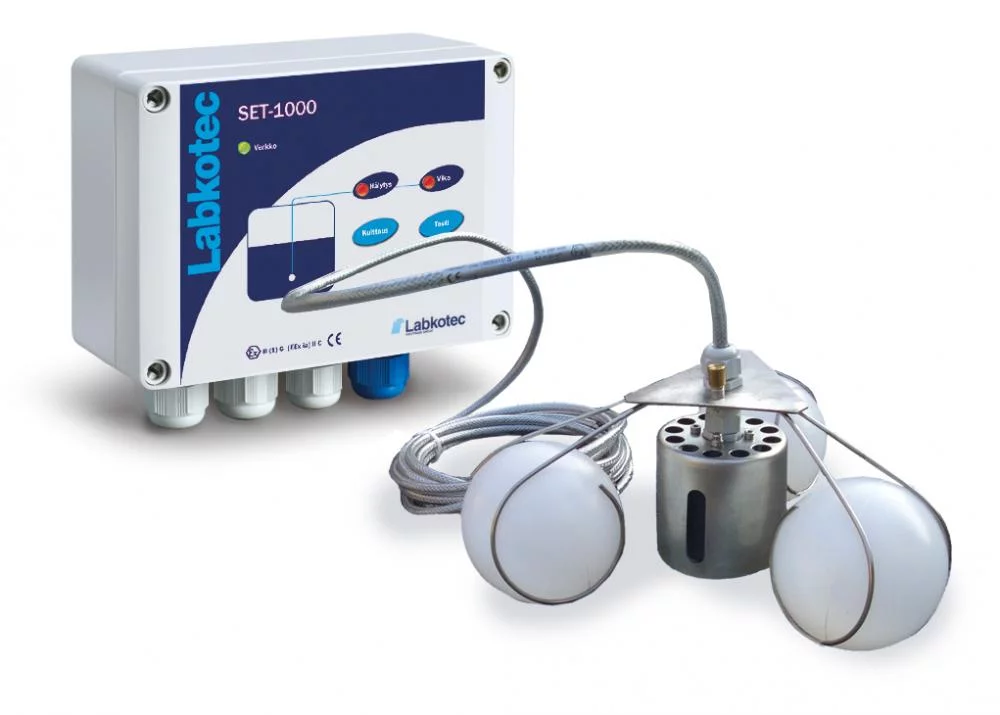


- System Components
-
- idOIL series (idOIL-20 / idOIL-30): Advanced control units with multiple sensor inputs that read the thickness of the oil layer from the difference in dielectric constant.
- OMS-1 and GA-1/GA-2 (grease alarm): Sensor networks that measure the build-up of organic grease in commercial kitchens and interceptors in real time, and put emptying schedules on a digital footing.
- Real-time SMS and data transfer to the LabkoNet cloud through a GSM/GPRS modem.
- Industry Applications
-
- Overflow alarms at fuel loading facilities and on car park bypass lines.
- Predictive maintenance for the underground grease separators of hospitals and large shopping centres.
Labkotec probes are housed in fully enclosed polymer and stainless steel bodies against chemical attack, and hold their calibration even through extreme pH shocks.
Through the volt-free relay outputs on the devices — the idOIL-30, for instance — or over Modbus RTU, they connect directly to the plant PLC, by cable or wirelessly.
Level Sensors Millimetre-accurate level monitoring, SET series
These monitoring systems read the liquid volume in reactors, tanks and lift-equipped wet benches to millimetre accuracy, and handle overflow, dry running and chemical depletion autonomously.
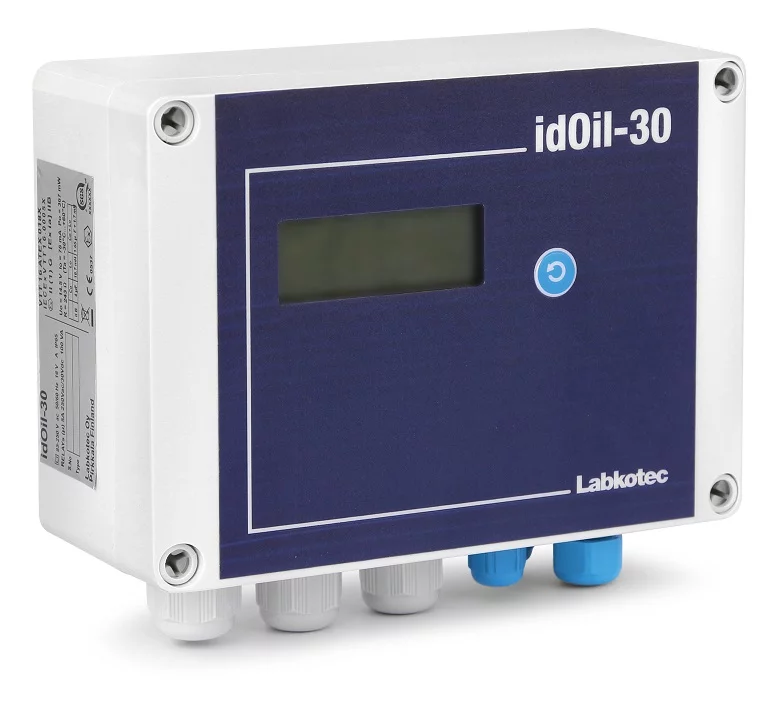


- System Components
-
- SET-1000 and SET-2000 controllers: Central decision units processing the signals from ultrasonic, capacitive or hydrostatic probes such as the SET/V and SET/S2.
- Dual-channel probe integration reading the sludge level and the high water level separately.
- A fail-safe electronic relay architecture.
- Industry Applications
-
- Start and stop interlocking of the discharge pumps on automatic separators.
- Leak and fill warnings in the spill trays of chemical storage cabinets.
The probe works either by ultrasonic attenuation or by optical turbidity. When the solids density in the water reaches the set threshold, the signal transmission changes and the alarm is triggered.
The SET controllers recognise a break or short in the sensor line immediately as a cable fault, take the system to its safe state with the pumps stopped, and warn the operator.
Leak Sensors Dry-area leakage monitoring
Protective systems that detect the smallest escape of liquid before it can become an incident — in double-wall thermoplastic tanks, in the drip pans of cleanroom equipment and in underground pipe galleries. Yongrad's process assurance is combined with Labkotec's dry area leak monitoring portfolio, so a leak of chemical, water or hydrocarbon reaches the SCADA network within milliseconds.
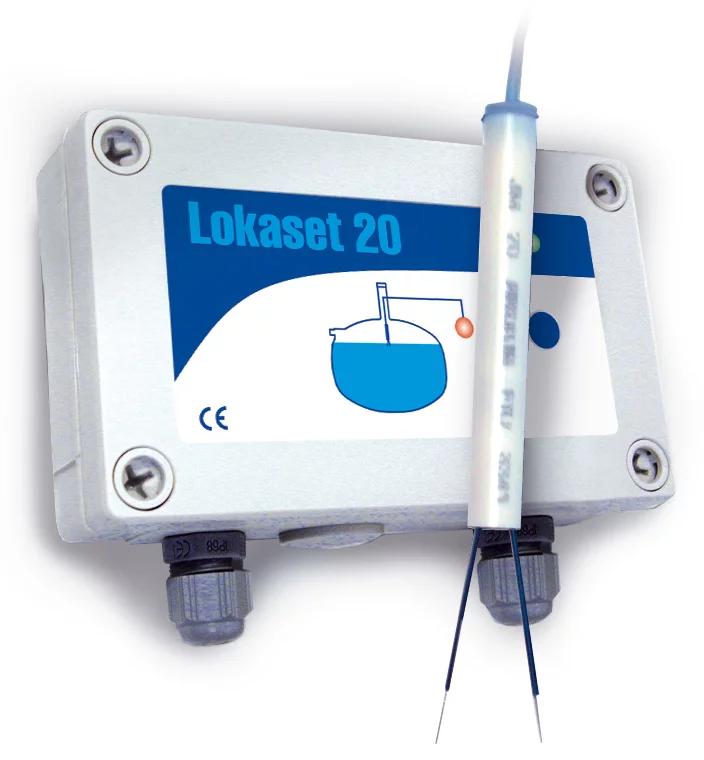

- System Components
-
- SET-1000 controller: A single-channel central leak controller with fail-safe relay outputs, compatible with explosion-proof probes.
- SET/OS2 optical leak sensor: An optical detector whose prismatic tip measures the refractive index in air and in liquid, and so detects instantly even the smallest clear liquid in the interstitial space of a double-wall tank or in a dry sump.
- SET/V capacitive sensor: A rugged capacitive probe that detects aggressive chemical escapes and conductive liquid leaks through the change in dielectric.
- Industry Applications
-
- Absolute process security through SET/V sensors in the collection trays beneath the acid baths of wet benches in semiconductor plants.
- SET/OS2 integration for dry area leak monitoring in the interstitial space of advanced double-wall chemical storage tanks.
No. The prism responds only when the tip is fully immersed in a body of liquid and the refractive index changes. A thin film of condensation on the surface cannot trigger that, so false alarms are physically ruled out.
Yes. The volt-free relay outputs can be wired as an interlock directly onto the main chemical supply valves — solenoid or motorised — or onto the pumps. The moment the sensor detects a leak, the source is physically cut off.
No. Because the devices are fail-safe, the controller detects a sensor failure or a broken cable directly. It treats that condition as though a leak were present, takes the system to its safe state and raises a fault signal.
Ice Detectors Climate defence units based on the LID-330
These climate defence units detect aerodynamic or hydro-mechanical icing on the surfaces of critical outdoor structures — car park bypass systems, cooling towers, wind turbines — in real time and switch the heating on.



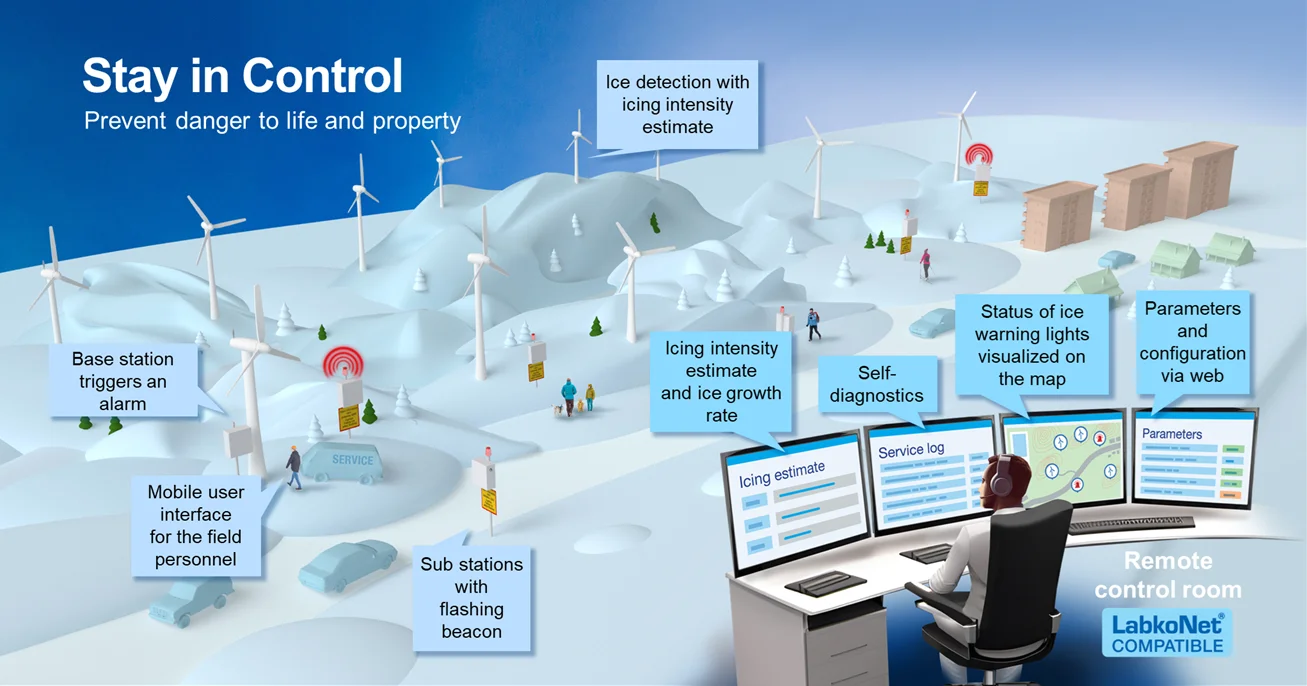
- System Components
-
- LID-330 ice detector: An ultrasonic sensor head that analyses the finest shifts in the resonant frequency of the surface and distinguishes ice from mere water or snow.
- A built-in de-icing heating element of its own.
- Relays that bring the trace heating into service automatically.
- Industry Applications
-
- Preventing the surface skimmers of open API separators freezing in cold climates such as northern Europe.
- Preserving the hydraulic function of valves and weirs on outdoor bypass separators.
The sensor surface vibrates at a set ultrasonic frequency. Water does not damp that vibration, but a mass passing from liquid to solid shifts the resonant frequency directly. The system reads that shift and raises the alarm.
On detecting ice, it first pulls in the relay and starts the trace heating. It then runs its own heater to clear itself and measures again. If the cold and damp persist it keeps the heating on; once the danger has passed it switches off automatically and saves energy.