



Gas Scrubbers and Wet Cleaning Systems.
Neutralising corrosive emissions at molecular level, for lasting clean air.
Gas cleaning is not filtration — it is advanced fluid dynamics and polymer engineering.
In modern industry, continuity of production is bound directly to the safety of the working environment and to environmental compliance. We treat gas cleaning not as filtration but as advanced fluid dynamics and polymer engineering, destroying aggressive chemical vapour and toxic emissions at source through managed physical and chemical mass transfer. Against corrosive environments where metal deforms and rots quickly, we isolate your plant from emission risk with scrubber towers built entirely from thermoplastics — polypropylene (PP), polyethylene (HDPE) and PVDF — welded to the German DVS extrusion standards.
Packed Bed Scrubbers Counter-current mass transfer towers
Vertical towers with the largest possible mass transfer area, in which acidic or alkaline pollutants in the gas meet the neutralising liquid trickling over polymer packing inside the reactor. Dirty gas rising from below and liquid sprayed from above meet in counter-current; the chemical wash takes place, the emissions are removed with high efficiency and only clean air is released.

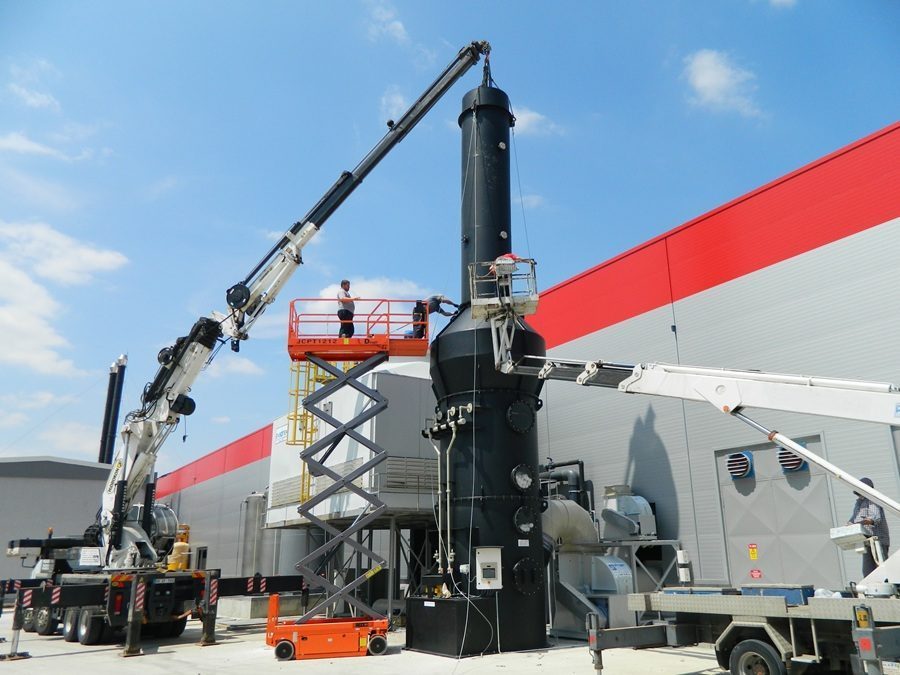
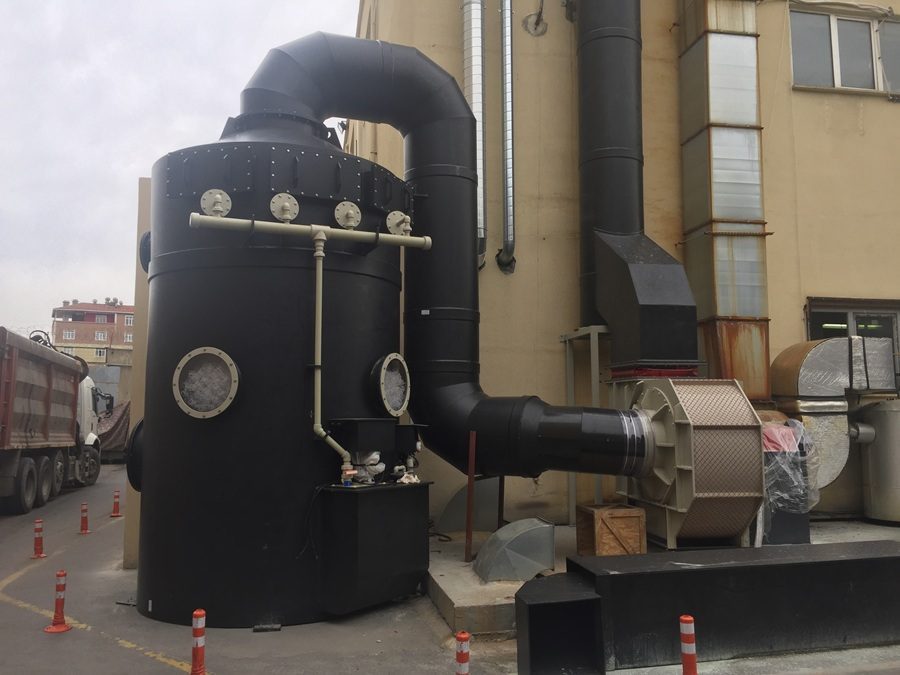
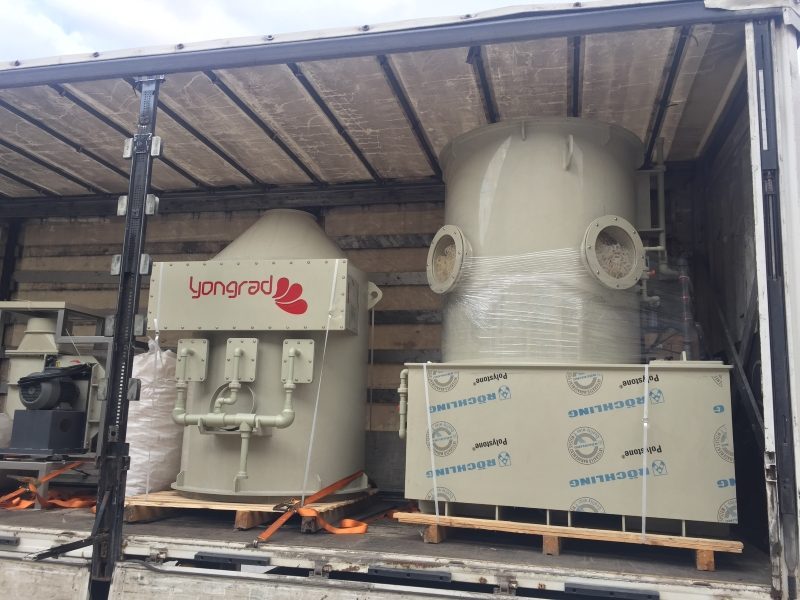
- System Components
-
- High-surface-area polymer packings: Pressure- and acid-resistant internals of special aerodynamic form — Pall rings, Raschig rings — that maximise contact between gas and liquid.
- Non-clogging distribution nozzles: Spray heads resistant to particle build-up that distribute the washing liquid perfectly evenly, in an umbrella pattern, over the packed bed.
- Mist eliminator module: Integrated eliminator grids at the tower outlet that physically capture the microscopic chemical droplets trying to escape with the air stream.
- Global Industry Applications
-
- Surface finishing and plating: Neutralising the concentrated hydrochloric and sulphuric acid vapour drawn continuously from pickling, anodising, hard chrome and zinc plating baths.
- Chemicals and petrochemicals: Cleaning the toxic gases from feedstock reactors and the vent emissions from storage tanks.
- Wastewater and environmental technology: Removing the strong odours of hydrogen sulphide (H2S) and ammonia given off by biological treatment basins and sludge dewatering units.
The system recirculates the liquid in the base reservoir continuously with corrosion-resistant acid pumps. Integrated pH and ORP sensors detect the moment the liquid reaches saturation and instruct the dosing units to add fresh chemical. The process is autonomous and uninterrupted.
The interior of the tower, where acidic gases react with water, is one of the most destructive corrosion zones there is — even stainless steel erodes quickly. PP and HDPE are completely inert to those reactions, so there is no corrosion risk and the structure stays sound for decades.
On lines carrying only acid or alkali vapour, no. Where the process also contains dust or sticky particles, open-structure packings with a large surface are specified and automated periodic backwash cycles prevent deposits forming.
There is no standard size. From the extraction rate of your fan (m³/h), the chemical concentration of the gas and the residence time the reaction needs, our engineers calculate the tower diameter and packed bed height for each project by fluid dynamics.
Cross-Flow Scrubbers Horizontal gas flow for low headroom
Cross-flow systems for buildings without the headroom for a vertical tower, or where roof and ceiling space is constrained. The gas travels horizontally through the reactor while the washing liquid is sprayed downwards in several stages. Modular wash chambers arranged in series allow gases of different chemistry to be treated one after another in a single compact unit — acid wash first, then alkaline, for example.


- System Components
-
- Multi-stage wash chambers: Isolated spray cells in which different washing solutions are used in sequence within the same horizontal housing, without mixing.
- Low-profile frame: A horizontal frame reinforced with thick-walled, thermally stable polymer blocks so the unit fits into unused areas or between floors.
- Front-access service doors: Sealed panels giving access to the packing and nozzles from the side, so maintenance in tight spaces does not require entering the housing.
- Global Industry Applications
-
- Electronics and semiconductors (PCB): Local treatment of the acid fume from PCB manufacture, installed in the ceiling void of cleanroom-standard facilities.
- Compact surface finishing lines: Integrated emission solutions placed along the wall directly behind the tanks in small plating shops with limited floor area.
No. Air velocity and nozzle positions are balanced specifically for the horizontal plane and the contact time between gas and packing is extended. A properly engineered cross-flow system achieves exactly the same emission figures as a vertical tower.
It is ideal where a hall does not have the five or six metres of headroom a vertical tower needs. Its low profile lets it be fitted on a mezzanine, in the roof space or in-line with the existing ductwork, saving valuable floor area.
Yes — that is one of the great advantages of the design. Internal polymer baffles isolate the wash chambers from each other. Washing with acid in the first and alkali in the second lets different reactions be managed safely on a single frame.
Fume Scrubbers Compact local units that treat at source
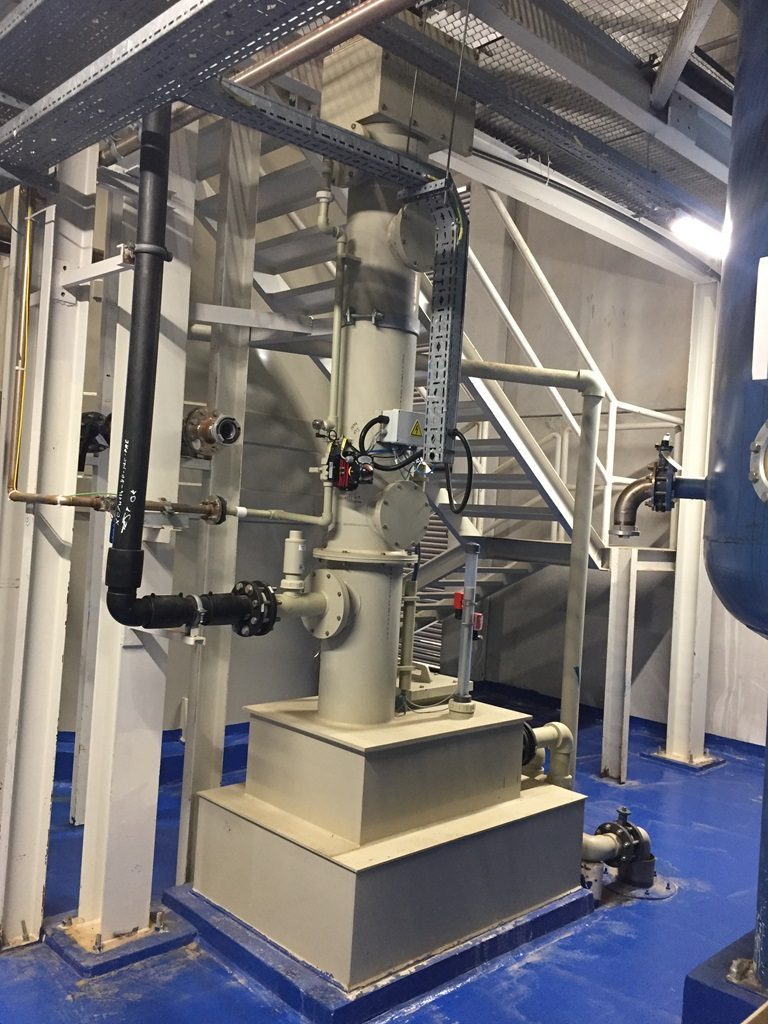
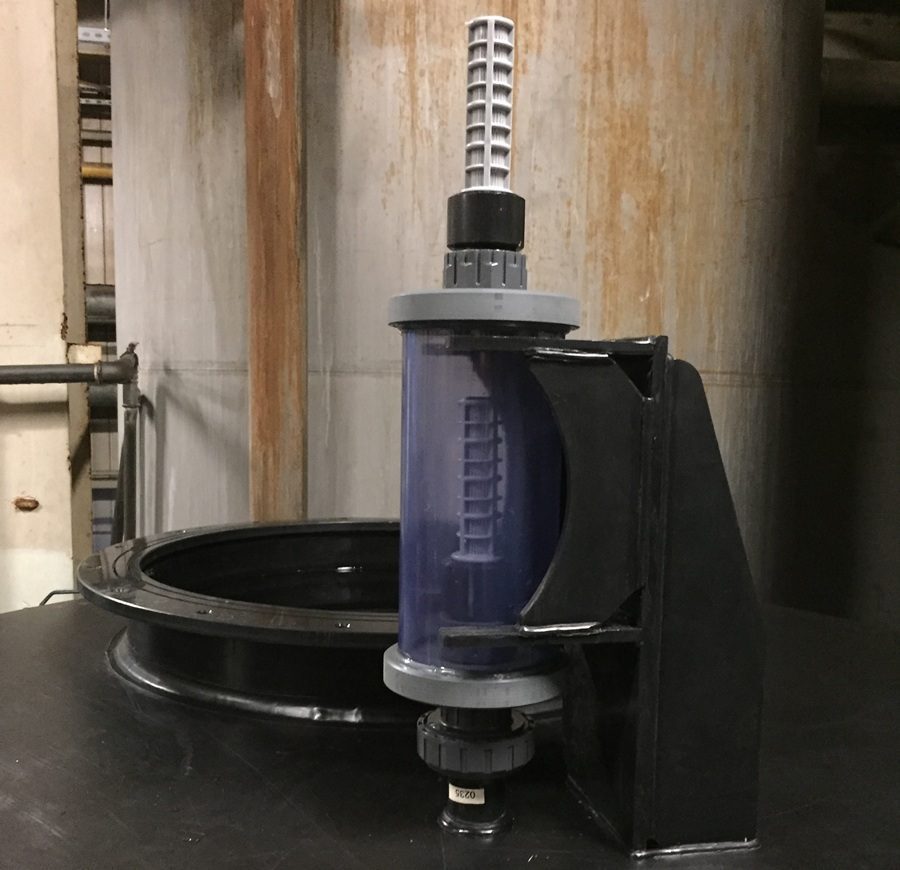
Compact local treatment units placed directly above the point where the chemical vapour is released, working on a treat-at-source principle without loading the central ventilation. Designed for low gas volumes, their modular plug-and-play form lets them be connected straight to laboratory fume hoods, small dip tanks or dosing points.
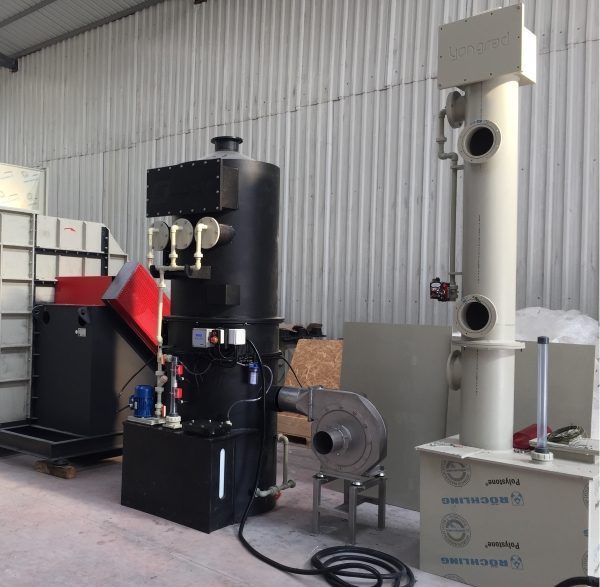

- System Components
-
- Integrated extraction fans: Low-energy local exhaust fans with corrosion-resistant polypropylene impellers, built into the housing.
- Circulation reservoir: A compact liquid volume in the base of the unit that holds its own washing water without needing an external tank.
- Acoustic insulation module: A housing design that damps motor vibration and intake noise, for working areas close to laboratories and offices.
- Global Industry Applications
-
- Industrial laboratories and R&D: Capturing and treating the harmful fume generated in fume hoods where aggressive reagents are tested, before it spreads into the room.
- Jewellery and precious metal working: Immediate neutralisation of the dense nitrous gases from gold and silver refining, directly over the baths.
Because the reservoir is smaller than a vertical tower's, the liquid saturates faster, depending on how concentrated the vapour is. Our sensors warn when a change is due; draining and refilling take seconds through compact valves.
Yes. Its modular plug-and-play construction connects directly to standard PP/PVC ductwork through flanges. No additional building work is needed.
The plastic exhaust fans are selected on acoustic grounds. Intake noise and motor vibration are held well below the decibel limits set by health and safety standards, giving a quiet working environment.
Venturi Scrubbers Kinetic reactors for dust and sticky particles
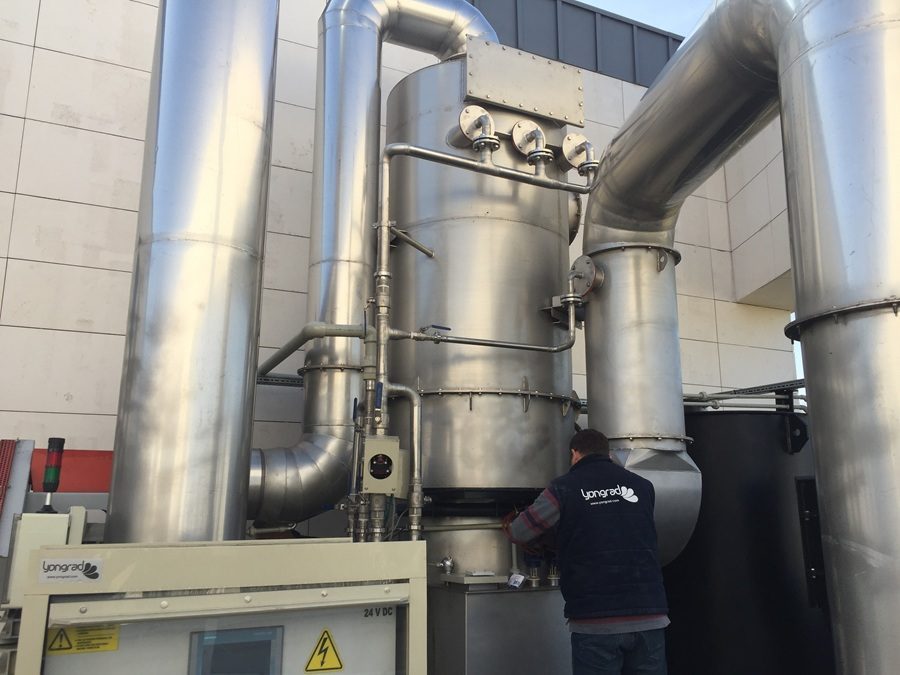
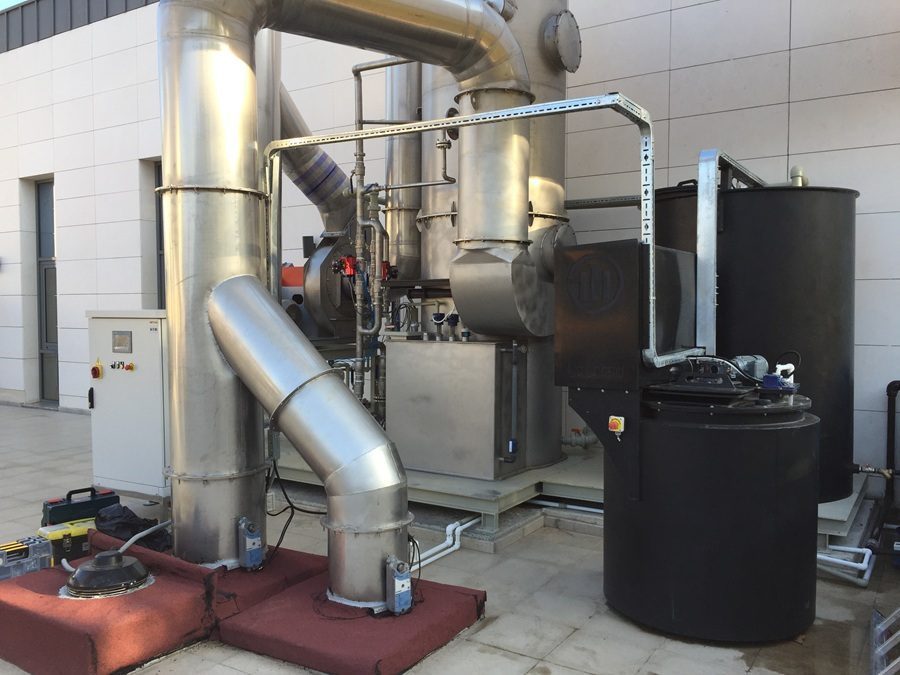
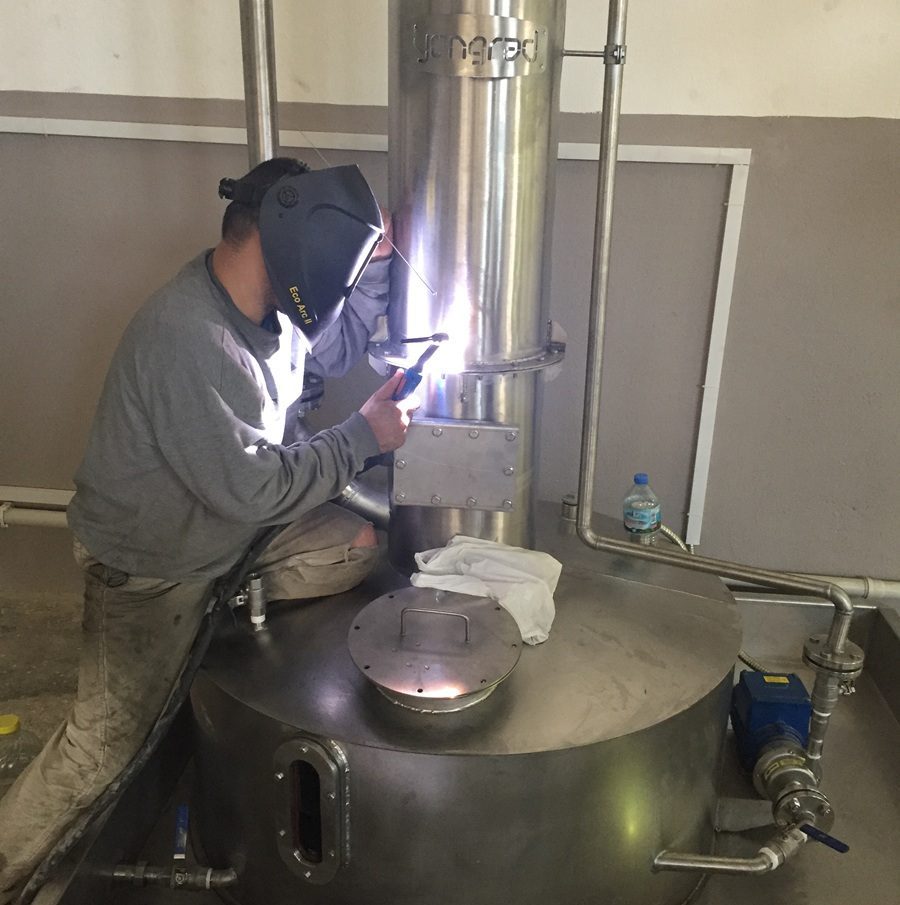
Kinetic reactors developed for the hardest processes, where dust, sticky particles and corrosive gas occur together and a conventional packed tower would block within hours. The principle rests entirely on accelerating the gas: passing through a converging venturi throat, the dirty gas reaches an extraordinary velocity. The washing liquid injected into that throat is torn apart by the gas — atomised — into microscopic droplets, which collide with even the finest particles and knock them physically out of the stream.

- System Components
-
- Adjustable venturi throat: An aerodynamic throat whose opening can be narrowed or widened mechanically or pneumatically to follow flow variations and optimise pressure drop.
- Cyclonic separator body: The main vertical reactor in which the fast gas-water-particle mixture leaving the throat is spun by centrifugal force and the liquid and solid phases are separated from the air.
- Wear-armoured internal surfaces: Ultra-high molecular weight polyethylene (UHMWPE) or extra-thick PP to withstand the abrasive effect of fast-moving dust.
- Global Industry Applications
-
- Recycling and smelting furnaces: Capturing the dense soot, dust and acidic combustion gases from metal melting in a single system at once.
- Industrial dryers: Knocking down the sticky particles and vapours from thermal drying ovens before they reach the atmosphere.
It cannot block. With no packing inside, it cleans continuously in hard processes full of heavily settling particles, sticky vapour and dense dust — drying ovens or melting crucibles, for instance. A packed tower would clog and stop within hours under the same conditions.
In the converging throat the gas and particle velocity is at its highest, so an abrasive effect does occur there. To prevent that wear, the throat is built not in standard PP but in an extra-thick, highly wear-resistant polymer or UHMWPE.
Yes — forcing the gas through a narrow throat inevitably costs kinetic pressure (ΔP). It is compensated completely by sizing the fan for that high static pressure, typically a heavy-duty plastic fan with a specific blade angle.
Dry Scrubbers Waterless filtration units producing no effluent
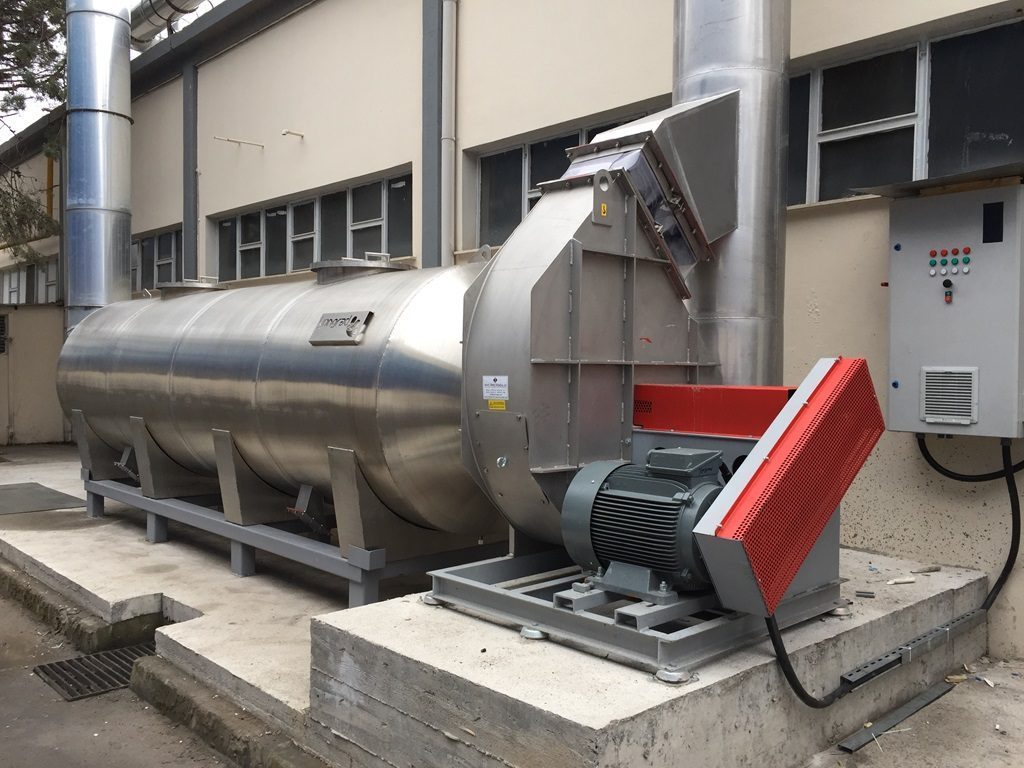
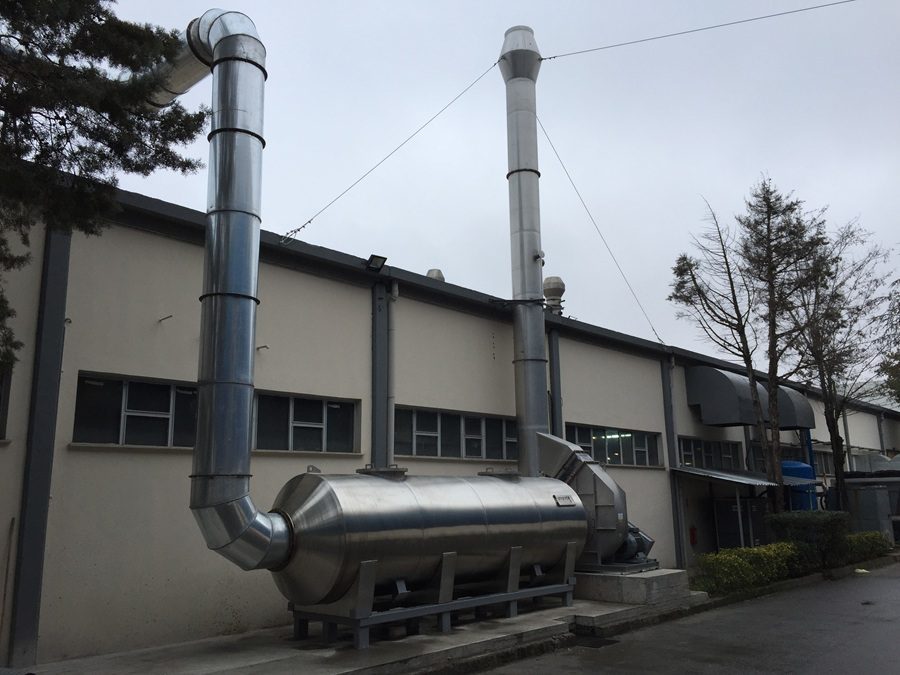
Waterless filtration units for processes where liquid consumption is unwanted, discharge is restricted, or water would disturb the chemistry. Passing through beds of activated carbon, alumina, zeolite or chemically impregnated granules, the pollutants in the gas are bound molecularly by adsorption or chemisorption. No effluent leaves the system at all.


- System Components
-
- Modular media beds: Sealed polymer cassettes in which the granular medium is laid out for maximum surface area and even air passage.
- Quick-change cassette rails: Ergonomic drawer rails that let spent media be withdrawn and replaced within seconds when the filter is exhausted, without stopping the whole system.
- Pre-filtration layer: A washable G4/F7 particle filter that keeps dust from reaching the main granular bed and blocking its pores.
- Global Industry Applications
-
- VOC control: Trapping in the pores of activated carbon the toxic solvent vapours from solvent-based painting, coating and drying lines that may not be released to atmosphere.
- Odour control: Decisive removal of the organic decay odours arising at municipal treatment pumping stations and in the food industry.
Standard activated carbon works well for general VOC removal but is not enough for acidic, alkaline or particular odour molecules. Depending on your process, granular media impregnated with specific chemicals — potassium permanganate, caustic and so on — are used so the target gas is fully bound.
Our engineers calculate an expected media life from the daily emission load of your process. For a firmer check, gas detectors can be fitted at the outlet, which raise an automatic change request through the SCADA the moment breakthrough begins.
No. Thanks to the modular cassette drawers in our housing, the spent cassettes slide out on their rails and new ones go in within seconds, with no lengthy shutdown.
Degasser Towers Systems that strip dissolved gas from liquid
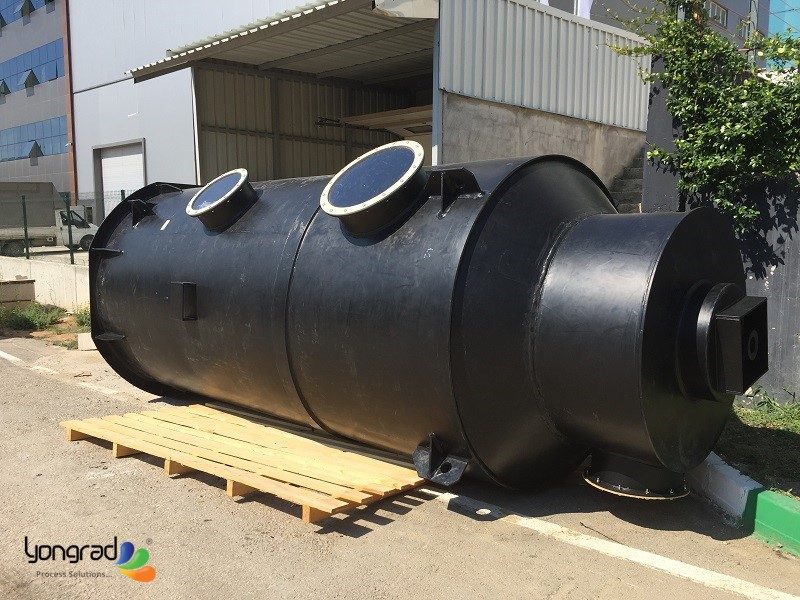
Stripping systems designed not to clean gas with liquid but to drive out the gas dissolved within the liquid. The water trickles down over the packing as a thin film while a strong counter-current of air is blown in from below. That physical action breaks the bonds of the dissolved carbon dioxide (CO2), hydrogen sulphide (H2S) and oxygen, releasing the gas upwards to the atmosphere and discharging the purified water below.

- System Components
-
- Free-fall droplet packing: Polymer rings inside the tower that break the surface tension of the water into a thin film and maximise contact between liquid and air.
- High-volume counter-flow blower: A powerful centrifugal fan at the base of the tower providing the kinetic energy the stripping needs.
- Hygienic polymer shell: A PP or PE reactor that prevents bacterial growth at the water-air interface — where even stainless steel oxidises in time — and cannot rust, particularly for water treatment plants.
- Global Industry Applications
-
- Industrial water conditioning: Removing dissolved carbon dioxide from well water ahead of reverse osmosis, extending the life of the membranes and resins.
- Power generation and boiler feedwater: Stripping the oxygen from industrial boiler feedwater and stopping corrosion inside the boiler decisively.
The inside of a degasser is one of the most corrosive environments there is: oxygen, water and aggressive gases circulating constantly. Lined steel degassers lose their coating over time and rot quickly, while our one-piece PP or HDPE towers are closed to corrosion entirely and need neither paint nor maintenance.
Too little counter-flow and the dissolved gases will not strip; too much and the tower floods, with the air carrying the water upwards. Fluid dynamics calculations set a blower capacity exactly proportional to the water flow and aerodynamically balanced.
Yes. Thermodynamically, the solubility of a gas falls as the water warms, so it separates more easily. Stripping from warm water therefore succeeds with a much shorter contact time and at higher efficiency.
Your engineering strength in industrial ventilation
In an industry where competition and environmental regulation grow tighter every year, leave nothing to chance. For scrubbers sized to your plant, with the right polymer choice and a sound pressure-drop analysis, talk to our process engineers today.