



Plating Tanks and Process Reactors.
Advanced polymer engineering and faultless construction for aggressive chemicals.
A tank is not a container for liquid — it is a reactor of advanced engineering.
The heart of any surface finishing plant is the tanks in which the chemical reactions take place. We design them not as simple containers but as advanced engineering reactors in which thermal expansion is calculated, aggressive acids and alkalis are contained and the fluid dynamics are optimised. By joining high-density polyethylene (HDPE), polypropylene (PP) and PVDF with internationally recognised extrusion welding technology, we guarantee tightness and performance for decades.
Zinc Plating Tanks Heavy-duty electrolytic reactors
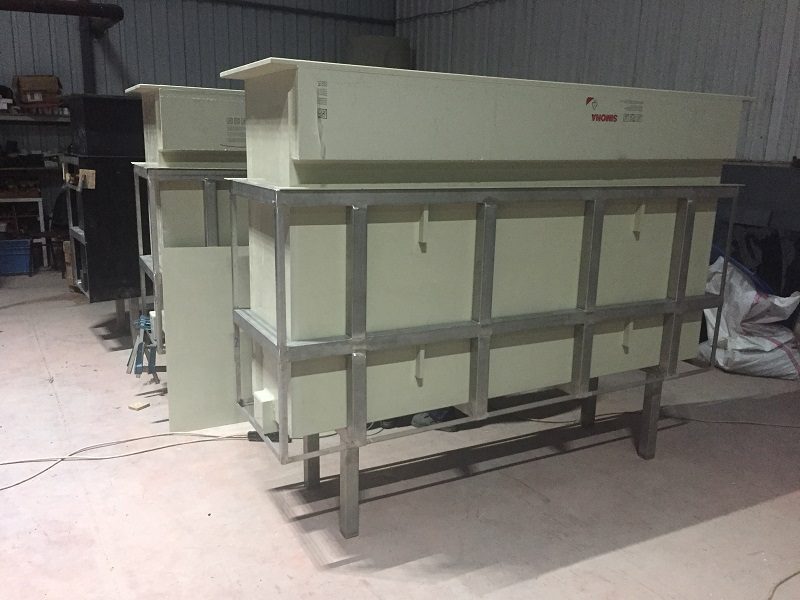
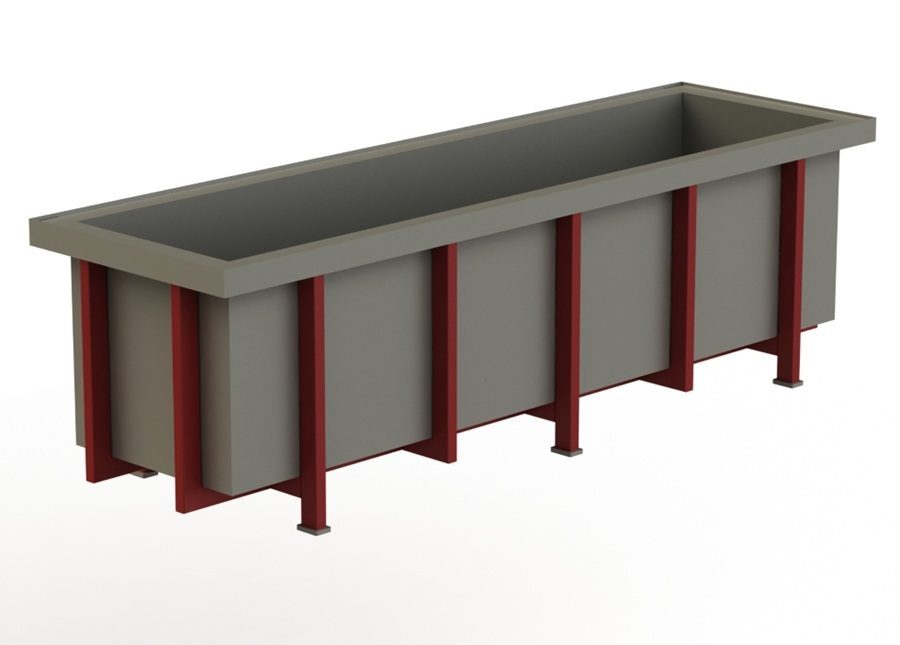
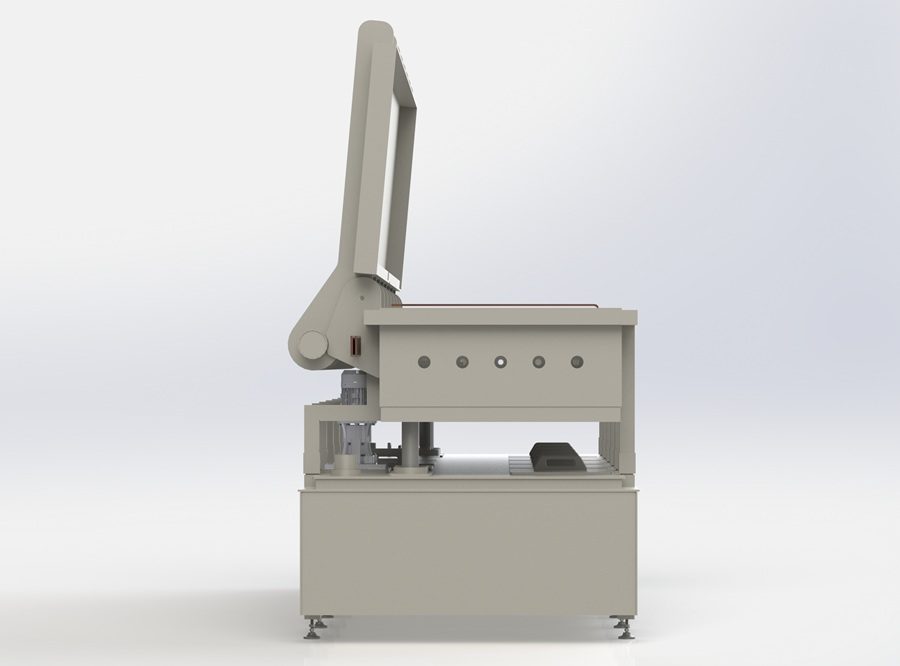
Heavy-duty reactors designed for high production volumes, in which heavy metal ions — zinc, zinc-nickel, copper — are transferred electrolytically onto the part. Against the static and dynamic loads of the tonne-scale rack and barrel mechanisms they carry, they have polymer shells supported by an extra-reinforced steel frame. Even current distribution gives micron-accurate cathodic protection at every point of the workpiece.

- System Components
-
- Dynamic load barriers: Internal impact-absorbing plates that prevent heavy metal parts damaging the tank walls during hoist movements and barrel swings.
- Insulated V-saddles and copper bars: Wear-resistant cathode and anode seats that reduce energy loss to nothing at high amperage.
- Even bath circulation: Eductor mixing nozzles that keep the metal ion concentration uniform throughout the bath.
- Global Industry Applications
-
- Automotive and tier suppliers: Alkaline zinc-nickel lines with high corrosion resistance for vehicle chassis and fasteners.
- Building and construction: Surface armouring of structural steel sections, scaffolding systems and anchors.
Thick shock-absorbing polymer baffles welded to the inner walls isolate the main shell completely from mechanical impact.
We calculate the volume displacement and integrate purpose-built overflow weirs and buffer reservoirs.
Hard Chrome Tanks The summit of thermal and chemical resistance
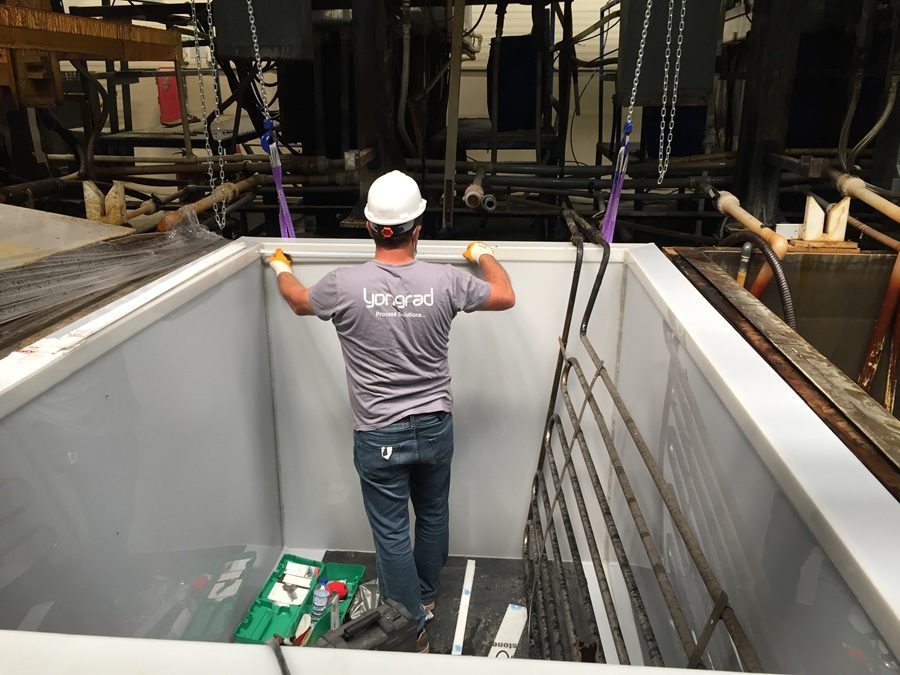
Reactors at the summit of thermal and chemical resistance, designed for processes that allow no wear and demand extreme surface hardness. Handling exceptionally aggressive, heat-generating chemistry such as chromic acid, they also carry advanced emission control that fully contains the dense toxic vapour produced during electrolysis.


- System Components
-
- Ultra-durable inner lining: Lead, titanium or special PVDF linings with maximum resistance to high temperature (above 60 °C) and strongly oxidising acids.
- Thermal stabilisation units: Titanium cooling coils that remove the excess heat of electrolysis instantly and hold bath temperature to ±0.5 °C.
- Advanced extraction ducting: High-volume push-pull collectors set at a specific angle, capturing chromic acid vapour at the liquid surface before it can reach the atmosphere.
- Global Industry Applications
-
- Aerospace: Protective coatings that lower the coefficient of friction on landing gear, hydraulic pistons and turbine shafts.
- Heavy machinery and defence: Maximum wear resistance on weapon barrels, construction machinery cylinders and mining equipment.
Opposing air curtains positioned to the millimetre at the tank rim direct the toxic gases straight to the scrubber towers, so nothing escapes into the operator's breathing zone.
Anodising Tanks Cooled for an exothermic reaction
Molecular modification tanks that grow a controlled oxide layer electrochemically on aluminium and its alloys. Because anodising is an exothermic reaction, they are integrated engineering structures providing powerful cooling and vigorous bath circulation so that micron thickness and colour uniformity stay flawless.


- System Components
-
- High-capacity cooling exchangers: Acid-resistant chiller integrations that absorb the heat of the process quickly and hold the acid bath in its optimum temperature band.
- Air agitation (blower) manifolds: Turbulence pipes that release even air bubbles from the tank floor, preventing local heating of the acid at the part surface and eliminating colour variation.
- Aluminium and titanium bar systems: Corrosion-free bus bars and contact seats designed to carry high current density evenly.
- Global Industry Applications
-
- Architecture and automotive: Aluminium facade profiles, interior decorative trim and roof rails.
- Medical and precision mechanics: Ultra-precise hard anodising and colouring processes for surgical implants and high-technology optical sensor housings.
Colour variation usually comes from local temperature differences within the bath. The blower systems we lay into the tank floor keep the liquid in constant motion and hold the temperature identical at every point.
Pickling Tanks Zero-tolerance containment reactors
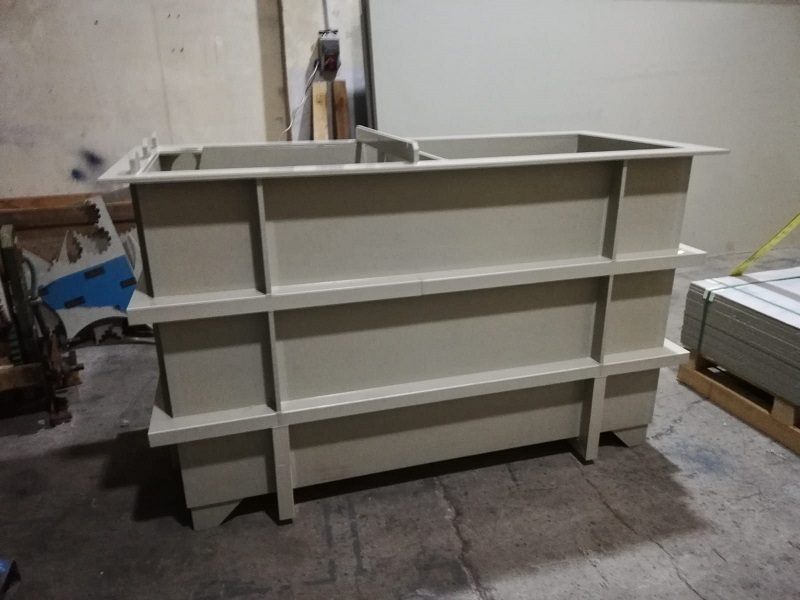
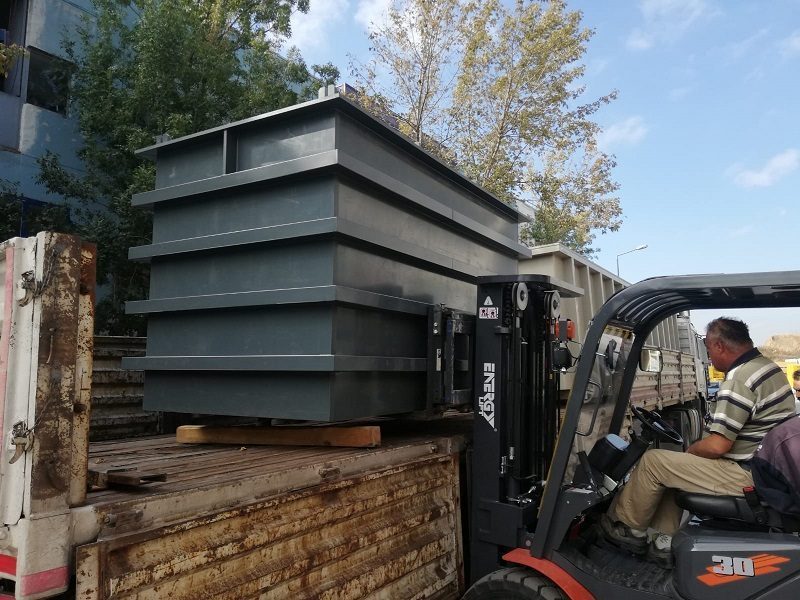
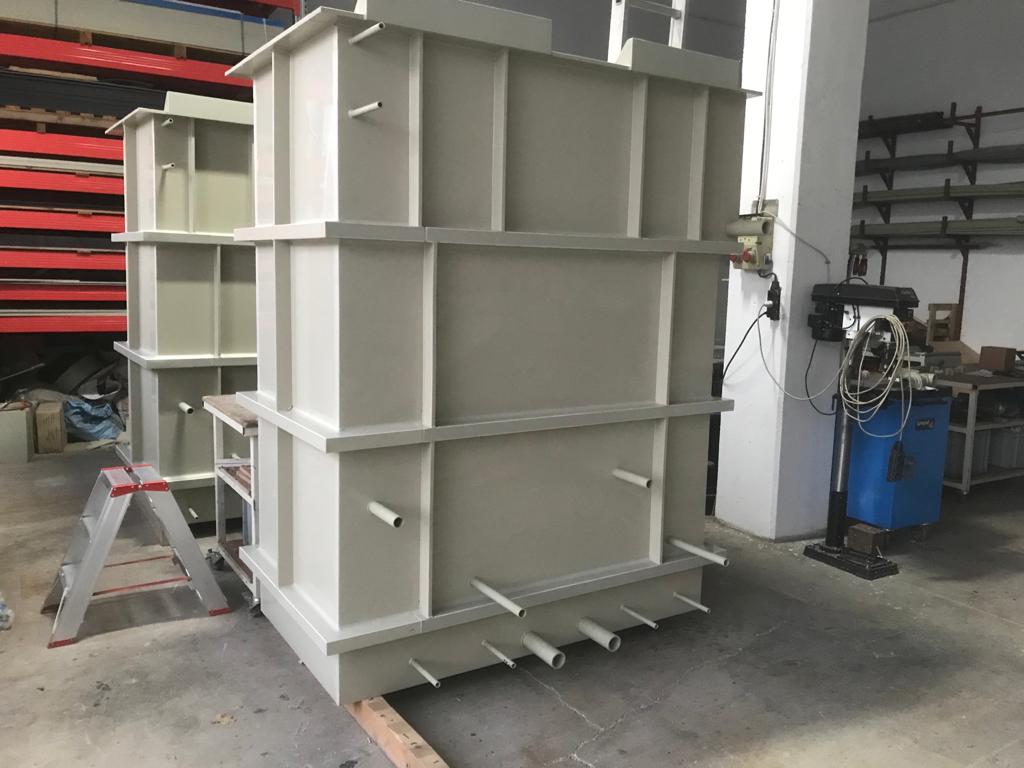
Structural reactors that dissolve rust, weld discolouration, scale and silicate layers from metal surfaces, offering zero-tolerance containment against corrosive acids at maximum concentration — hydrochloric, sulphuric, nitric and hydrofluoric. Thick-walled polymer blocks fitted over a steel frame deliver mechanical strength and chemical isolation at the same time.

- System Components
-
- Deep-penetration extrusion welding: Fabrication to German DVS standards, bonding the material molecularly so the weld is stronger than the parent body and leakage becomes impossible.
- Corrosion-armoured frame: The outer steel structure that keeps the polymer tank from flexing is itself protected against acid vapour with epoxy or glass-fibre coating.
- Acid mist covers and extraction: Fully enclosed or guillotine lid mechanisms over the tank that cut the acid fume escaping into the workshop.
- Global Industry Applications
-
- Steel and tube industry: Removing heavy mill scale from hot-rolled metal before wire drawing and tube manufacture.
- Hot-dip galvanising: The final aggressive cleaning stage for structural steel before it enters the molten zinc bath.
Built from the right material — for concentrated sulphuric acid, HDPE or PP in a specific wall thickness — and to expert calculation, our tanks are engineered to serve for decades without deforming, even under heavy industrial conditions.