



Industrial Storage Tanks.
Advanced thermoplastic engineering — PP, HDPE, PVDF, PVC — that begins where metal dissolves.
Where even stainless steel corrodes: exceptionally long-lived plastic reactors that introduce no metal ion contamination.
In aggressive chemical processes where even stainless steel corrodes within seconds, the era of conventional metals is over. We build our chemical storage tanks from industrial plastics with an absolute, natural immunity to acids and alkalis: PP (polypropylene), HDPE (high-density polyethylene), PVDF and PVC. Combining the flexibility, corrosion resistance and inertness of plastic with finite element analysis, we build exceptionally long-lived plastic reactors that introduce no metal ion contamination, need no maintenance and stay tight for decades.
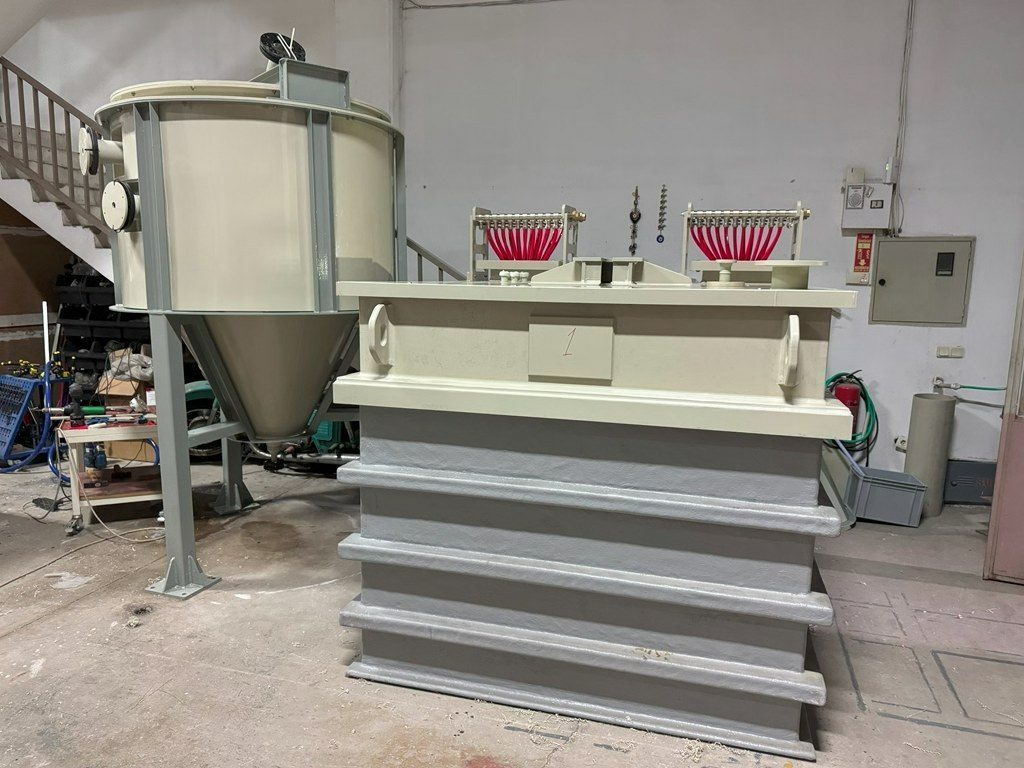
Rectangular Plastic Tanks Square-sided units that maximise volume in a tight layout
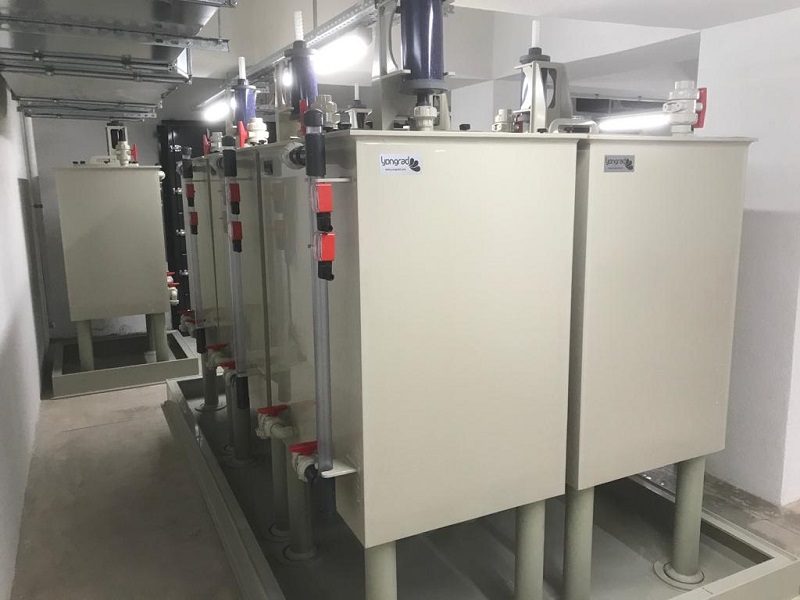
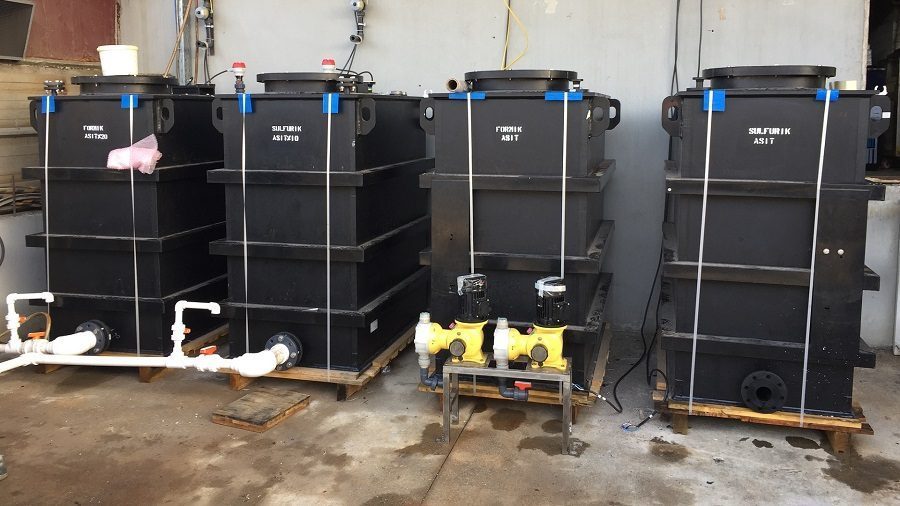
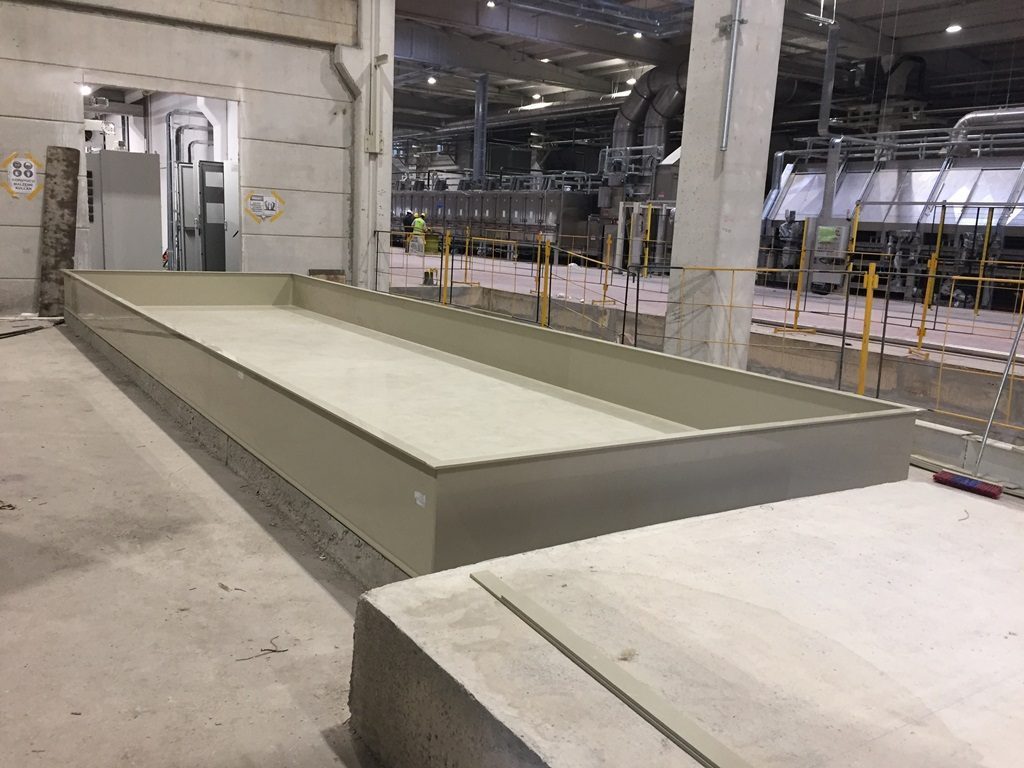
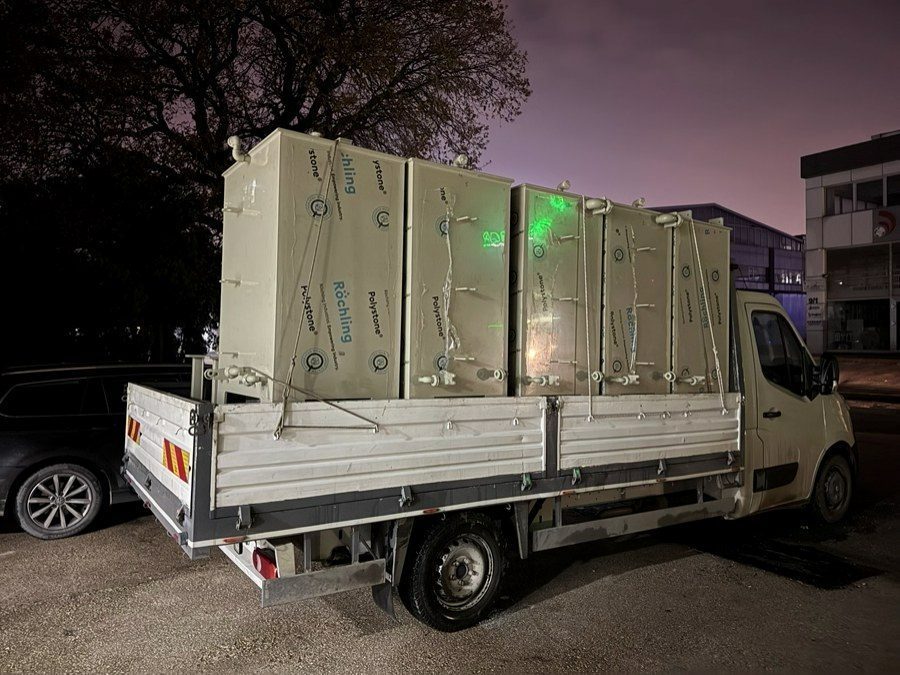
Square-sided thermoplastic units designed specifically to maximise stored volume per square metre in tight, constrained plant layouts. Thick PP or HDPE sheet prevents the bulging that flat plastic surfaces suffer under high hydrostatic pressure. The shell is supported by an external steel frame, itself fully sheathed in plastic or epoxy against chemical vapour. The chemical resistance of the plastic and the mechanical rigidity of the steel are thus combined perfectly in one unit.
- System Components
-
- Thermoplastic welding to DVS standards: The corners are neither bent nor glued but extrusion welded to German DVS standards, bonding the polymer chains molecularly with zero leakage.
- Corrosion-armoured frame (exoskeleton): A stress-bearing skeleton fitted over the PP or HDPE shell, either fully enclosed in plastic sections or armoured with heavy epoxy so acid vapour cannot reach it.
- Internal plastic baffles: Internal walls in the same material (PP/PVC) that damp the sudden impacts of sloshing liquid against the shell.
- Industry applications centred on chemical process
-
- Laboratory and chemical synthesis lines: Intermediate storage for aggressive chemicals (HCl, H2SO4) in enclosed production halls where space is extremely tight and stainless steel cannot be used.
- Modular water treatment (skid systems): Make-up tanks for concentrated acids and alkalis, fitted into the last available millimetres of containerised package plants.
Never. At the design stage the hydrostatic thrust is calculated from the specific gravity of the chemical. Because the spacing of the outer frame and the sheet thickness — say 20 mm or 30 mm PP — are sized to that force, deflection is engineered out.
On a lined metal tank the smallest scratch lets acid reach the steel and rot the tank from within. In our all-PP or all-HDPE tanks the shell itself is acid-resistant, so a scratch carries no corrosion risk at all.
Cylindrical Plastic Tanks Monoblock shells for bulk storage
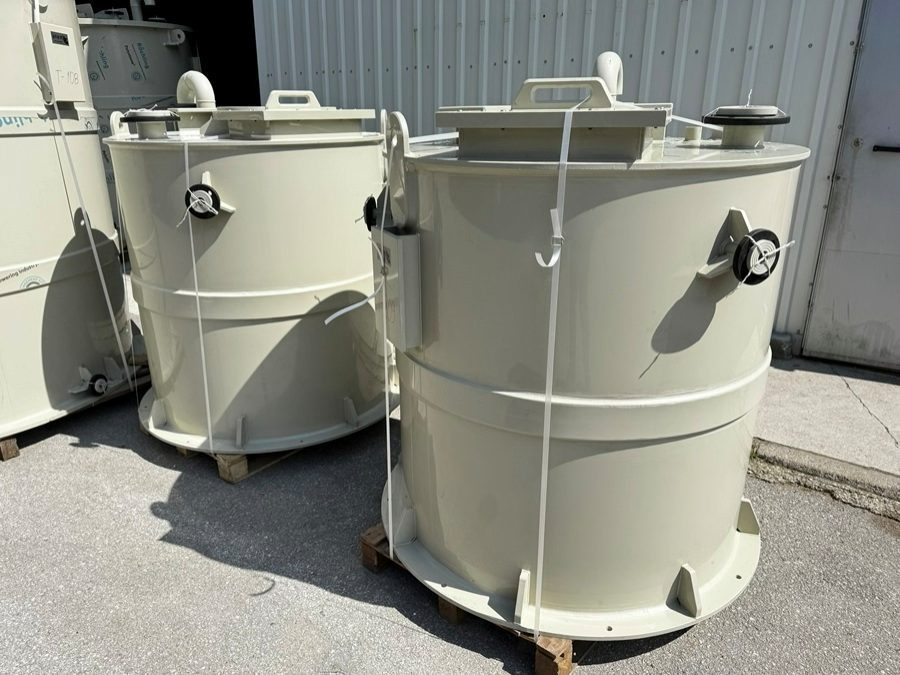
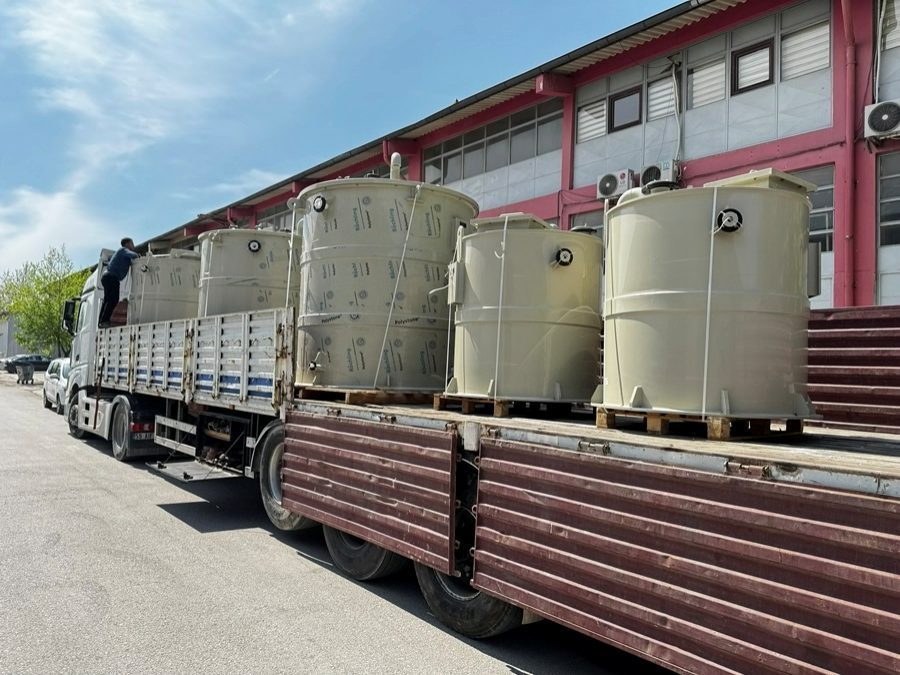
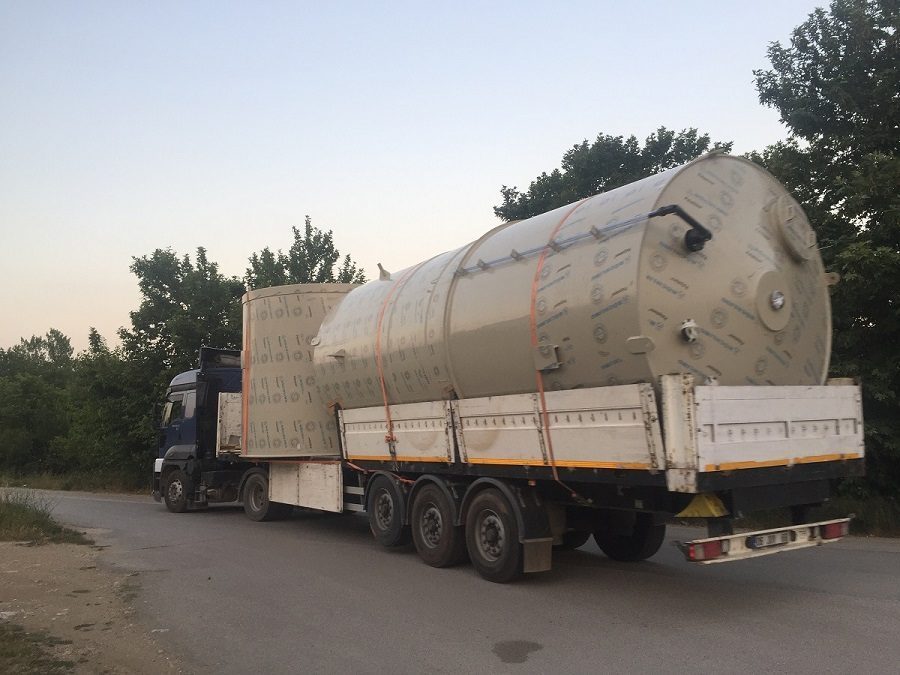
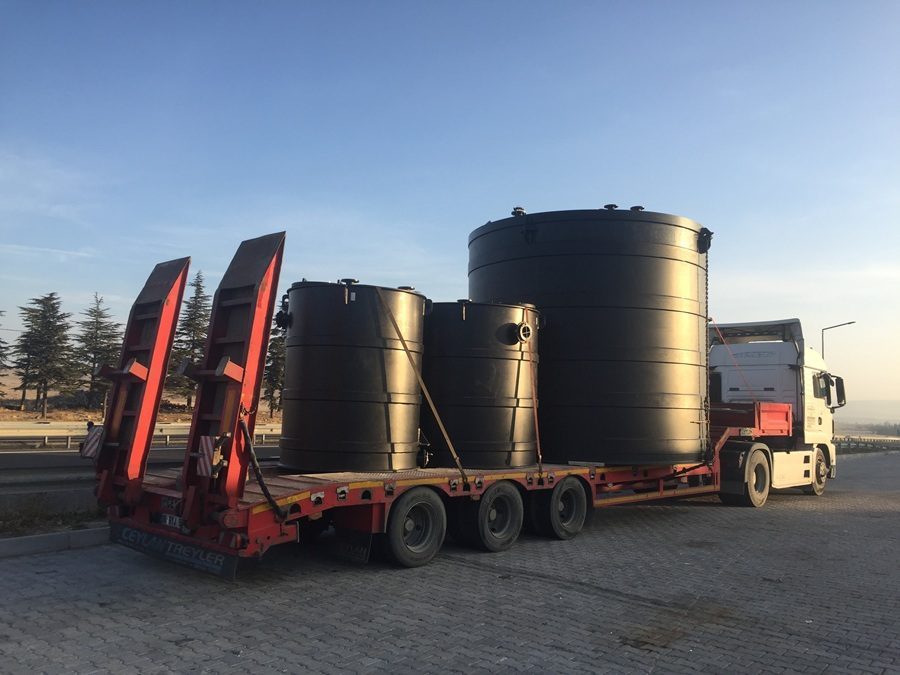
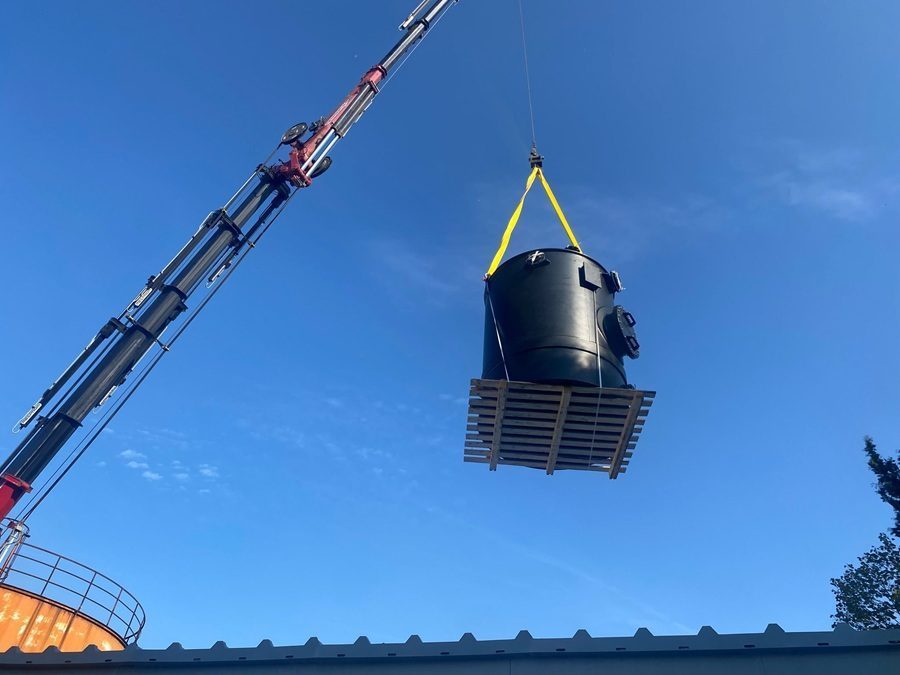
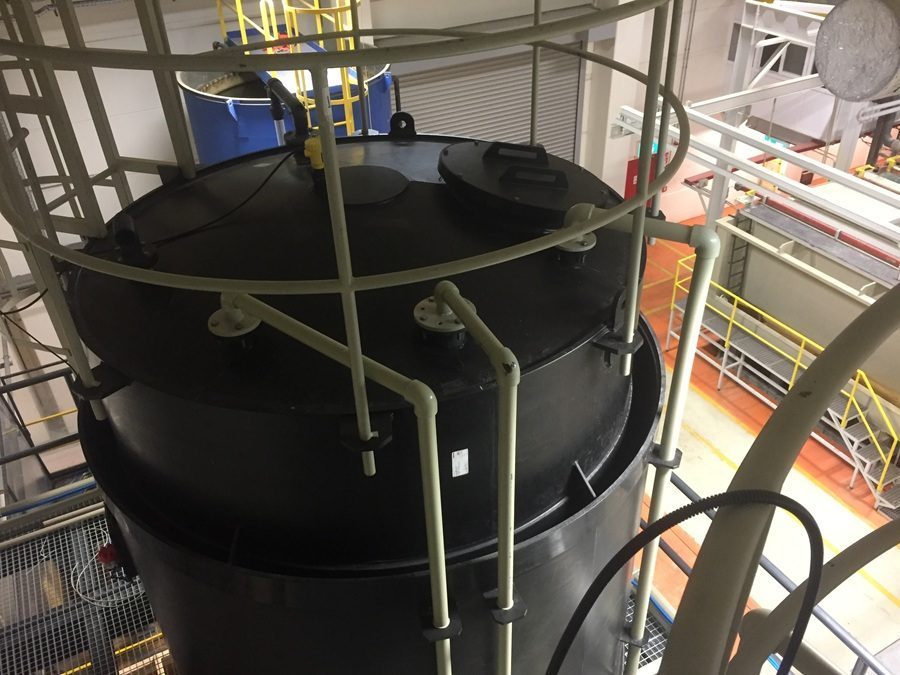
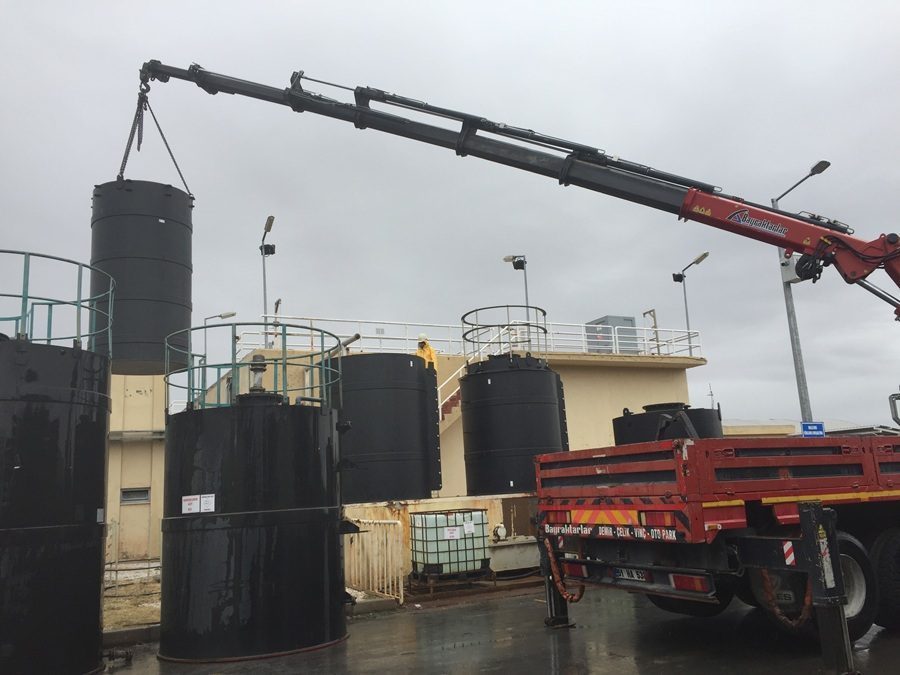
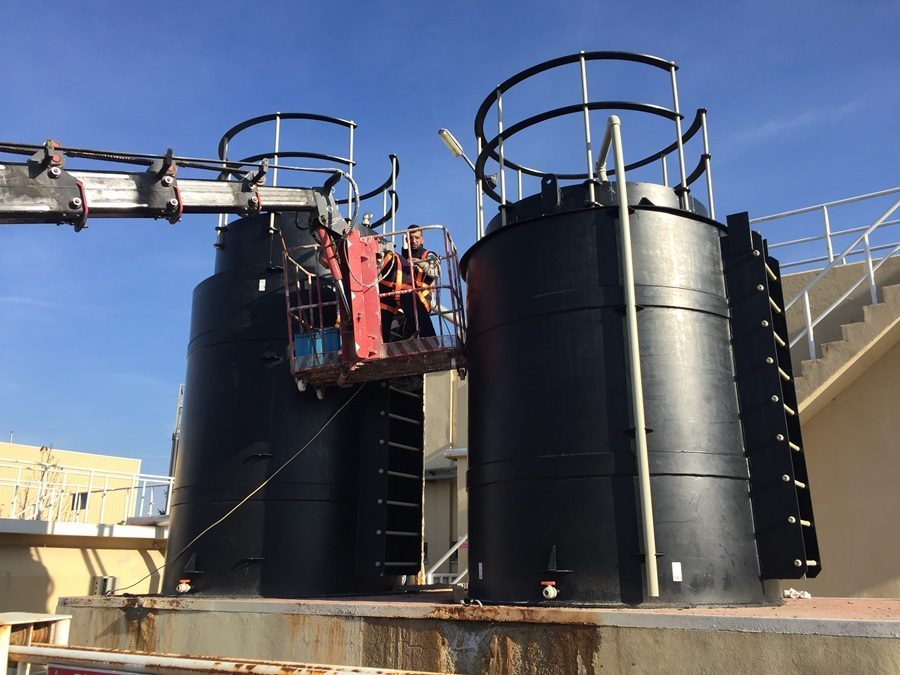
The form engineering accepts as ideal for storing bulk chemicals in large tonnages, because the liquid pressure spreads radially and evenly across the wall. Needing no external frame, these tanks resist pressure through their own internal stresses, thanks to thick PP, HDPE or PVC shells. From outdoor UV exposure to high-temperature processes, they are the largest arteries of your chemical plant.
- System Components
-
- Monoblock plastic shell: A homogeneous cylinder formed in one piece, thickest at the base and tapering towards the top, and closed to stress cracking.
- UV-stable HDPE and heat-resistant PP: UV-stabilised black HDPE for tanks exposed to sunlight outdoors; PPH (homopolymer polypropylene) formulated for hot chemical processes reaching +90 °C.
- Domed or conical plastic roof: Structural top closures welded from the same plastic as the shell, venting reaction gases without pressure build-up.
- Industry applications centred on chemical process
-
- Heavy industrial chemistry (bulk storage): Storing destructive media such as sodium hypochlorite, hydrochloric acid and caustic soda in plastic tank farms of tens of thousands of litres.
- Plating and surface finishing chemicals: Holding the ultra-pure chemicals that feed the plating baths in fluoropolymer (PVDF) or PP cylinders, with no risk of metal contamination.
Unlike commodity plastics, engineering plastics have high thermal resistance. HDPE holds to 60 °C, PP to 90 °C, and premium PVDF tanks work above 120 °C — a performance metals might envy.
Yes. The seismic oscillation and wind overturning moments are calculated, and steel anchor feet are integrated into the skirt of the plastic shell to lock it rigidly to the ground.
Cone-Bottom Plastic Tanks Process units that drain completely, with no residue
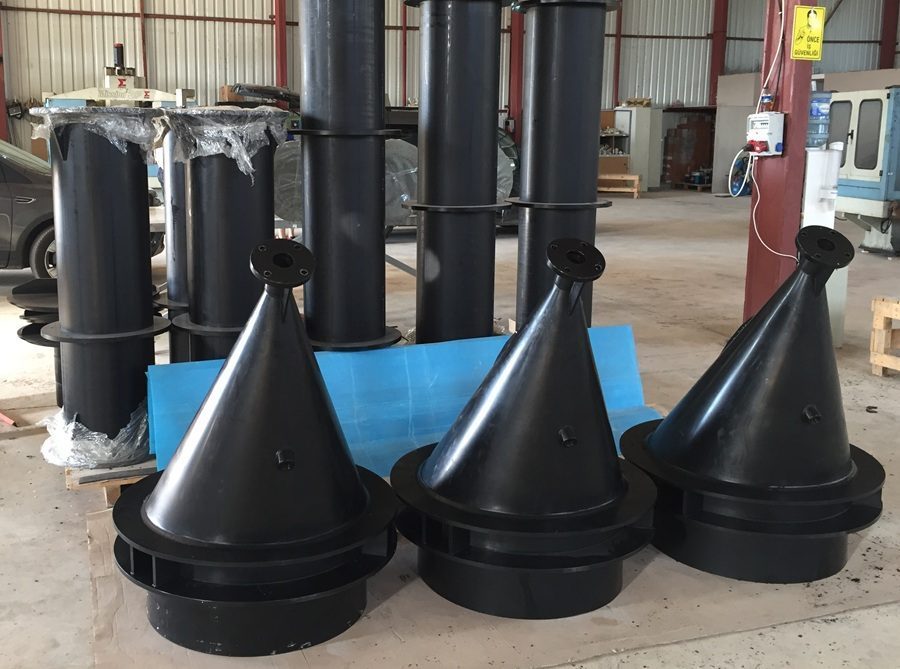
Gravity-assisted process units that prevent sediment settling on the floor and empty completely with no residue. Thanks to the ultra-smooth internal surface of the plastic — particularly PP and PVC — with its low coefficient of friction, sticky sludges, resins and crystallised solids cannot cling to the cone. Wall adhesion and bridging, familiar from metal tanks, disappear entirely.
- System Components
-
- Smooth thermoplastic cone: A smooth discharge cone, thermoformed or extruded at 30°, 45° or 60° depending on the viscosity, down which the medium slides freely.
- Heavy-duty polymer skirt: Support legs in the same plastic as the shell, or on a special epoxy frame, that hold the cone clear of the floor and even out the mechanical stress.
- Plastic anti-vortex breakers: PP/HDPE vanes welded to the floor that stop a vortex forming at the centre during discharge and prevent pump cavitation.
- Industry applications centred on chemical process
-
- Liquid-solid phase separation (settling): In mining chemistry and treatment processes, heavy metal sludge slides easily down the low-friction plastic surface and is directed to the filter press.
- Batch reaction and formulation: Mixer feed tanks that empty completely and rinse quickly, leaving no trace of the previous chemical where recipes change one after another.
Steel tanks have a rough surface; viscous media stick to the metal wall and are hard to clean. Industrial plastics (PP/PVC) have a very low coefficient of friction, so the contents discharge completely without adhering.
Because the entire weight of the liquid rests on the cone, that zone is engineered with a considerably greater wall thickness than the cylinder above it — a stepped thickness — and reinforced further with DVS welds.
Double-Wall Plastic Tanks Tank-in-tank secondary containment
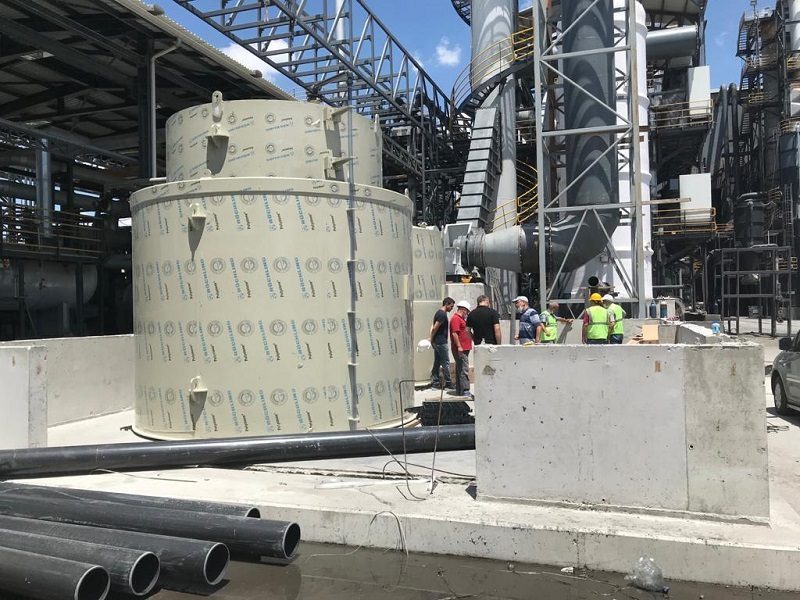
Zero-fault-tolerance safety shields developed for highly toxic and aggressive chemicals whose escape would be a disaster for the environment, human health and groundwater. Around an inner tank built entirely from industrial plastic, a second outer tank is formed, again in plastic (PP or HDPE). Even the finest crack in the inner shell sends the hazardous liquid into the outer plastic wall rather than onto the concrete floor. These autonomous containment systems replace the classic reinforced concrete bund and sit at the top of EPA standards.
- System Components
-
- Fully polymer secondary shell: A corrosion-immune PP or HDPE outer shell designed to hold at least 110 % of the inner tank volume.
- Interstitial leak detectors: Sensor technology that watches the narrow gap between the two plastic walls continuously and sends a digital alarm to the SCADA at the smallest leak.
- Closed-loop top connections: A sealed lid design in which every fill and discharge line is also connected in double containment piping, against any risk of overflow or splashing.
- Industry applications centred on chemical process
-
- Storing ultra-toxic chemicals: Complete containment of hazardous liquids that would dissolve even a concrete floor on escape: cyanide solutions, concentrated sulphuric acid and hydrofluoric acid.
- Confined areas with no room for a bund: A self-contained, legally compliant storage solution where there is simply no space to build a concrete or epoxy-lined bund.
No. The outer wall — the secondary containment — is built from a high-grade thermoplastic with exactly the same chemical resistance as the inner tank (PP, HDPE or PVDF). The escaped liquid waits there, entirely unreactive, to be safely removed.
Concrete bunds must be re-coated with epoxy every year to withstand acid, and they take up a great deal of space. A double-wall plastic tank removes the extra construction cost, eliminates coating maintenance and saves floor area through its compact form.