



Industrial Neutralisation Units.
Advanced balancing technology for corrosive media and industrial effluent.
Balancing systems that bring liquid waste of any scale into the legal discharge range (pH 6.5–8.5).
Industrial plants, large laboratories and major boiler houses produce thousands of litres of acidic or alkaline effluent every day — enough to eat through the infrastructure and damage the environment. Yongrad neutralisation units bring liquid waste of every scale, from condensing boiler discharge to the chemical effluent of a large hospital complex, precisely into the legal range of pH 6.5–8.5. Built from corrosion-immune engineering plastics (PP, HDPE), these systems restore the molecular balance of your effluent across a broad range — from passive gravity-fed limestone beds to fully autonomous SCADA complexes with data reporting.
Neutralisation Tanks Passive balancing units with a limestone bed
Industrial condensing boilers, cascade boiler systems and research laboratories continuously produce acidic effluent at a low, corrosive pH. Discharged straight to the drain, it rots the building's pipework quickly. Designed for exactly these cases, our neutralisation tanks work without electronic dosing pumps or sensors, using calcium carbonate (limestone) beds and a purely natural reaction. As the acidic liquid percolates through the mineral bed it reacts with the limestone, is neutralised naturally and can be discharged without harming your infrastructure.

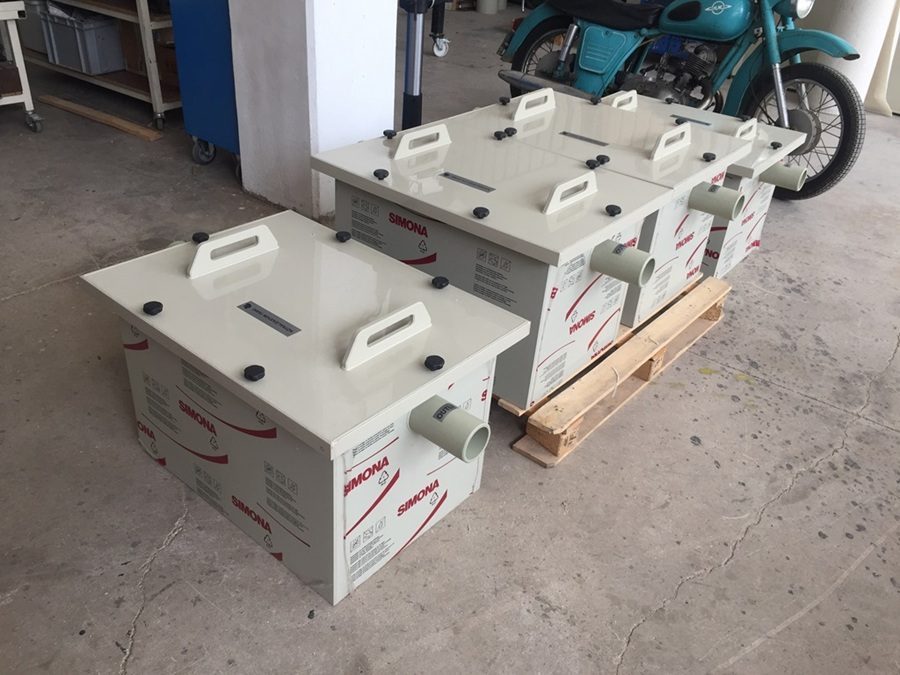

- System Components
-
- Heavy-duty polymer shell (PP/HDPE): A long-life extrusion-welded plastic shell, fully resistant to the corrosive action of acidic effluent.
- Calcium carbonate (CaCO3) bed: High-purity limestone filter modules in an optimal grain size, sacrificing themselves as they consume the acid.
- Sediment trap: Easily cleaned collection chambers in the base that stop the sediment from the reaction blocking the drain.
- Industry Applications
-
- Energy and heating plants: Treating the acidic condensate from industrial steam boilers and commercial cascade boiler systems.
- University and hospital laboratories: Local balancing of laboratory waste poured down the sinks — small in volume but variable in acidity.
No. Our limestone-bed neutralisation tanks work by gravity flow and natural chemical reaction. With no electricity, sensors or moving parts, they are fit-and-forget systems.
Depending on the strength of the effluent, the limestone dissolves and is used up over time. Topping up with fresh calcium carbonate granules through the lid every 6 to 12 months extends the system's life indefinitely.
pH Adjustment Systems Sensor-controlled active intervention lines
Active intervention systems for effluent lines where limestone would not be enough: lines that see both acidic and strongly caustic shocks and carry a heavy reagent load. High-precision sensors read the pH of the incoming chemical effluent within seconds, and acid or alkali is dosed in fine increments until the legal discharge value is reached. Flash mixers maximise the reaction rate, so your effluent never remains at a value that threatens your pipework.


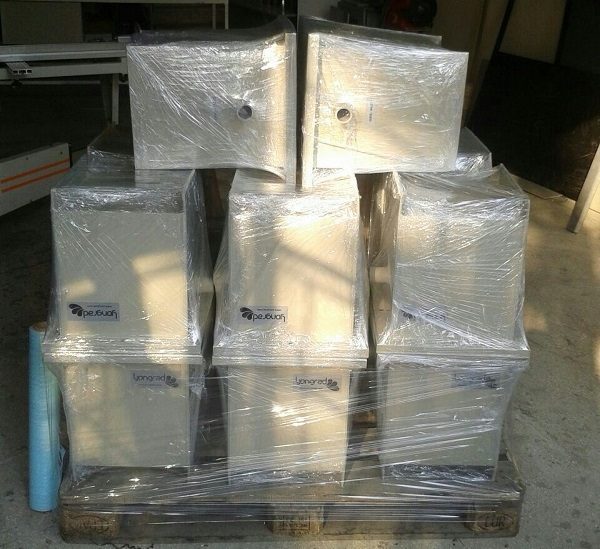
- System Components
-
- Industrial pH and ORP electrodes: Precision probes housed in PVDF sleeves against chemical attack, holding their calibration even in aggressive effluent.
- Teflon-armoured agitators: High-speed shafts and impellers with a chemically resistant coating that distribute the dosed acid or alkali completely evenly through the effluent within seconds.
- Proportional (PID) dosing pumps: Intelligent pumps that cut the dosing rate to microlitres as the pH approaches its target, decisively preventing overshoot.
- Industry Applications
-
- Chemical production and synthesis plants: Process effluent from washing production reactors, whose pH swings instantly to either extreme.
- Plating and surface finishing works: The final pH balancing stage for rinse water overflowing from the plating baths before it reaches the main drain.
Our control algorithm uses PID regulation. The sensors detect a change immediately and instruct the dosing pumps to run at a variable speed matched to how aggressive the effluent is. The system irons out the fluctuations in real time.
Automatic Neutralisation Fully autonomous complexes with SCADA reporting
Fully autonomous complexes for sites where millions of litres of chemical effluent are generated and where environmental legislation requires that everything be recorded: large hospitals, extensive industrial campuses and pharmaceutical plants. These units do more than neutralise — they log pH values, dosed chemical quantities and alarm states second by second and produce discharge reports for the authorities. It is a fortress of effluent control that takes human discretion out of the equation.


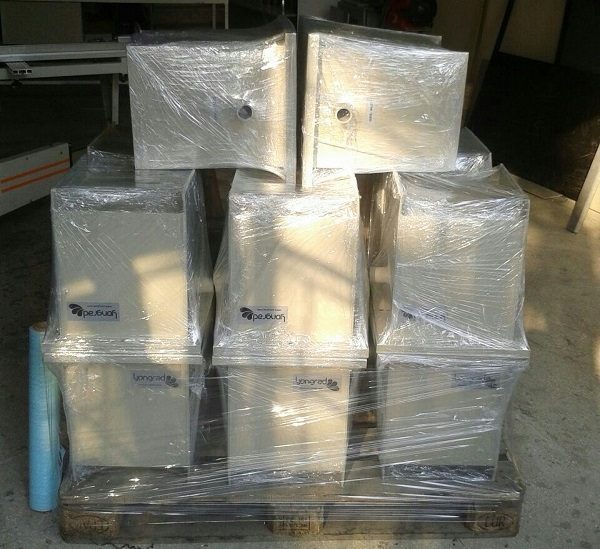
- System Components
-
- SCADA and datalogging centre: Advanced industrial computer networks that map the effluent anatomy of the whole plant digitally and provide five years of trend reports and discharge records.
- IoT remote access: Communication modules that let plant managers follow discharge quality live from a phone or tablet, and raise SMS or e-mail alarms if a critical limit is exceeded.
- Autonomous bypass and fail-safe emergency valves: A safety layer that closes the discharge valves pneumatically on power failure or severe chemical contamination, mechanically preventing hazardous liquid escaping to the drain.
- Industry Applications
-
- Major city hospitals and medical faculties: Central, fully logged neutralisation of the varied, changeable and hazardous liquid waste from radiology, oncology and biochemistry laboratories.
- Pharmaceutical and biotechnology campuses: Production sites where GMP requires the chemical history of every drop of effluent leaving the plant to be demonstrable.
Large sites are subject to regular inspection by the environmental authorities, and that water discharged to the network or to nature stayed within limits must be proven with live sensor data. Our system produces those statutory reports for you automatically, as PDF or Excel.
Liquid Waste Neutralisation Compact plug-and-play skids
Compact skid-mounted neutralisation units in plug-and-play form, easily integrated into an existing system — for sites that already have an extensive fluid ecosystem, such as central wastewater treatment works, industrial estates or zero liquid discharge projects. They are placed ahead of complex treatment plants (biological stages, reverse osmosis and so on) as a protective shield. Taming the heavy chemical load in their own compact polymer cascade tanks before it reaches the main system, they protect the sensitive stages downstream from shock.


- System Components
-
- Compact architecture on a skid: A modular design in which pumps, mixers, sensors, control panel and PP cascade tanks are mounted on one steel-epoxy frame in our workshop; on site only the pipe and electrical connections remain.
- Multi-stage cascade reactor chambers: An integrated polymer labyrinth in which the liquid overflows through fast, slow and final settling chambers, achieving the maximum retention time in a small footprint.
- Communication interfaces (Modbus/Profinet): Industrial protocols that let the compact unit talk to the central SCADA of the existing treatment plant within seconds and work in step with it.
- Industry Applications
-
- Industrial estate wastewater plants: Pre-treatment barriers installed to stop sudden pH shocks arriving from different factories killing the beneficial bacteria in the main biological basins.
- Reverse osmosis and desalination plants: Rapid, space-saving neutralisation of the concentrated waste produced after acid and caustic cleaning (CIP) of the membranes.
It reduces installation from months to days. The whole system arrives on site tested and calibrated in the Yongrad works, and connects to the existing plant through flanges without breaking out or re-pouring any of it.
Absolutely. Compact means optimised engineering, not weakness. Through its internal polymer cascade and high-speed eductor mixing, it does the work of very large concrete basins in a quarter of the space and at the same efficiency.