



Polypropylene (PP) Fabrication.
Polypropylene fabrication optimised to the temperature, creep, static discharge and fire safety requirements of the process.
The most widely chosen workhorse among industrial thermoplastics, covering a broad spectrum through its molecular variants.
Polypropylene, the most widely chosen workhorse among industrial thermoplastics, covers a very broad spectrum through its molecular variants. Optimised to the temperature shocks, creep loading, static discharge requirements or fire safety standards (DIN 4102) of your process, our PP fabrication delivers tight, rigid solutions from plating baths to chemical storage silos.
PP-H Homopolymer Polypropylene Fabrication
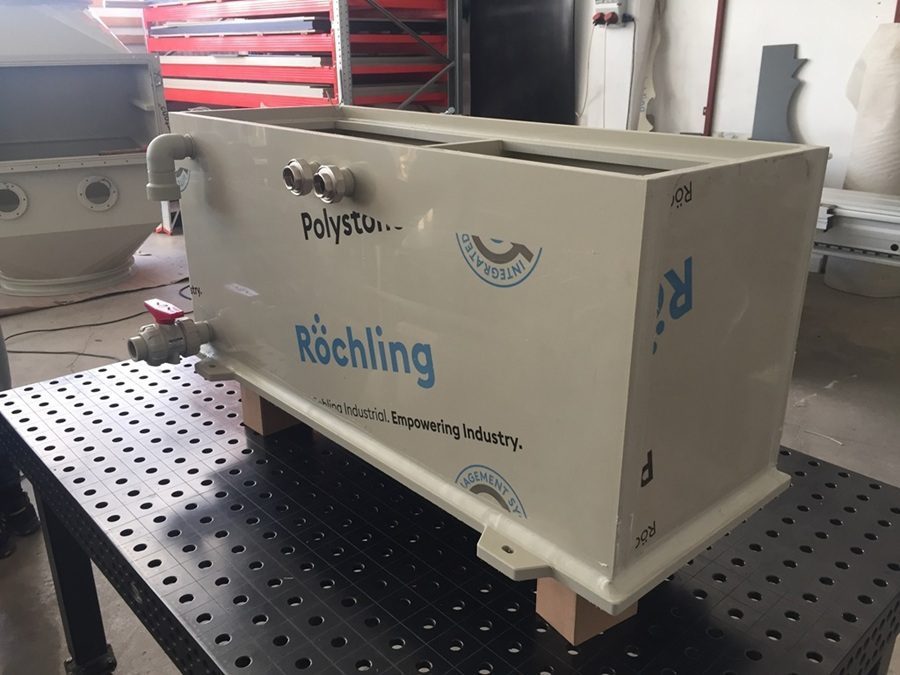
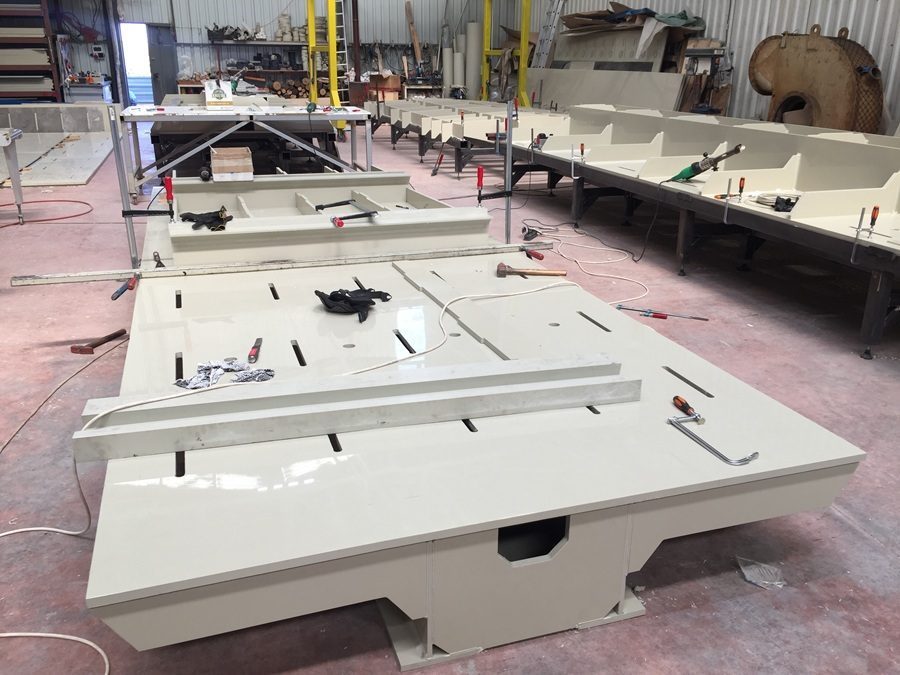
The principal engineering plastic: polymerised from pure propylene monomer alone, highly crystalline, hard, rigid and of high tensile strength. At continuous working temperatures up to 90 °C it shows faultless chemical resistance to inorganic acids and alkalis.


- Materials Science and Components
- PP-H sheet and pipework in the beta-crystalline form for high thermal stability. Stress-free CNC bending and seamless butt and extrusion welding for heavily loaded chemical storage tanks and reactor bodies.
- Industry Applications
- Hot acid baths in surface finishing and plating plants, chemical dosing stations, pickling reactors in the steel industry and neutralisation tanks in industrial treatment.
Below 0 °C the homopolymer loses impact strength and tends to become brittle. It is therefore the first choice for enclosed, controlled and hot indoor processes rather than for outdoor storage exposed to frost.
Our designs follow the internationally accepted DVS 2205. From the design life — usually 25 years — the density of the medium and the working temperature, the optimum wall thickness against hydrostatic pressure and creep is calculated to the millimetre.
It is excellent in strong inorganic solutions such as hydrochloric acid, sulphuric acid and sodium hydroxide. Free halogens such as fluorine and chlorine, and strong oxidising agents, can damage the polymer chain over time; in those environments we move to fluoropolymer fabrication.
PP-C Copolymer Polypropylene Fabrication
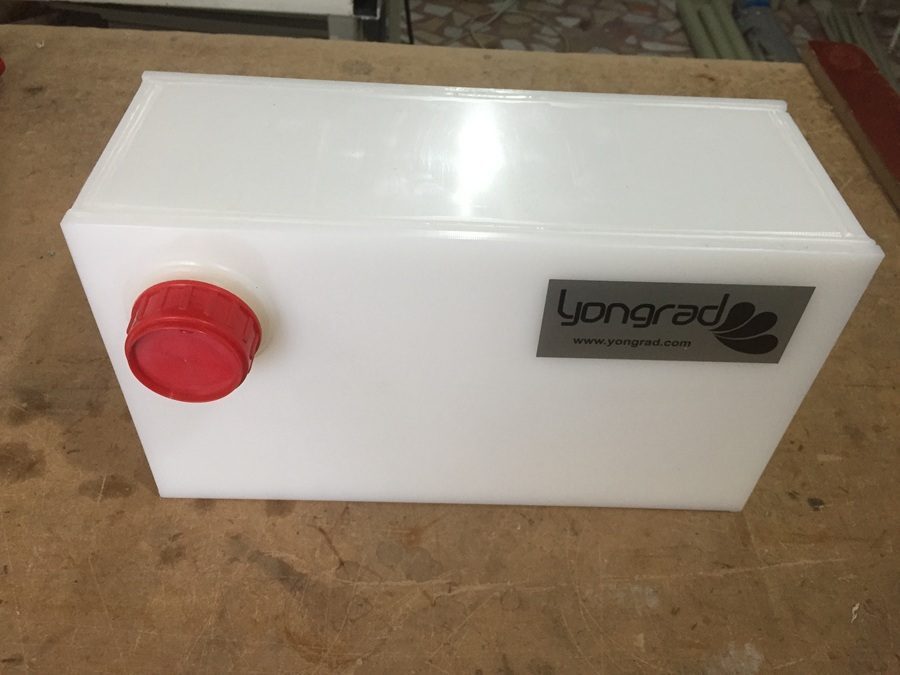
By building controlled proportions of ethylene monomer into the polymer chain, the amorphous regions are increased, and with them the flexibility, impact absorption and low-temperature performance of this copolymer thermoplastic.


- Materials Science and Components
- PP-C sheet that gains its stress cracking resistance from the ethylene comonomer. Monolithic, impact-absorbing constructions for harsh climates and thermal cycling between −20 °C and +80 °C.
- Industry Applications
- Outdoor balancing tanks in wastewater treatment, underground chemical pumping stations, open-air blower lines and industrial pipe galleries in cold climates.
PP-H offers superior rigidity and strength at high temperature, while PP-C stands out for its ability to flex without breaking in the cold or under dynamic impact.
Plain PP-C is affected by ultraviolet light. For outdoor projects we use PP-C sheet containing carbon black or UV stabilisers added during raw material production, which prevents photochemical degradation.
Yes. In the PN10 and PN16 pressure classes in particular, its flexibility in the face of ground settlement and seismic movement makes it a safe choice for buried industrial networks.
PPs Flame-Retardant Polypropylene Fabrication
The strategic material group whose polymer matrix carries flame-retardant compounds, so that in the ventilation ducting of industrial plants and the acid exhaust of laboratories, a fire is physically blocked from spreading through the site.


- Materials Science and Components
- PPs sheet certified to class B1 — not readily flammable — under DIN 4102. Extruded ventilation ducting and monolithic fume hood bodies with additives that stop the flame advancing and let the material extinguish itself.
- Industry Applications
- Corrosive fume hoods in semiconductor plants, laboratory exhaust runs, central scrubbers and the central chemical exhaust stacks of hospitals.
Standard PPs products on the market may contain halogenated additives. The halogen-free, low-smoke PPs formulations we specify in our projects release no toxic or corrosive gas such as HCl that would threaten anyone's health in a fire.
Because the additive levels are optimised, the loss is minimal — around 95 % of standard PP-H performance is retained. In the extraction of acid vapour and damp gases in particular it offers durable strength.
No. So that the weld does not become the weak link in a fire and the flame-retardant property is preserved, only original PPs welding rod exactly matching the parent material may be used.
PP-el Electrically Conductive Polypropylene Fabrication
Conductive, carbon-filled fabrications that earth within milliseconds the static charge generated by friction or fluid movement — in petrochemical plants with a high risk of flash fire and explosion (ATEX Zone 1 and Zone 2) and in areas where flammable solvents are stored.


- Materials Science and Components
- PP-el sheet with conductive carbon black and nanotubes in the polymer matrix, whose surface and volume resistivity is below 106 ohms, ruling out any accumulation of static charge.
- Industry Applications
- Petrochemical refineries, storage tanks for flammable chemicals, explosion-proof ventilation systems and ATEX-certified solvent separation units.
Modern compounding disperses the conductive carbon evenly through the polymer matrix, and the impact strength is maintained at industry-standard levels.
Conductive flange gaskets or copper bars are fitted to the outer surface of the tank or pipework and connected to the plant's main earthing ring with low-impedance cable.
In every explosion-proof area where low-flashpoint solvents — alcohols, ketones, hexane, thinners and similar volatile organic compounds — are stored, transferred or extracted, it is mandatory in order to eliminate the risk of a static spark.