



Industrial Plastic Fans and Process Exhaust Systems.
Moving corrosive gases continuously, quietly and efficiently.
The fan is the heart of any industrial ventilation system.
The fan is the heart of any industrial ventilation system. But where sulphuric acid, chlorine, hydrogen sulphide or aggressive solvent vapour is present, even epoxy-coated or 316L stainless steel fans oxidise within a short time, lose their balance and fail dangerously. Where corrosion rots metal, industrial acid fans take over — casing and impeller entirely in thermoplastic (PP, HDPE, PPs, PVDF) and aerodynamically balanced to perfection.
Polypropylene (PP) Acid Fans Backward-curved radial fans, the industry standard
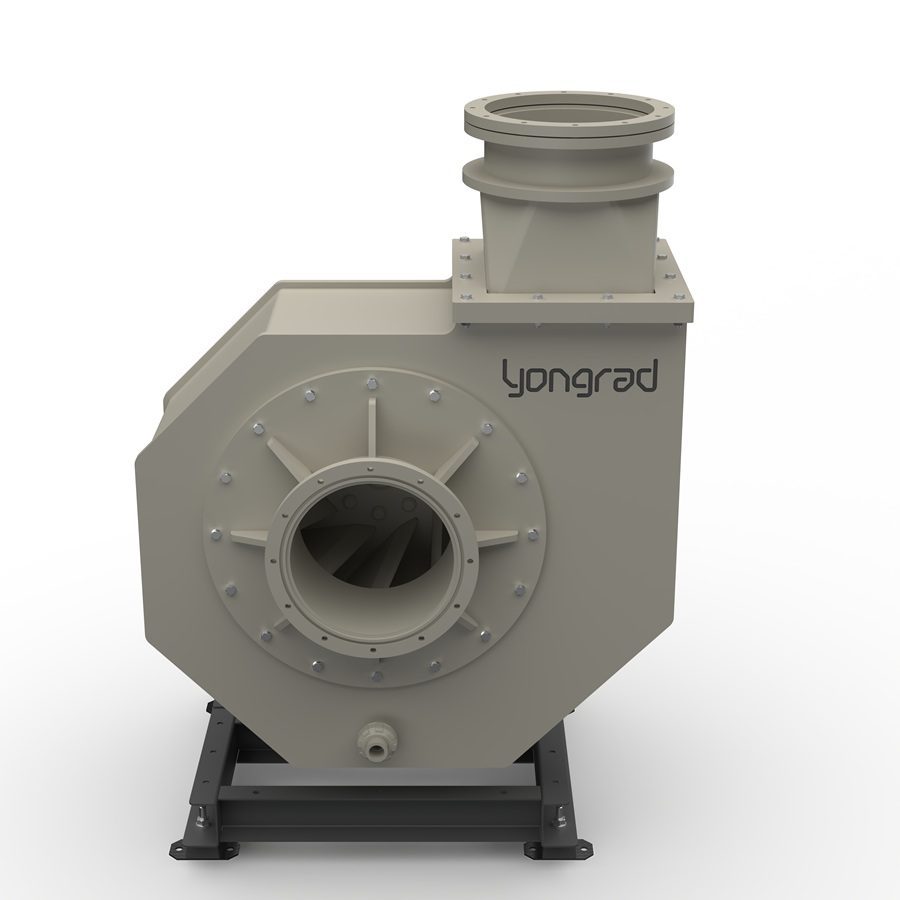
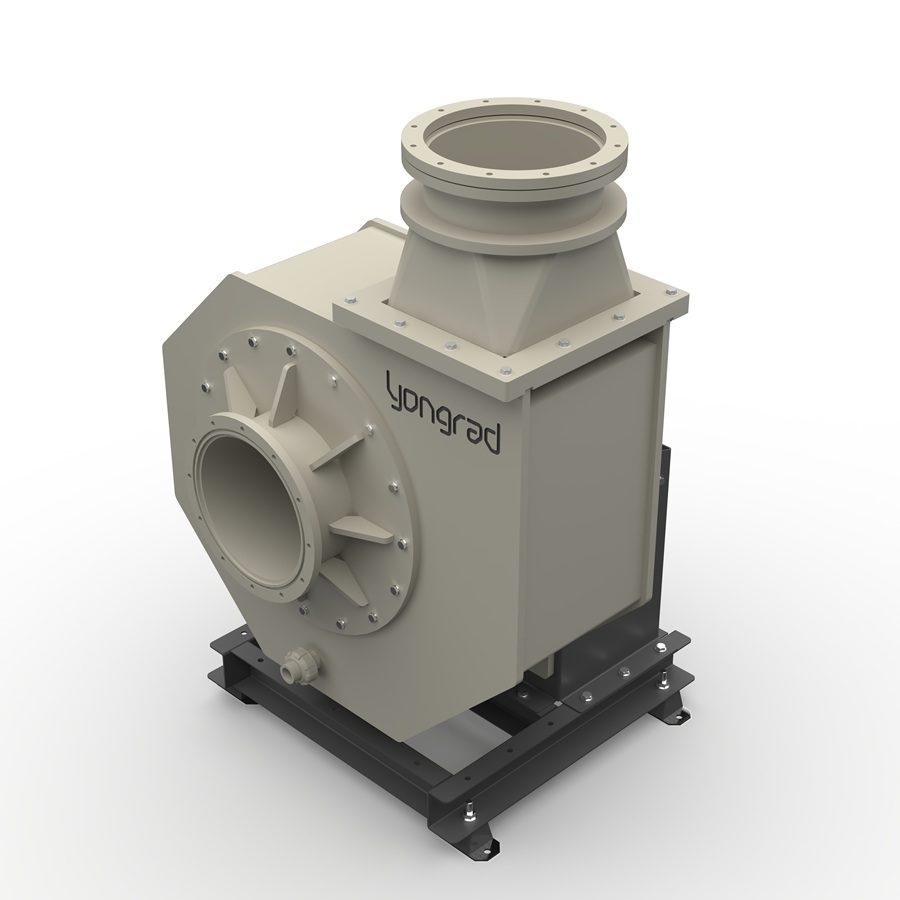
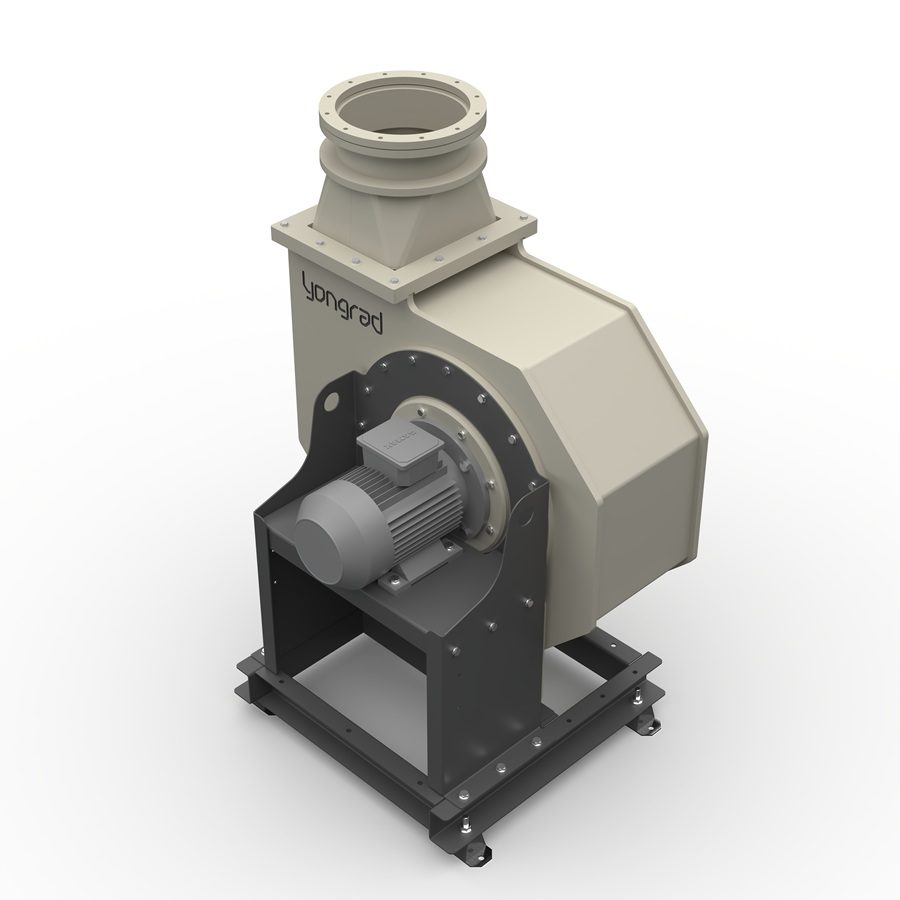
The industry standard for acid ventilation, PP radial fans bring together high mechanical strength and broad chemical resistance. Their scroll casing and backward-curved impeller blades, shaped by fluid dynamics calculation, keep turbulence to a minimum even at high volumes and move the air quietly and without vibration. In acidic environments where a metal fan is destroyed within weeks, they serve for decades.
- System Components
-
- All-polymer scroll and impeller: A PP casing and wheel entirely closed to corrosion, produced by injection moulding or extrusion welding to German DVS standards.
- Isolated drive system: Tight shaft seals (V-ring or mechanical seal) and shaft protection sleeves that decisively keep corrosive gas away from the motor.
- Vibration-damping frame: A motor frame — epoxy-painted over galvanising, or on stainless steel mounts — that stops mechanical resonance passing into the building or the ductwork.
- Global Industry Applications
-
- Surface finishing and plating plants: Delivering the concentrated hydrochloric and sulphuric acid vapour from push-pull extraction over pickling, zinc, nickel and anodising baths to the main scrubber tower.
- Chemical production reactors: Continuous, safe extraction of the aggressive gases released from the vents of dosing and mixing vessels.
- Industrial laboratories: Continuous, variable-volume extraction under inverter control on central exhaust systems serving many fume hoods.
A standard PP acid fan keeps its mechanical integrity and corrosion resistance perfectly in continuous gas flows between 0 °C and +80 °C. Where your plant runs hotter — 100 °C and above — we build the same casing design in PPs or PVDF.
Certainly. Our backward-curved plastic impellers, designed with modern tooling and CFD analysis, generate the high static pressures your process needs — 3,000 Pa and beyond — with high aerodynamic efficiency and considerably less energy than a metal equivalent.
In our designs the motor sits entirely outside the gas stream. The shaft joining impeller to motor is sealed off from the casing with Teflon or acid-resistant polymer hub seals, so acid vapour never reaches it.
Our impellers are balanced statically and dynamically to ISO 1940 during manufacture. Because acid crystals cannot adhere to the plastic surface and there is no mass loss through corrosion, the drift in balance so common on metal fans does not occur.
Polyethylene (HDPE) Acid Fans UV-stabilised fans for outdoor use
These high-density polymer fans come into their own where the process is not only chemically aggressive but also exposed to harsh outdoor conditions — severe cold and strong UV. On systems installed outside the building, on the roof or in the yard, standard polypropylene can grow brittle in sunlight over time, whereas UV-stabilised HDPE shows outstanding structural resistance to solar radiation, freezing temperatures down to −40 °C and hard climates.


- System Components
-
- UV-stabilised HDPE casing: A high-density polyethylene scroll formulated for outdoor installation and protected at molecular level against destructive ultraviolet light.
- Cold-climate impeller: Impact-resistant HDPE impeller blocks that do not turn brittle even below freezing.
- IP55 / IP66 outdoor motor protection: Drives fitted with fully sealed weather covers against rain, snow and dust.
- Global Industry Applications
-
- Wastewater treatment plants: Extracting the concentrated hydrogen sulphide and ammonia from open-air biological basins, sludge dewatering buildings and pumping stations.
- Outdoor scrubber exhausts: Extraction and delivery at the clean-gas stacks of scrubber towers sited on the roof or in the yard.
- Fertiliser and biogas plants: Ventilation lines heavy with organic acids and moisture, permanently exposed to the weather.
Black, UV-stabilised PP will survive outdoors for a time, but in extreme winter cold it loses its flexibility and becomes brittle. HDPE keeps its toughness even at −40 °C and does not crack chemically or mechanically under long UV exposure. For outdoor projects it is the safest engineering plastic.
Almost not at all. Both are polyolefins and both resist acids, alkalis and salt solutions excellently. The choice is made by our engineers less on chemical load than on ambient temperature and sun exposure.
No. The HDPE sheet we use is compounded with carbon black or special UV stabilisers, so the pigment runs through the whole material. Decades in the sun produce neither surface nor hairline cracking.
Yes. For high-capacity systems the wall thicknesses are increased by finite element calculation and the HDPE casing is reinforced externally with steel or epoxy ribs, so fans can be built for any volume.
Flame-Retardant (PPs) Acid Fans Self-extinguishing fans to DIN 4102-B1 / UL94-V0
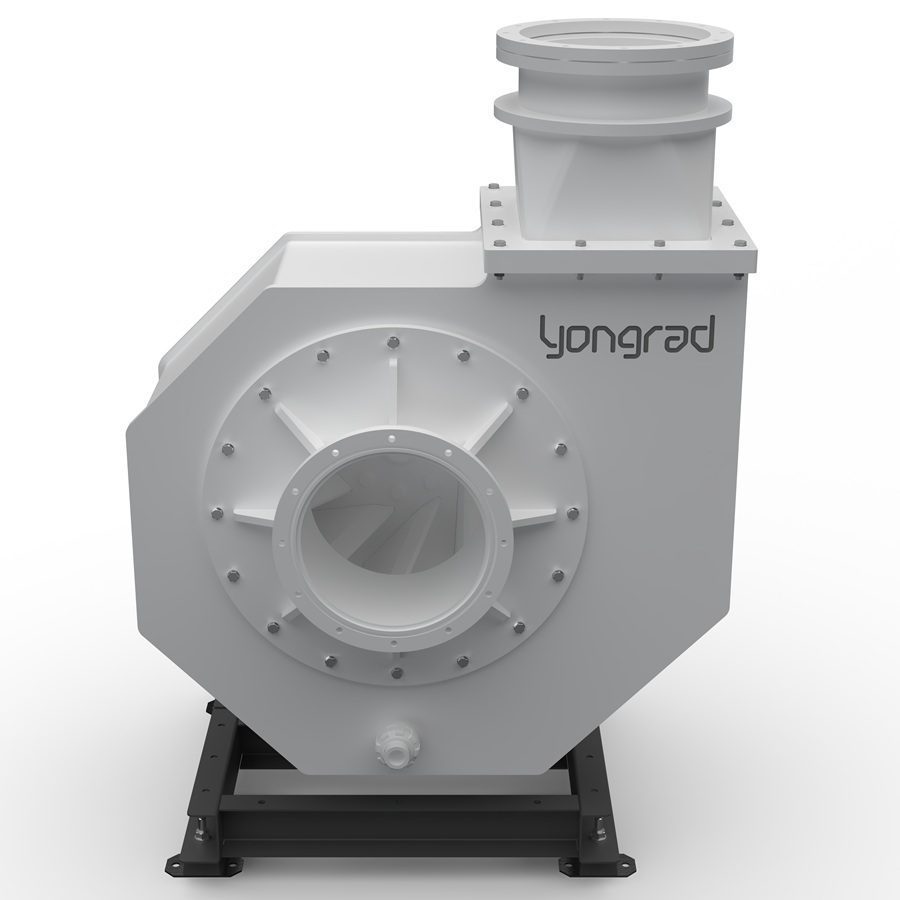
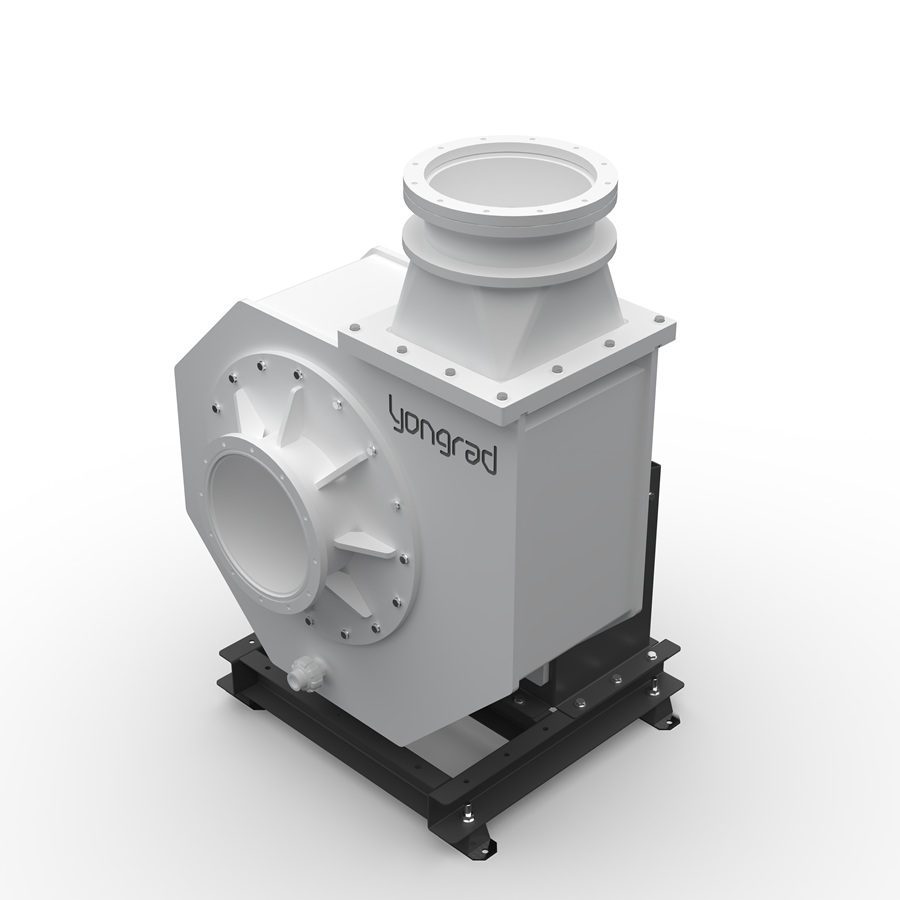
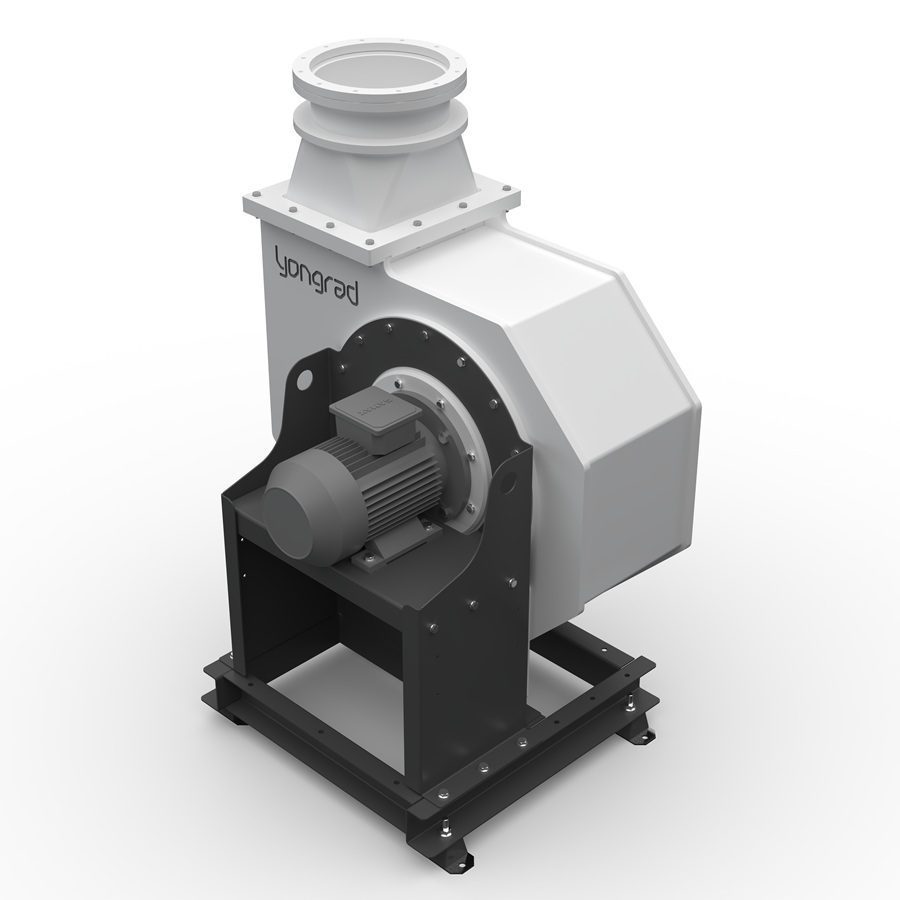
Where fire safety and preventing flame spreading through the ductwork matter as much as extracting aggressive gas, flame-retardant PPs fans are an engineering necessity. Standard thermoplastics can continue to burn once ignited, whereas PPs materials conforming to DIN 4102-B1 or UL94-V0 are self-extinguishing. The moment the ignition source is removed, the casing stops burning within seconds and the fire cannot spread.
- System Components
-
- Self-extinguishing (class B1) casing and impeller: Main components in grey-coded PPs thermoplastic, compounded with flame-retardant additives.
- Shaft bearings with a thermal barrier: Specially insulated couplings that break the heat path between motor and impeller shaft in a fire or on overheating.
- Spark-free construction: An inlet geometry with a minimised friction coefficient that produces no spark even if the impeller touches the inlet cone.
- Global Industry Applications
-
- Electronics and semiconductor cleanrooms: Mezzanine ventilation on chip and PCB lines, where aggressive acid fume is extracted and the building fire regulations allow zero tolerance.
- Chemical processes in enclosed spaces: Safe exhaust for dosing and acid dilution stations in enclosed halls near the fire exits.
- Pharmaceutical and biomedical laboratories: Corrosive fume hood extraction sharing a route with the building's central air handling and ventilation shafts.
No polymer is entirely non-combustible, Teflon aside. Flame-retardant means the plastic will burn under a direct flame but extinguishes itself once the source is withdrawn, and does not carry the flame or drip burning material. It stops a fire spreading through the ductwork into other parts of the plant.
No. PPs retains the full acid and alkali resistance of standard polypropylene. Fire safety is raised without any loss of chemical performance.
Because of their additives, PPs materials can be somewhat stiffer than standard PP, and their UV resistance is usually formulated for indoor use. They also cost more. Our engineers make the optimal choice for you based on your layout and your fire regulations.
ATEX / Ex-Proof Industrial Plastic Fans Antistatic conductive fans for Zone 1 & Zone 2
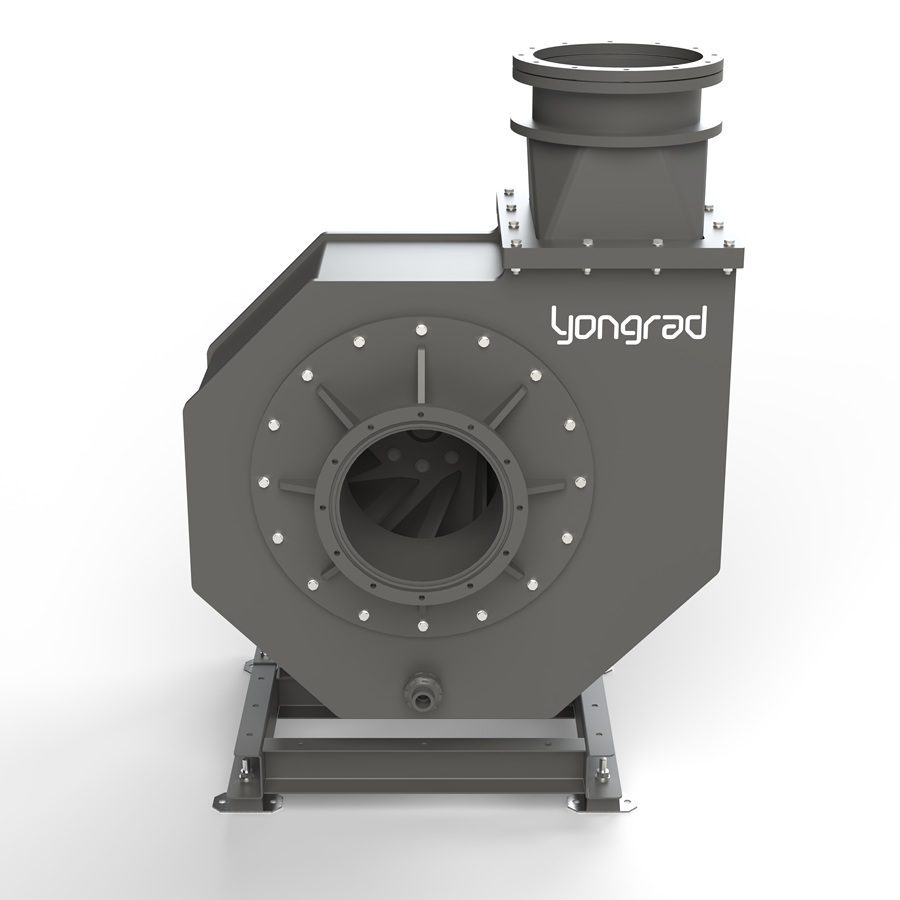
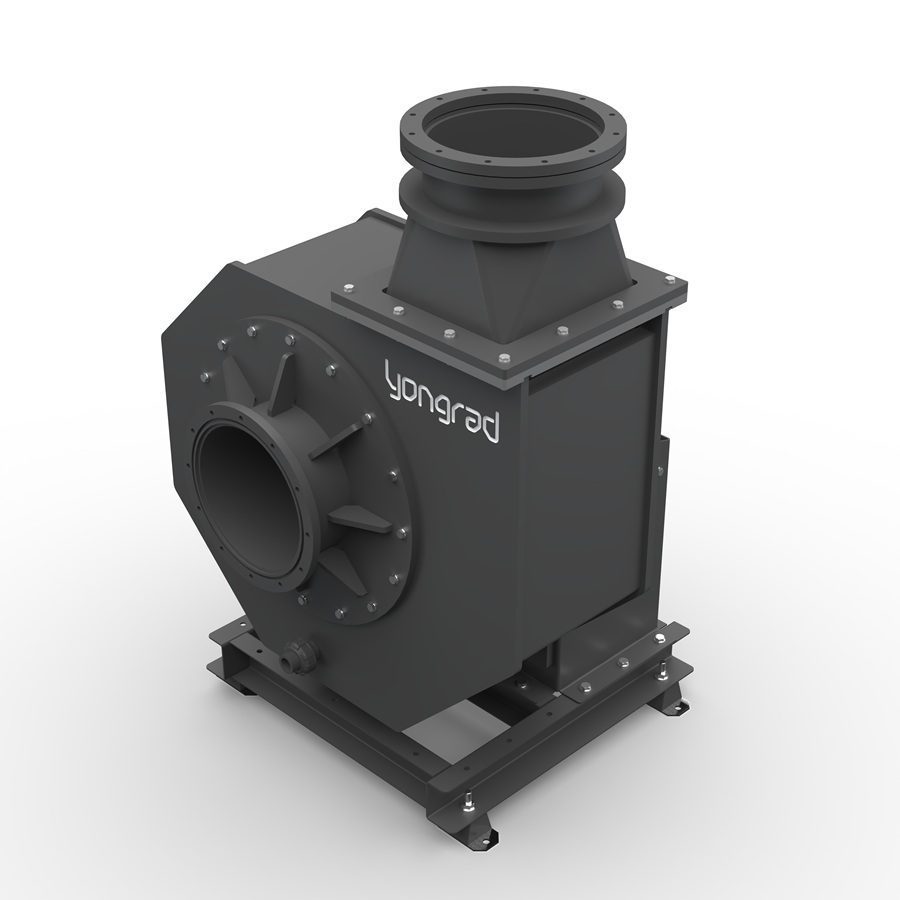
In petrochemicals, paint and solvent processing two great dangers occur together: corrosion and the risk of explosion. An ordinary plastic fan accumulates a dangerous static charge as it runs. If flammable solvent vapour — hexane, toluene, hydrogen — is present, one microscopic spark jumping from the plastic can destroy the whole plant. Our Ex-Proof thermoplastic fans, fully compliant with the ATEX directives for Zone 1 and Zone 2, are electrically conductive and therefore antistatic thanks to their carbon content. The charge generated by gas friction is earthed through impeller and casing, and the spark risk is eliminated at molecular level. You are protected from acid corrosion and have maximum safety in an explosive atmosphere at the same time.
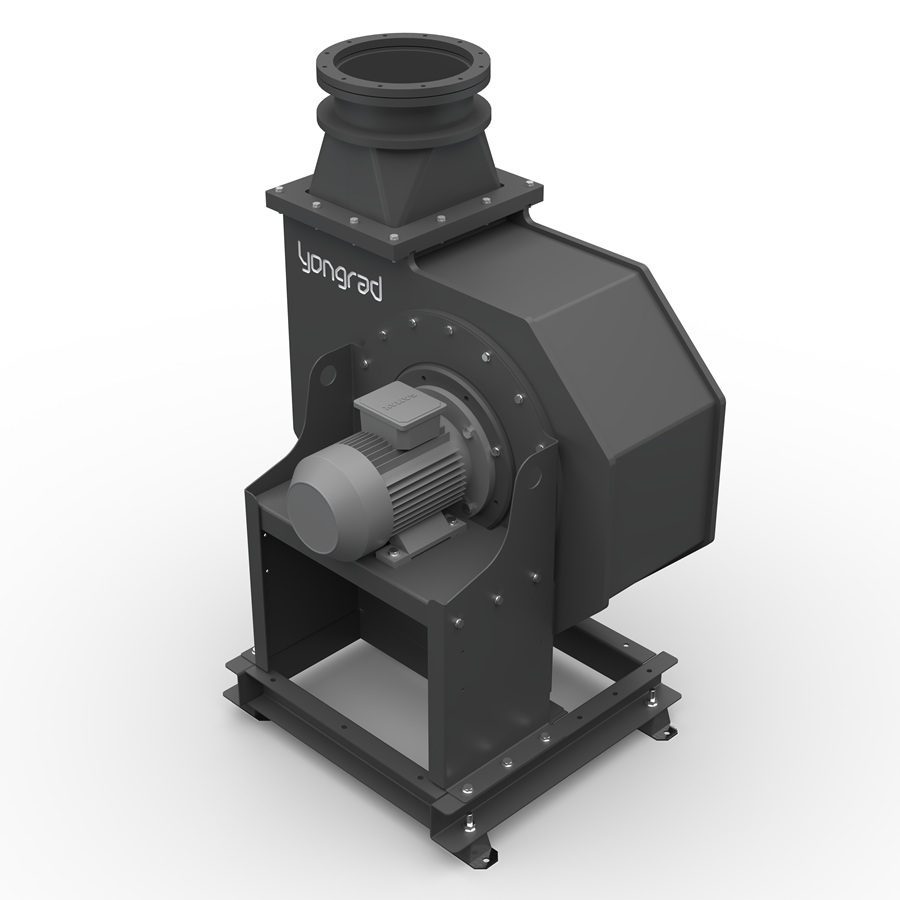
- System Components
-
- Carbon-filled antistatic casing (PP-el / PE-el): A black, electrically conductive polypropylene or polyethylene construction with a surface resistivity below 106 ohms.
- Spark-free inlet ring: A safety ring in the inlet cone, usually copper, brass or antistatic polymer, in case an unbalanced impeller should touch the casing.
- ATEX-certified Ex-Proof motor: Flameproof enclosed motors for explosive atmospheres (Ex d, Ex e) that never let an internal spark meet the gas outside, complete with earthing bars.
- Global Industry Applications
-
- Petrochemicals and solvent lines: Scrubber systems heavy with volatile organic compounds such as toluene, acetone and alcohols, where corrosion and explosion risk coincide.
- Battery manufacturing plants: Safely removing both sulphuric acid vapour and explosive hydrogen from charging and discharging rooms at the same time.
- Paint and varnish manufacture: Local extraction over closed reactors in which flammable liquid chemicals are mixed.
Pure thermoplastics are excellent insulators and accumulate static. During raw material production, however, conductive carbon black or special nanotubes are dispersed evenly through the polymer matrix. These additives create microscopic paths through which current can pass, so the charge is conducted immediately to earth.
It would be, with a standard plastic impeller. But the impellers in our ATEX fans are also made from conductive PP-el and connected to the motor shaft with earthing brushes. No surface the air touches can hold a static charge.
European standards divide such areas into Zone 0, Zone 1 and Zone 2 according to the concentration of the explosive gas and how often it is present. Our fans are certified for the most common industrial risk areas: Zone 1, where an explosive atmosphere may occur occasionally, and Zone 2, where it is rare. Our engineers confirm the right choice against your process data.
As with every ATEX installation, periodic earthing measurements — every six or twelve months — and checks of the shaft seal are mandatory to confirm the conductive path is intact. Mechanically, the fan lasts as long as any of our plastic fans.
Fluid dynamics (CFD) and engineering support for your plant
A wrongly chosen acid fan does more than waste energy: through inadequate extraction it lets toxic gas escape into the workshop and puts people at risk. For the right polymer casing, a full calculation of the system pressure losses and safe exhaust routing, talk to our process engineers today.
info@yongrad.com Get technical advice for your project — contact form