



Advanced Plating Processes.
Surface engineering at molecular level and advanced chemical technology.
Surface finishing is not a "coating" — it is the art of redefining the character of a material.
With full command of the thermodynamics of chemical reactions and of molecular integration, we prepare your parts for the harshest industrial environments — corrosion, wear and high temperature. From nanotechnology pre-treatments that go beyond classical methods to medical colouring baths of the finest precision, explore below the high-technology process lines that will strengthen the DNA of your production.
Cathodic E-Coating (KTL) Plants The pinnacle of electrochemical painting technology
Cathodic e-coating, the pinnacle of electrochemical painting, penetrates to micron accuracy into even the most hidden recesses of complex parts and delivers maximum corrosion resistance — more than 1,000 hours of salt spray. In these plants water-based resins bond to the part surface at molecular level under direct current. With high transfer efficiency, a smooth finish free of run marks and a fully environmentally sound, low-VOC composition, they are indispensable to global series production.
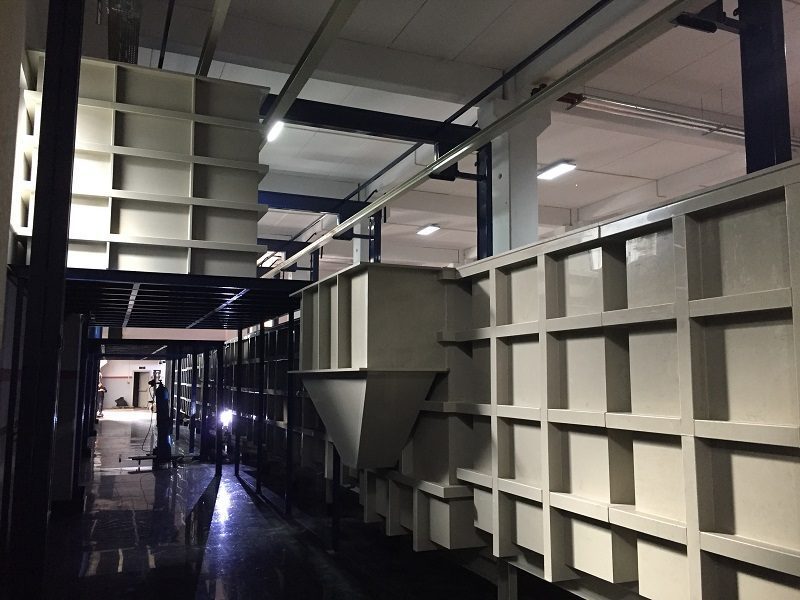
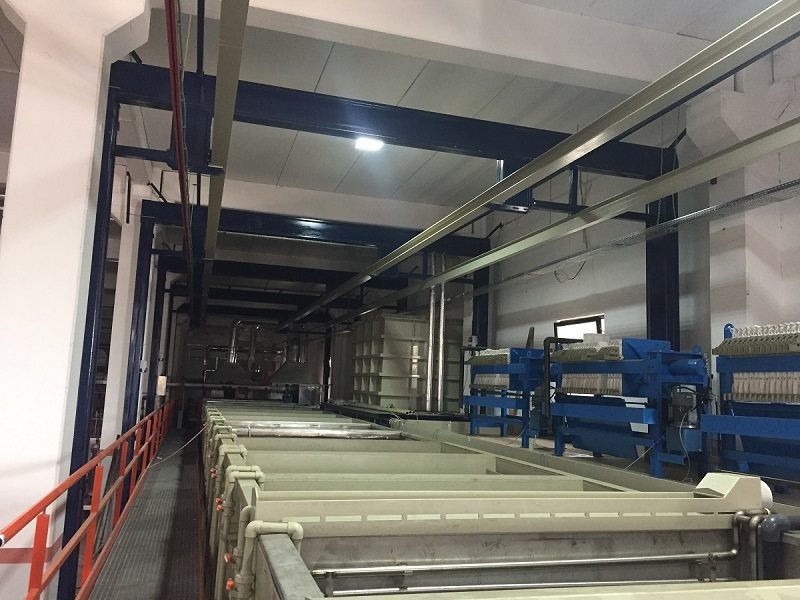


- Global Industry Applications
-
- Automotive OEM & chassis: Continuous lines that meet global corrosion standards for car bodies, suspension systems, axles and engine-carrier components.
- Agricultural and construction machinery: Armouring heavy industrial equipment exposed to aggressive outdoor conditions — mud, salt and moisture.
- Domestic appliances and HVAC: Flawless protection of parts with many internal recesses, such as air-conditioning compressors and radiator cores.
- System Components
-
- Ultrafiltration (UF) systems: Closed-loop reactors that filter surplus water and solvent out of the paint bath and recover 98 % of the paint from the rinse water.
- Anolyte (dialysis) cells: High-technology membrane systems that regulate the acid balance of the bath automatically.
- Curing ovens: Thermally efficient ovens providing the even air circulation the e-coat film needs to polymerise.
On the contrary, it is among the most environmentally sound processes. Because water-based paints are used, solvent emissions are minimal, and our UF systems reduce paint waste to almost nothing.
Yes — e-coat makes an excellent primer. Powder or wet paint over it further improves appearance and UV resistance.
Chemical Treatment Lines Plants for electroless conversion and autocatalytic reaction
Advanced surface modification plants that work purely on chemical conversion and autocatalytic reaction, with no electric current at all. Housing processes such as oxidation, passivation, phosphating and colouring, these lines alter the outer skin of the metal at microscopic level and rebuild its corrosion resistance, biocompatibility or optical absorption.


- Global Industry Applications
-
- Medical and implantology: Ultra-pure titanium anodising and passivation processes that maximise tissue compatibility for surgical screws, dental implants and orthopaedic prostheses.
- Aerospace: Chemical film lines to MIL standards (Alodine / chromate) that stop oxidation on aluminium structural parts while preserving electrical conductivity.
- Defence and optics: Wear-resistant black oxide plants that eliminate light reflection on weapon barrels, sights and optical sensor housings.
- System Components
-
- Tanks for aggressive chemicals: PVDF and PP process reactors with special extrusion welding, resistant to highly concentrated acid and alkali reactions.
- Titanium and PTFE (Teflon) heaters: Thermal units that hold bath temperature to ±0.5 °C in corrosive media without dissolving.
- Integrated scrubber towers: Environmental protection systems that neutralise 99.9 % of the toxic gases from heavy chemical reactions and release only clean air.
For implant and instrument processes we install deionised (DI) water systems delivering purity at ppm level, together with cleanroom-compatible, particle-retaining filtration architectures.
Pre-treatment Lines Nanotechnology surface preparation stations
The secret of a perfect finish is a perfect foundation. Pre-treatment lines are the nanotechnology and chemical preparation stations that ready a metal or plastic surface for the main coating — paint, anodising or galvanising. After degreasing and descaling, zinc phosphate, iron phosphate or new-generation zirconium-based nano-coatings enlarge the surface area of the substrate microscopically, so the paint or deposit effectively locks onto the metal.


- Global Industry Applications
-
- Architectural aluminium: Long-life, corrosion-resistant chromate and zirconium lines that guarantee Qualicoat standards for facade profiles.
- Steel structures and panels: Tri-cation phosphating processes that maximise paint adhesion on radiators, steel doors and appliance bodies.
- Coil coating: Continuous pre-treatment reaction tunnels that modify the surface at speed on continuous strip lines.
- System Components
-
- Spray tunnels and nozzles: Non-clogging 316L stainless steel nozzle systems that carry the chemistry to every point of the part at the same pressure.
- Cascade rinse technology: Intelligent fluid management in which fresh water is used in counter-flow stages, cutting water consumption by up to 60 %.
- Sludge separation and press systems: Filtration units that remove reaction sludge from processes such as phosphating as it forms, extending the life of the chemistry.
It depends on your part geometry. For parts with many internal cavities — tubes, profiles — immersion is essential, while on large flat surfaces spraying is far faster and more efficient thanks to the added mechanical action. We determine the right method for your project through 3D analysis.
Surface Cleaning Lines Ultrasonic, electrolytic and chemical cleaning
The greatest enemies of plating quality are microscopic oil films, carbon residues, oxide layers and polishing compounds. Our cleaning lines combine the ultrasonic, electrolytic and chemical stages to return the surface to a molecularly virgin state. In high-technology production where contamination cannot be tolerated, this is the first and most critical line of defence.


- Global Industry Applications
-
- Precision mechanics and horology: Removing microscopic polishing compound from watch gears and micro-mechanical parts with cavitation waves.
- Machining and engine reconditioning: Cleaning heavy cutting fluid and carbon deposits from engine blocks, valves and gears coming off CNC operations.
- After plastic injection moulding (POP): Removing mould release silicones and antistatic dust from ABS or PC/ABS parts before plating.
- System Components
-
- Ultrasonic generators and transducers: High-frequency units that create millions of microscopic vacuum bubbles in the liquid — cavitation — and blast contamination off the surface.
- Electrolytic cleaning cells: Reactors that release oxygen or hydrogen at the metal surface under anodic or cathodic current and lift the most stubborn oils away with those gas bubbles.
- Industrial oil-water separators: Systems that continuously remove emulsified oils floating to the surface, using HDPE separators or disc skimmers, and so extend bath life.
For very complex parts, blind holes or interlocking moving assemblies, liquid contact alone is not enough inside. Ultrasonic waves create cavitation in every microscopic cavity the liquid reaches, giving a flawless deep clean.
Continuously circulating oil separator sensors and cascade discharge units built into our systems remove any risk of oil redepositing on the part.
Talk to us about surface finishing that goes beyond the limits
Redefine your plant's quality standards on a global scale with the Yongrad vision, where process chemistry meets engineering power. Get in touch with our process engineers now to discuss your specific requirements.
info@yongrad.com Get technical advice for your project — contact form