



Industrial Mixing Units.
Flawless homogenisation through fluid dynamics and chemical kinetics.
Mixing is far more than stirring a liquid — it is hydrodynamic engineering.
In an industrial process, mixing is far more than agitating a liquid. Bringing media of different viscosities together at molecular level, accelerating the kinetics of the reaction and eliminating dead zones in the vessel all require advanced hydrodynamic engineering. We size our mixing units — from heavy-duty mechanical agitators to intelligent eductor systems with no moving parts — specifically to the thermodynamic needs of your process.
Mixing Tanks Heavy-duty reactors with mechanical agitation
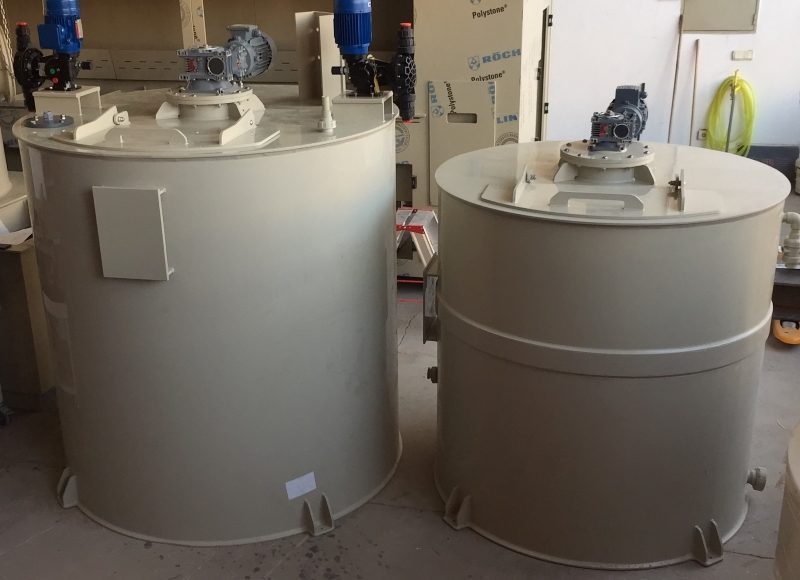
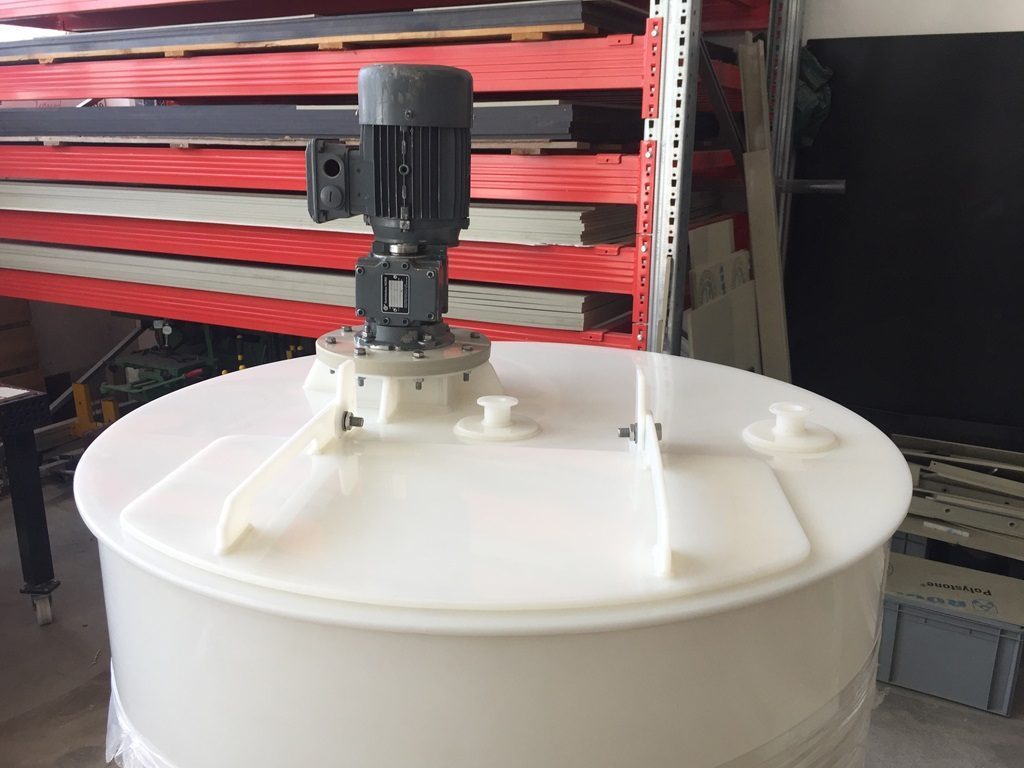
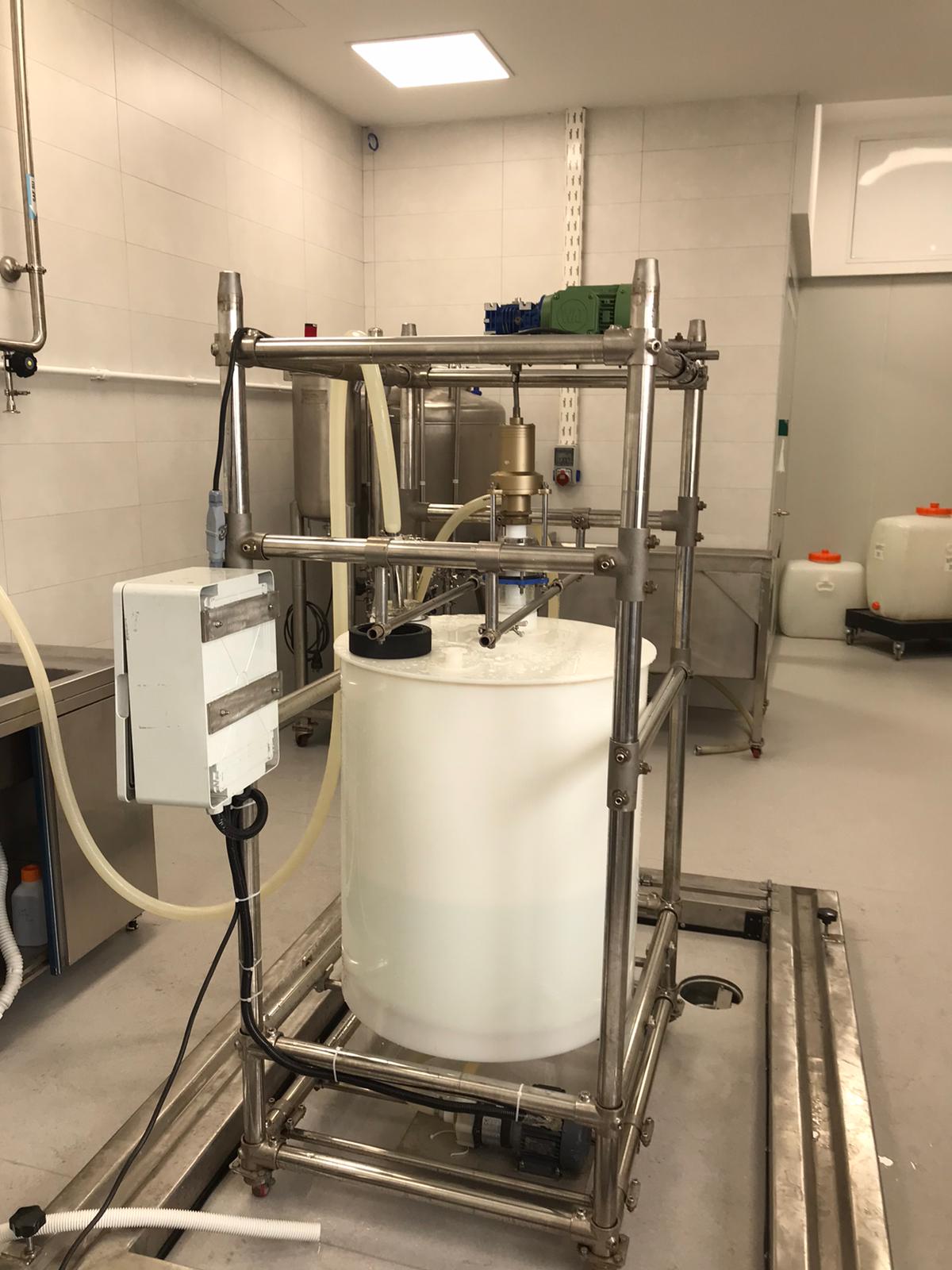
Plastic reactors with heavy-duty mechanical agitators, designed to bring chemicals of differing density and viscosity to the required homogeneity in the shortest possible time. In units mixing aggressive acids or hot alkalis, the vessel is built from thick-walled PP or HDPE to eliminate corrosion, while the agitator shaft and impeller are armoured in a fully acid-resistant fluoropolymer (PTFE). The high torque and hydrodynamic vibration of the motor are absorbed by dedicated steel or heavy polymer mixer bridges, so they never fatigue the vessel itself.
- System Components
-
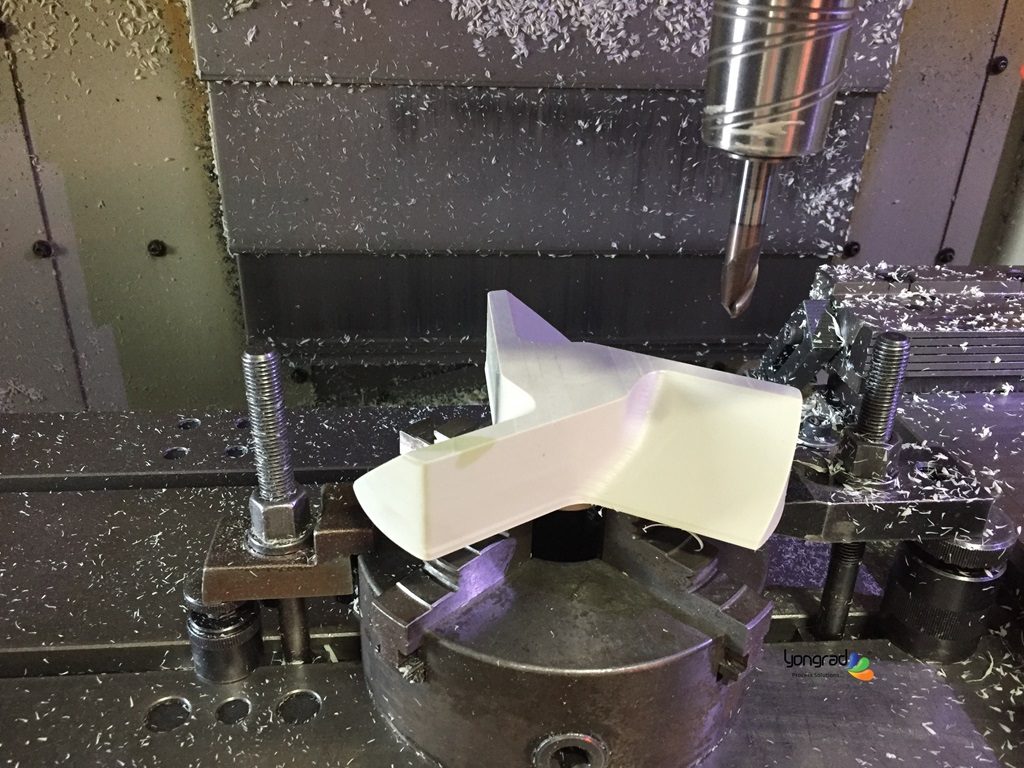
- Teflon-armoured agitator assembly: Corrosion-immune agitators — turbine, propeller, anchor or double-helix as the process requires — in PTFE over a stainless shaft.
- Internal anti-vortex baffles: Plastic plates welded to the vessel wall that stop the impeller merely spinning the liquid in a circle and force it into axial, up-and-down motion.
- Heavy-duty agitator bridge: A shock-absorbing frame that takes the weight and torque of the geared motor off the polymer vessel and carries it into the outer structure.
- Applications centred on chemical process
-
- Chemical synthesis and paint manufacture: Main production mixers in which very viscous polymer resins, adhesives or heavy pigments form an emulsion without settling.
- Coagulant and flocculant make-up: Continuous homogenisation of readily agglomerating aluminium sulphate or ferric chloride solutions that precipitate the solids in treatment plants.
On a conventional plastic tank the risk is real. In the Yongrad design the agitator does not sit on the plastic at all, but on an independent steel or heavy-section mixer bridge around the vessel. The dynamic load never reaches the plastic.
A plain propeller is not used with high-viscosity media. A wall-scraping anchor impeller in titanium or with a thick Teflon coating is fitted to the shaft end instead, and the risk of breakage disappears.
Eductor Mixers Hydrodynamic venturi systems with no moving parts
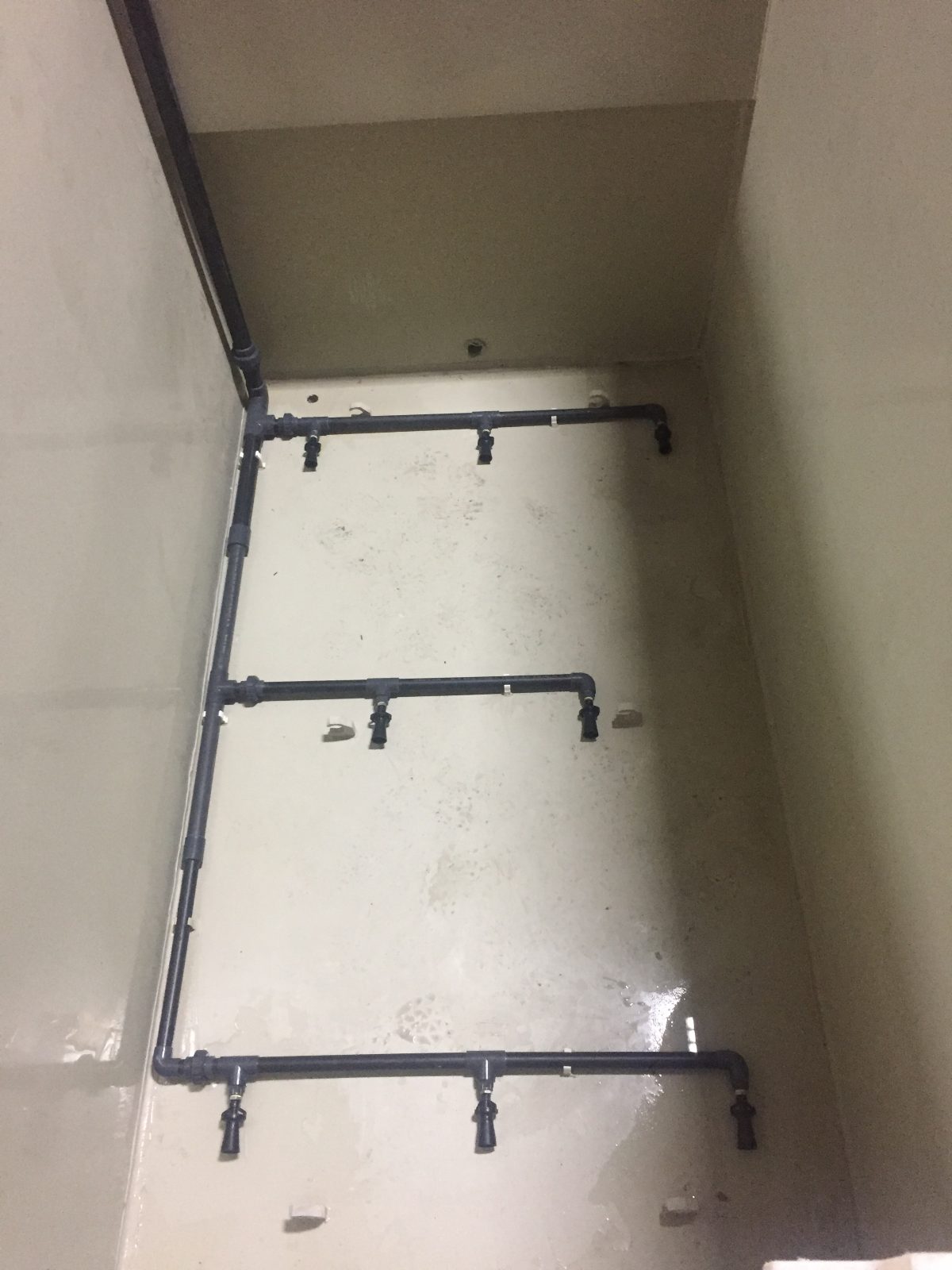
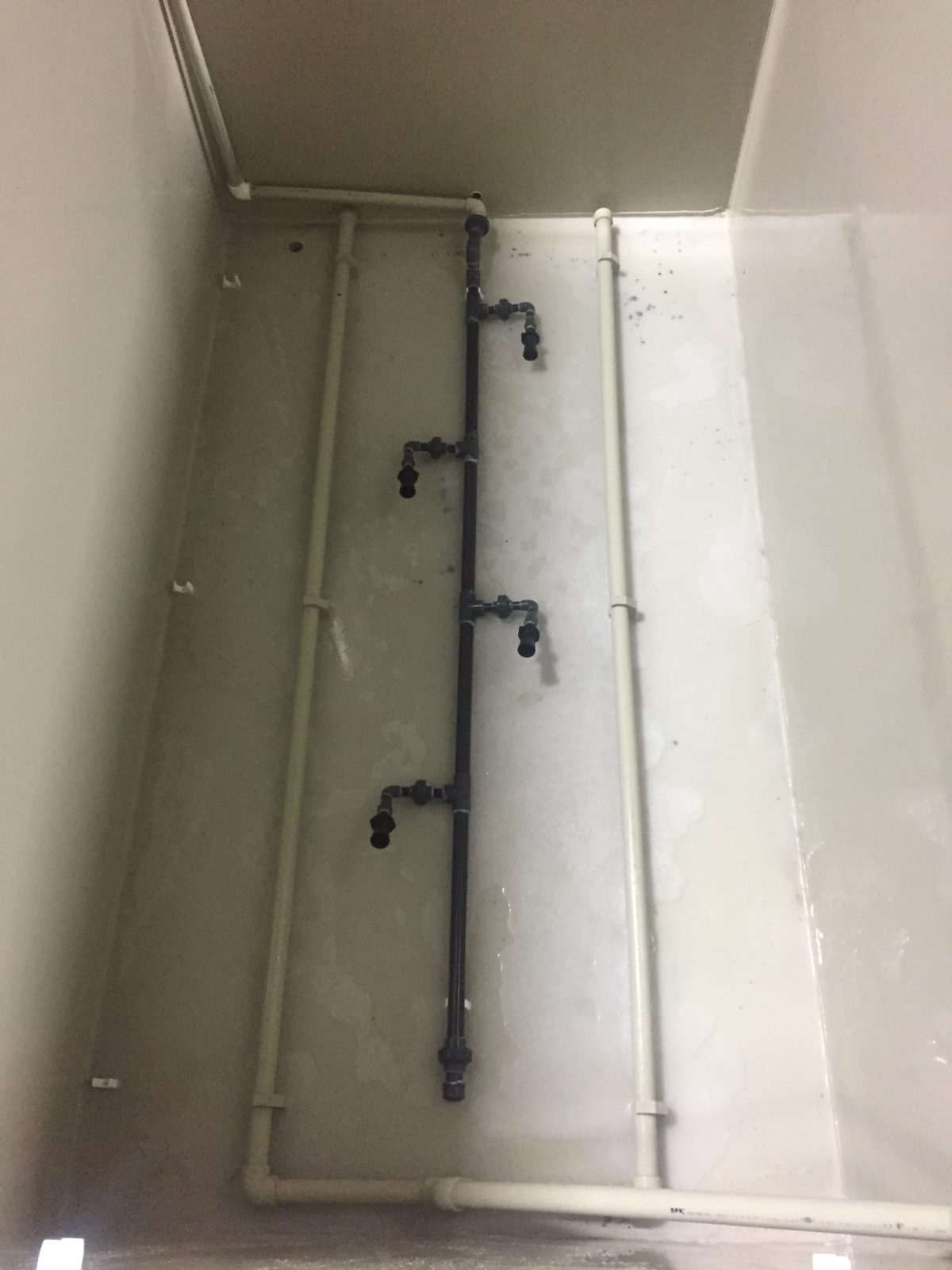
A new generation of hydrodynamic mixing that contains no moving mechanical part at all — no motor, shaft or impeller — and creates powerful circulation in the vessel using the kinetic energy of the liquid itself. PVDF or PP eductor (venturi) nozzles set into the floor or walls return liquid from an external high-pressure pump, and in doing so draw the surrounding liquid in with them by the Bernoulli principle. One unit of pumped volume moves five units inside the tank, producing a very high turnover rate.
- System Components
-
- PVDF / PP eductor nozzles: Acid-proof, purpose-designed hydrodynamic nozzles whose converging-diverging geometry multiplies the flow velocity fivefold.
- External circulation pump (magnetic drive): Leak-free magnetically coupled acid pumps that draw from the vessel, pressurise the liquid and return it to the nozzles.
- CFD-calculated pipework: A sparger manifold whose nozzle positions and angles are computed by simulation so that no blind spot is left.
- Applications centred on chemical process
-
- Deep process basins (large capacity): Preventing sediment forming at the bottom of chemical storage basins too deep or too wide for a mechanical shaft to reach.
- Hazardous and explosive atmospheres: Solvent and flammable chemical reactors where an electric agitator motor on the vessel would breach the ATEX rules.
No maintenance inside the vessel at all. There is no rotating shaft, no wearing bearing and no leaking seal in there. Every moving part — the pump — sits outside, which maximises operator safety and removes the maintenance cost.
No. The eductor works below the liquid surface and draws in the surrounding liquid, not air. For chemicals where foaming is unwanted it is the gentlest way to homogenise.
Static Mixers In-line kinetic homogenisation
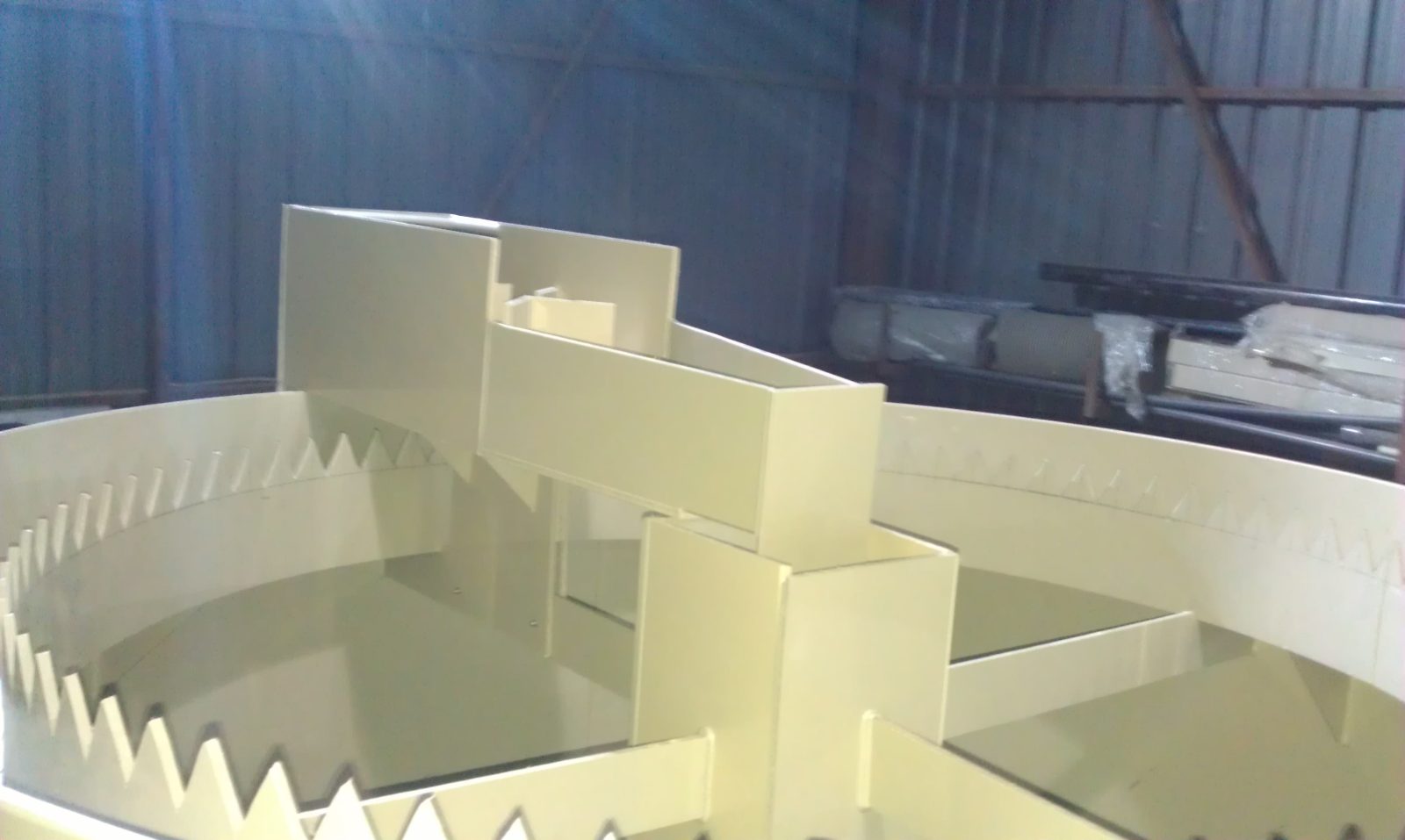
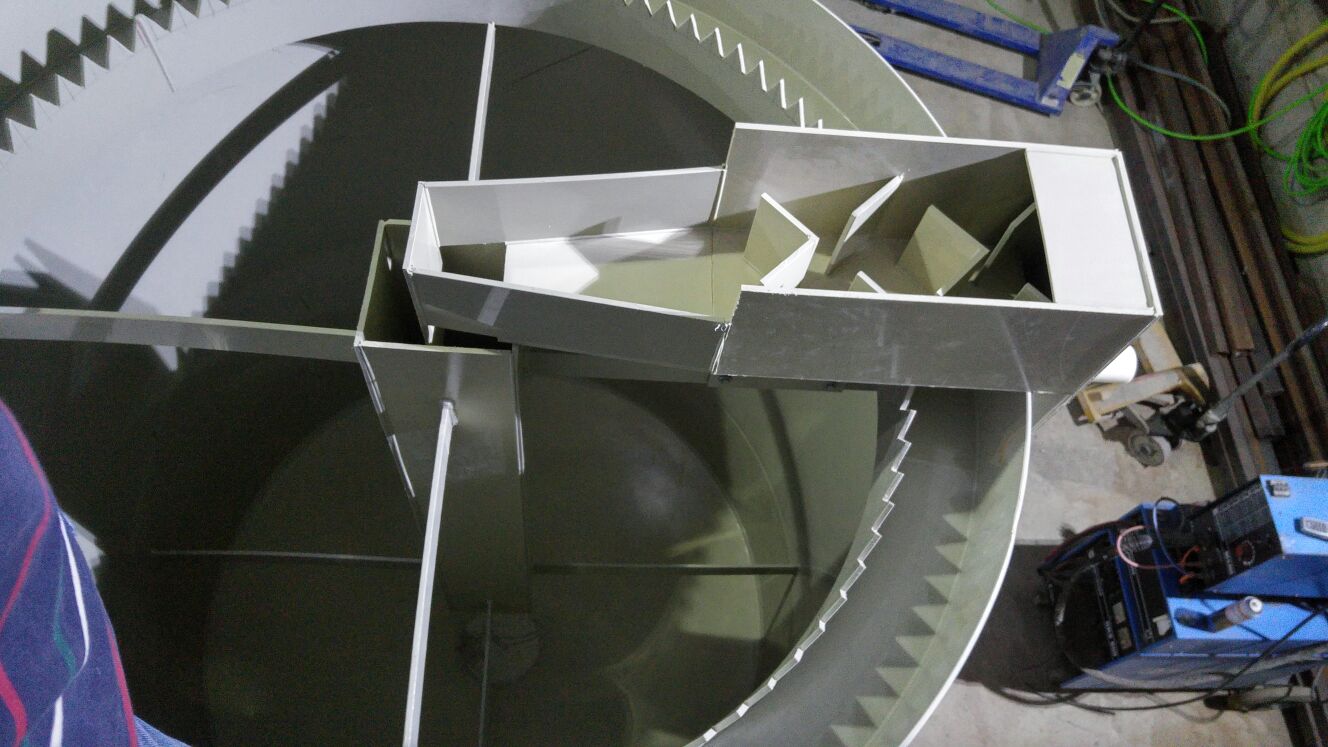
Instead of holding chemicals in a large tank for minutes, these units bond them molecularly within seconds as they flow through the pipe. Geometric elements set at specific angles inside the pipe divide the stream in two again and again, change its direction and fold it back on itself. With no moving or electrical part, using only the pressure and turbulence of the liquid itself, a perfect flash mix is achieved.
- System Components
-
- Advanced-geometry mixing elements: Helical, X-type or V-type PVDF/PVC element arrays optimised for the flow regime, whether laminar or turbulent.
- Chemical injection ports: Integrated dosing nipples that inject acid or coagulant into the exact centre of the stream just before it enters the mixer.
- Corrosion-immune transparent housing: Pressure-resistant housings in transparent PVC or thick-walled PP that let the state of the mixture be seen from outside.
- Applications centred on chemical process
-
- Continuous pH balancing: Bringing effluent or process water to its legal pH within fractions of a second by acid or caustic injection as it passes through the pipe.
- Flash-mix lines: In-line intervention points in water treatment where the coagulant must meet the water instantly and start the flocculation reaction.
That any static obstruction costs pressure is a physical fact. Our engineers simulate the number of mixing elements against the power of your existing pump, however, and design for exactly the point where minimum pressure loss meets maximum homogeneity.
Powder-Liquid Induction Units Vacuum dissolution with no lumping
The worst nightmare in industrial production is polymer powder, carbohydrate or solid acid clumping when it is tipped into liquid, sinking undissolved and forming dry-centred agglomerates known as fisheyes. Our powder-liquid induction units use a powerful liquid jet to create a strong vacuum inside a dedicated hopper. The powder meets the liquid while still airborne and dissolves completely at molecular level before it ever reaches the tank. No waste, no lumps and the fastest possible dissolution.

- System Components
-
- Ergonomic induction hopper: Dust-free covered feed hoppers in PP or stainless steel, designed so the operator can empty the sacks without strain.
- High-shear rotor-stator pump: A toothed pump head that draws powder and liquid in together, breaks the microscopic surface tension between them and micronises the coarse mixture.
- Powder flow control valve: An automatic valve that holds the powder back until the liquid jet has built enough vacuum, making it mechanically impossible for dry powder to block the pipework.
- Applications centred on chemical process
-
- Polyelectrolyte make-up units (wastewater): Bringing the expensive polymer powders used for sludge dewatering into solution without waste and without lumping.
- Calcium, lime and clay slurry preparation: Feeding the heavy, sticky powders used in mining and flue gas desulphurisation to the pump stations continuously as a slurry.
Tip the powder in from above and large lumps form on the surface. Their dry cores will not dissolve even under the strongest agitator; they block your filters and tonnes of expensive chemical are wasted. The induction unit isolates every grain inside the pipe and coats it with liquid. Your chemical consumption falls by around 30 %.